
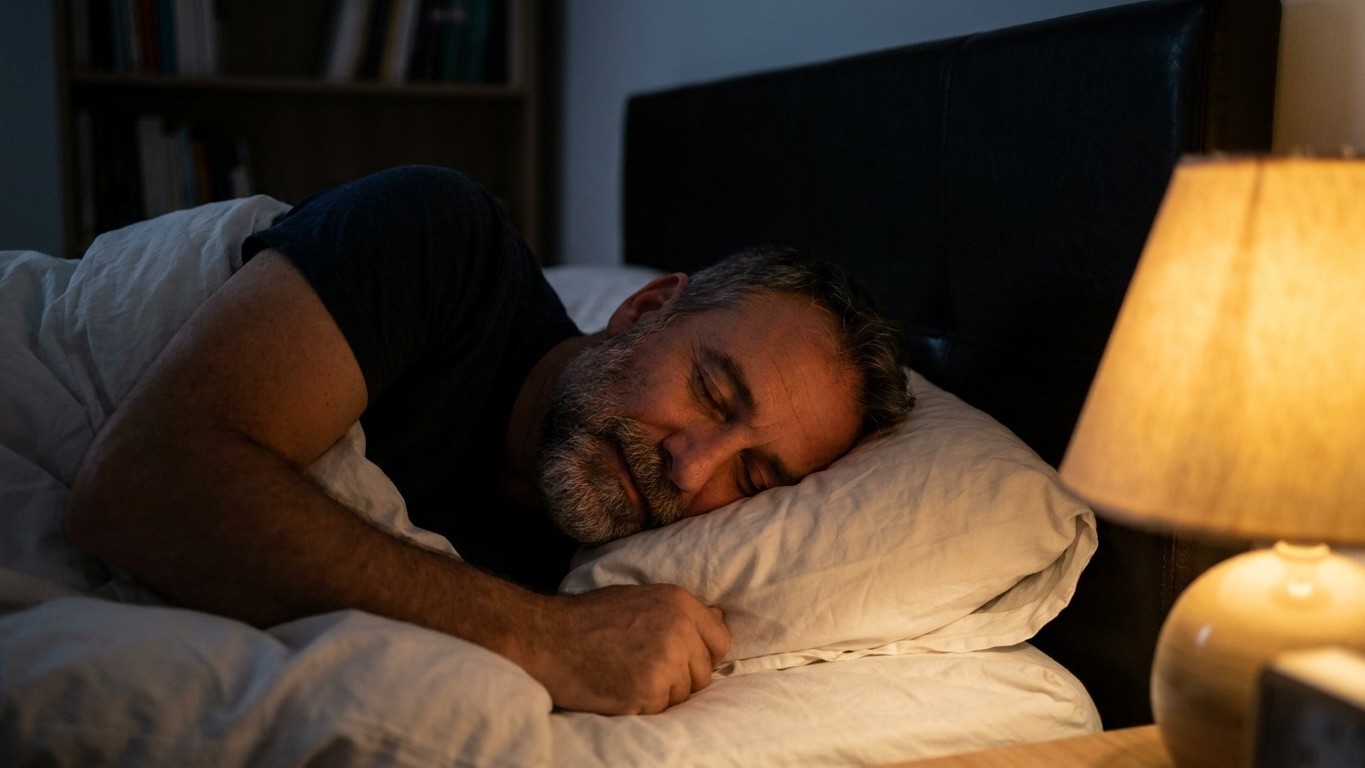
Fifteen years, the same small white tablet, the same glass of water on the nightstand. My father’s nightly ritual never wavered, not once, and for most of that time nobody in our house questioned it. Then one night my mother, unable to sleep herself, started counting the gaps between his breaths. What she heard in that silence changed Everything we thought we knew about a habit we’d stopped noticing.
She didn’t set out to conduct an experiment. She just lay there, phone in hand, and pressed start on a timer the first time his breathing stopped. Ten seconds. Then nothing. Fifteen. Then a gasp, a snort, and breathing resumed like nothing had happened. She did it again. And again. By the third or fourth pause, she was wide awake, and so was I when she woke me up whispering that something wasn’t right.
Key takeaways
- A mother’s accidental discovery at 2 a.m. uncovers a hidden medical crisis her husband never suspected
- The very medication prescribed to help sleep was actively worsening a dangerous breathing disorder
- Fifteen years of routine masked what fifteen minutes of attention revealed
What the Silences Actually Meant
What my mother had stumbled onto, without any medical training, is one of the most recognizable signatures of obstructive sleep apnea: repeated pauses in breathing, sometimes lasting several seconds to minutes, that recur throughout the night. Sleep apnea is a common sleep disorder characterized by repeated pauses in breathing during sleep, and the most common type is obstructive sleep apnea, where the upper airway collapses or becomes blocked despite continued efforts to breathe. Doctors measure its severity with something called the apnea-hypopnea index, essentially a count of how many of these pauses happen per hour of sleep.
The frustrating part, and the part that hit us hardest, is that my father never once complained of exhaustion. No dramatic daytime collapse, no obvious red flag. That silence isn’t rare, either. Doctors have documented cases of sleep apnea going undiagnosed for staggering stretches of time precisely because the person never presented the sleepiness everyone expects to see. Insomnia is often treated with benzodiazepines, which can lead to long-term use and potential complications, especially if underlying conditions like sleep apnea syndrome go undiagnosed, as one recent case report described in a patient with a previously undiagnosed severe case. In that particular report, the condition stayed hidden behind sedative use for decades before anyone caught it.
Why the Pill Made It Worse, Not Better
Here’s the part that genuinely unsettled me. We’d always assumed the tablet was doing exactly what it promised: helping him sleep, full stop. But sedatives don’t just quiet the mind. They relax muscle tissue throughout the body, including the muscles that hold the airway open. Sedative medications, including benzodiazepines, Z-drugs like Ambien and Lunesta, antihistamines such as Benadryl, and alcohol, can worsen sleep apnea by relaxing throat muscles, suppressing the brain’s reflex to resume breathing, and lengthening pauses in breathing.
There’s a second mechanism that’s more dangerous, and it’s the one that explains why the pauses my mother timed kept stretching longer instead of resolving on their own. Sleep aids can suppress the body’s natural arousal mechanisms, which are vital for someone with sleep apnea, since normally when the brain detects low oxygen levels, it prompts the body to wake up briefly to restore normal breathing, but sleep aids dull this response, which may prolong periods of oxygen deprivation, leading to more serious complications like heart arrhythmias or strokes. In plain terms, the very thing meant to help him rest was quietly disarming the alarm system that would have woken him up faster.
Clinical researchers have been raising this exact concern for decades, not as a fringe theory but as documented pharmacology. Benzodiazepines are central nervous system depressant drugs that may adversely affect the control of ventilation during sleep, and their prescription may worsen sleep-related breathing disorders, especially in patients with chronic obstructive pulmonary disease or cardiac failure. The same review noted something that should give every long-term user pause: although benzodiazepines may reduce sleep fragmentation, their long-term use may also cause health problems, such as complete obstructive sleep apnea in heavy snorers.
The Fine Print Nobody Reads
None of this means every sleeping pill is a hidden hazard for every person. The research is genuinely mixed on some formulations. Growing evidence has demonstrated that Z-drugs do not elevate the arousal threshold the way older benzodiazepines do, which is one reason doctors have shifted prescribing habits over the years. Still, the broader caution from medical institutions remains consistent. Sedatives can also worsen snoring and sleep apnea, a potentially life-threatening condition, notes Cleveland Clinic, which is precisely why healthcare providers only prescribe these sleeping pills for short-term use, and patients are more likely to get a prescription for Z-drugs instead.
Fifteen years is not short-term use by any definition. And that’s the Uncomfortable Truth we had to sit with: a tablet prescribed, presumably, for a stretch of rough nights had quietly become a permanent fixture, one that may have been masking a breathing disorder rather than treating actual insomnia. A sleep study eventually confirmed what the timer already suggested, an apnea-hypopnea index well into what specialists classify as significant territory, and a prescription for a CPAP machine followed within weeks.
What Changed After the Diagnosis
My father sleeps with a mask now, tethered to a small humming machine, and he jokes that he looks like he’s piloting a fighter jet. The joke lands because the alternative isn’t funny at all. Untreated obstructive sleep apnea carries real cardiovascular weight, and the machine’s steady air pressure keeps his airway from collapsing in the first place, no chemical relaxation involved.
What stays with me isn’t the diagnosis itself. It’s the timer. A wife, awake at 2 a.m. for reasons that had nothing to do with medicine, counting seconds in the dark because something felt off. No app, no wearable, no doctor’s referral triggered it, just attention. If there’s a lesson worth carrying out of that night, it’s that fifteen years of routine can hide something a stopwatch reveals in fifteen minutes, and that the people sleeping next to us often notice what we can’t hear ourselves.
Sources : ncbi.nlm.nih.gov | frontiersin.org