
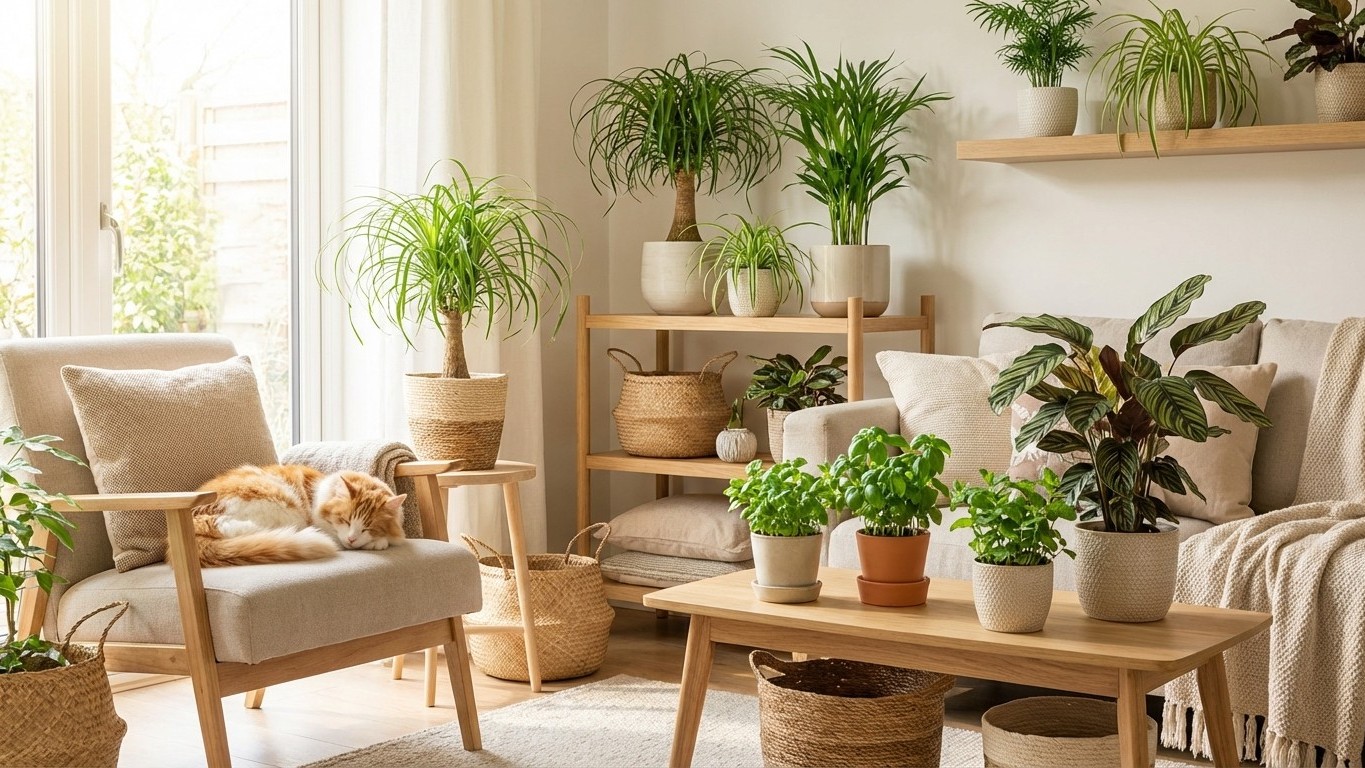
The morning light slides through sheer curtains, catching on glossy leaves shaped like violins. Or, rather, they used to. Where the mighty Fiddle Leaf Fig once stood proud, a monument to every Instagram-perfect living room, now there’s a cluster of fresh stems, pale greens, and Unexpected hues. The landscape has shifted. Cat owners, always quietly influential, have turned their backs on last decade’s botanical darling. The new era of feline-friendly decorating has arrived, bringing with it an entirely different set of textures, silhouettes, and species.
Frustration, not fads, drove the change. Anyone with a whiskered roommate understands the silent menace: a plant perched perfectly one day, chewed to disaster the next. The Fiddle Leaf Fig, once the best-seller in every nursery, proved itself toxic and, worse, irresistible to curious paws, leaves nibbled, pots toppled, a parade of costly vet visits. The high-maintenance regimen and the plant’s notorious drama queen behavior, dropping leaves at the faintest draft, made it, frankly, a decor risk for households with cats. So, what’s taking its place?
Key takeaways
- Why the Fiddle Leaf Fig no longer wins feline-friendly homes.
- Discover the plant varieties cat owners prefer for safety and style.
- How plant trends are evolving to prioritize coexistence with cats.
The Botanical Renaissance of 2026
Tilt your head. There’s chamomile growing where a glossy giant once loomed, spilling gentle daisy-like blooms across a reclaimed wood shelf. The narrative in pet-friendly homes now reads like the cast list of an apothecary. In data released last fall, US plant retailers reported a 20% surge in sales of herbal and non-toxic varieties, with pet parents leading the charge. Mint, baby tears, calathea, parlor palms, multiple soft, safe alternatives are stealing the spotlight.
This resurgence isn’t just cute: it has roots in Wellness and safe design. Cat owners increasingly swap out high-maintenance statement plants for living accents with a purpose, whether it’s air-purifying, culinary, or interactive for their four-legged companions. A young Brooklyn designer told me, between spoonfuls of oat cortado, that she’s built her entire apartment’s palette around “plants my cat can safely eat or nap under.” It’s a little wild, a little botanical speakeasy, and utterly intentional.
Five Non-Toxic Favorites Colonizing Stylish Homes
Trends, of course, resist neat classification. There’s an element of improvisation, for every Instagrammed setup there’s a half-chewed spider plant in the kitchen window. But some clear favorites have emerged, each with its own cult following:
- Ponytail Palm: With frizzy green tresses resembling a cat toy, this sculptural plant looks dramatic without drama. Not toxic, low fuss, unexpectedly long-lived.
- Areca Palm: Airy, tropical, endlessly photogenic, and not a threat to curious felines. This palm now claims more living room corners than the Fiddle Leaf ever did.
- Spider Plant: Endlessly forgiving, exuberant, and easy to propagate. Cats love batting at the “babies”, and you can relax about it.
- Herbs (Basil, Mint, Catnip): Urban gardeners blend culinary ambition with pet safety. A sprig of mint for tea, a handful of catnip for play, it’s a win all around.
- Calathea: Patterned like a 1970s silk scarf, this plant offers sculptural beauty and zero guilt if the cat decides to nap among the leaves.
The result. Bluffing sophistication with zero casualties. A chic space that feels lived-in, by people and pets alike.
The Emotional Shift: Plants as Companions, Not Sculptures
There’s something quietly radical in this evolution. Gone is the pressure to display the plant world’s version of a status car, perfect leaves dusted weekly and watered under strict regime. Now? A gentle tangle of green, scruffy here and there, living at the same messy, spontaneous pace as its human and feline companions.
If you’ve ever watched your cat turn a potted plant into an impromptu bed (or hunt for shade during the afternoon heat), you understand. Texture matters. Safety matters. The best-selling houseplant is no longer a trophy, but a collaborator in the home’s ecology. This is the paradox: what feels like a step back, abandoning the emblematic Fiddle Leaf Fig, actually marks the arrival of maturity in plant styling. A move away from spectacle. Toward coexistence.
Data from Google Trends across 2025 highlighted a 60% drop in Fiddle Leaf Fig searches among American pet owners. Meanwhile, “pet-safe indoor plants” became the breakout term, even eclipsing traditional queries like “low-light plant” or “no water plant”. The algorithm has spoken. But so have millions of living rooms, where a hanging basket of baby tears now Signals good taste (and good sense).
The Invisible Luxury: Peace of Mind
Some will say we’ve lost something. The architectural silhouette, the drama of a true “statement” plant. But watch a cat wind its way through a sunbeam, safe and curious, unhurried by danger. The luxury is peace of mind. Designer Ann Kim, whose 2025 collection debuted in Los Angeles, calls this “domestic biophilia”, not simply filling space, but creating micro-habitats where every creature thrives. The harmony is almost visible in the afternoon quiet.
It’s also a counter-trend to the maximalism that has dominated Pinterest boards since 2022. Instead of piling on aggressive forms and unfamiliar species, the vibe has subtly shifted to quiet abundance. More plants, yes, but chosen with empathy. Pots traded between friends, herbs snipped for dinner, a shared space that invites both paws and fingertips.
The Fiddle Leaf Fig isn’t extinct, not exactly. You’ll spot it here and there, clinging to its patch of sunlight in studios and lobby corners. Yet, in homes where the soundscape includes both jazz playlists and the playful bell of a collar, the reign is over. Something more nuanced, more collaborative, has taken root.
So what’s next? Maybe a kitchen herb pot that doubles as a play zone. Maybe a living room jungle curated for curiosity, not just for cats, but for the next houseguest who asks, “Could my pet live here too?” Or maybe, something altogether unimagined, waiting in the shade of the next afternoon sun.