
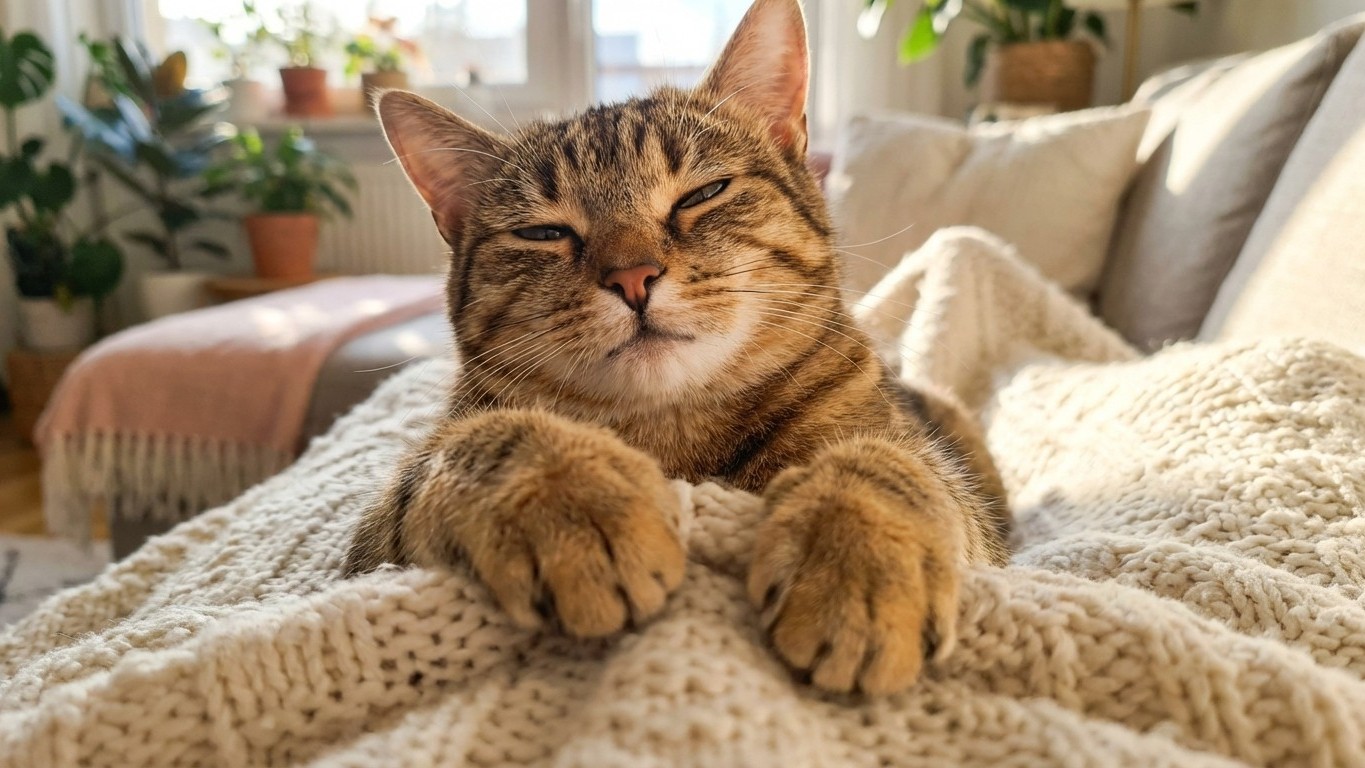
That rhythmic push-and-pull motion your cat makes with their paws against your lap isn’t just an adorable quirk—it’s Actually a sophisticated form of feline communication that most owners completely misunderstand. While the internet is full of sweet explanations about cats “Making biscuits” because they miss nursing, leading animal behaviorists are revealing a much more complex and fascinating reality.
The truth is, your cat isn’t simply reliving kittenhood memories when they knead on you. This behavior represents a multi-layered form of communication that combines territorial marking, emotional regulation, and social bonding in ways that showcase just how intelligent and intentional our feline companions Really are.
The Scent Marking Secret Most Owners Miss
Dr. Sarah Ellis, a renowned cat behavior specialist, explains that kneading serves as one of the most sophisticated scent-marking systems in the animal kingdom. When your cat presses their paws into your clothing or skin, they’re activating scent glands located between their toes—glands that release a unique cocktail of pheromones that essentially “brands” you as part of their territory.
This isn’t the same as the aggressive territorial marking we might associate with other animals. Instead, it’s an intimate form of claiming that signals deep trust and acceptance. Your cat is essentially saying, “This human belongs to my inner circle,” creating an invisible scent map that other cats can read and Understand. The intensity and frequency of kneading often correlates with how secure and bonded your cat feels with you, which explains why some cats knead more aggressively when they’re particularly content or seeking reassurance.
What makes this even more fascinating is that cats can actually “read” the scent signatures left by previous kneading sessions. That favorite spot on your couch where your cat Always kneads? It’s become a concentrated zone of familiar, comforting scents that reinforce their sense of security in Your shared space.
The Emotional Regulation System You Never Knew About
Beyond scent marking, behaviorists have Simple-rule-changes-everything”>Simple-jar-trick”>Discovered that kneading serves as a self-soothing mechanism that goes far beyond simple comfort-seeking. The rhythmic motion actually triggers the release of endorphins in cats, similar to how human meditation or repetitive activities can calm anxiety. This explains why cats often knead more intensely during times of stress, change, or uncertainty.
Dr. John Bradshaw, author of “Cat Sense,” notes that the pressure and rhythm of kneading stimulate the same neural pathways that were activated during nursing, but in adult cats, this creates a self-administered form of stress relief. It’s not about missing their mother—it’s about accessing a biological relaxation response that helps them cope with the complexities of domestic life.
This emotional regulation aspect also explains why some cats become Almost trance-like during extended kneading sessions. They’re entering a meditative state that helps them process emotions and reset their stress levels. The fact that they choose to do this on you specifically indicates that you represent safety and security in their world—you’re their chosen relaxation partner.
The Social Bonding Language Only Cats Understand
Perhaps the most surprising revelation from recent feline behavior research is that kneading functions as a form of social grooming by proxy. In multi-cat households, cats who are bonded will often groom each other as a way of strengthening their relationship. When your cat kneads you, they’re essentially treating you as a fellow cat worthy of this intimate social interaction.
The location where your cat chooses to knead also carries meaning. Cats who knead on your chest or near your face are engaging in the feline equivalent of a hug—they’re seeking and offering emotional intimacy. Those who prefer to knead your legs or lap are showing a more casual but still significant level of affection and trust.
Behaviorists have observed that cats adjust their kneading intensity and duration based on their reading of your responses. A cat who kneads gently might increase pressure if you seem relaxed and receptive, while those who knead more vigorously might dial back if they sense tension or discomfort. This demonstrates a level of social awareness and empathy that many people don’t credit cats with having.
What Your Response Really Means to Your Cat
Understanding the true complexity of kneading behavior can transform how you respond to these moments with your cat. When you allow and encourage kneading, you’re not just tolerating a cute quirk—you’re participating in a sophisticated form of interspecies communication that strengthens your bond and supports your cat’s emotional well-being.
The next time your feline friend settles in for a kneading session, remember that they’re engaging multiple complex behaviors simultaneously: claiming you as family, self-soothing through a biologically programmed relaxation technique, and inviting you into an intimate social interaction that requires significant trust. Rather than simply enduring those sharp claws, try to appreciate the profound compliment your cat is paying you—and the remarkable intelligence behind what might seem like simple, instinctual behavior.