
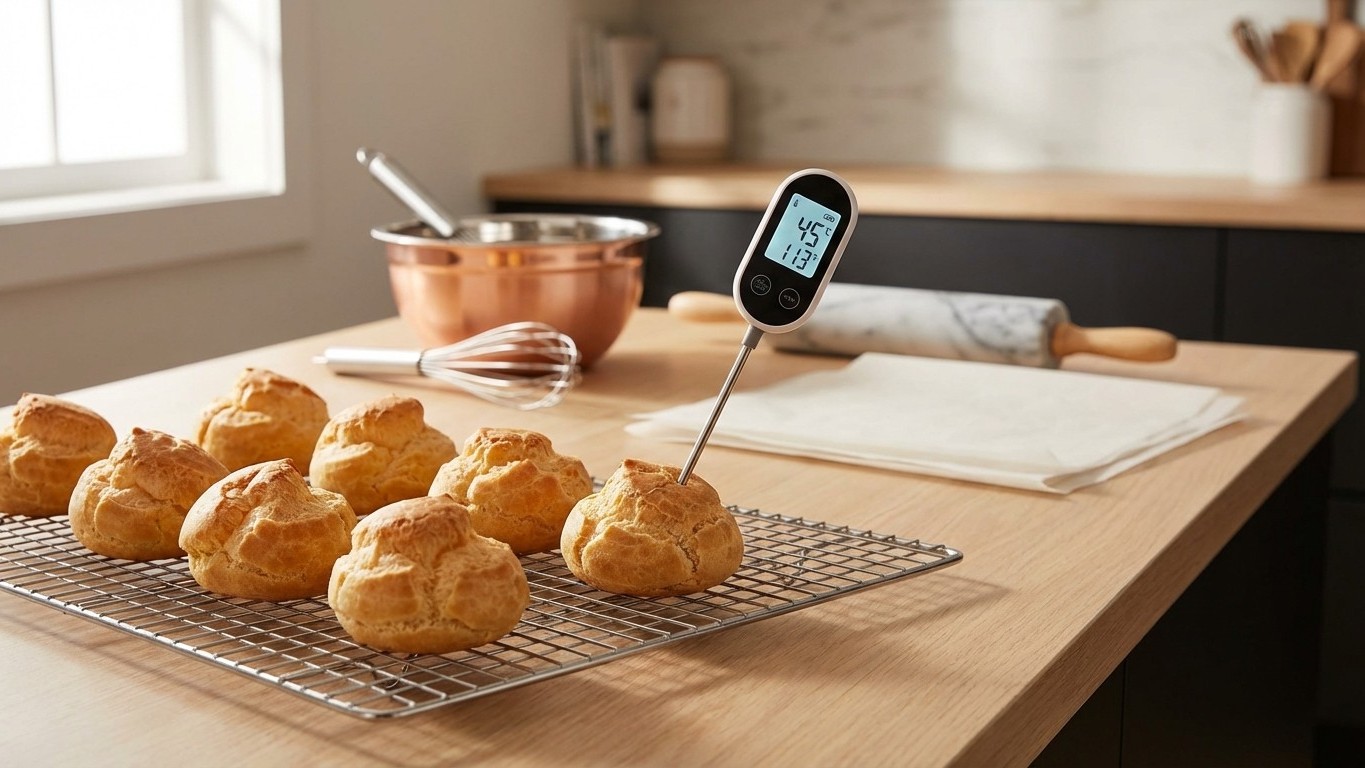
The era of deflated cream puffs and disappointing éclairs is officially behind us. A revolutionary baking technique emerging in 2026 is completely transforming how home bakers approach choux pastry, turning one of the most intimidating desserts into a foolproof Kitchen-waste-in-your-Drains-after-that-the-buildup-be”>kitchen victory. This isn’t just another trending hack – it’s a fundamental shift that’s making professional-quality results accessible to every home kitchen.
The breakthrough centers around what pastry scientists are calling “thermal layering” – a precise temperature control method that eliminates the guesswork from choux pastry preparation. Unlike traditional methods that rely on visual cues and baker’s intuition, this new approach uses specific temperature markers to ensure perfect steam development and structural integrity every single time.
The Science Behind Perfect Choux
Traditional choux pastry has Always been notoriously fickle because it relies entirely on steam for its signature hollow interior and dramatic rise. The new thermal layering technique addresses this by creating distinct temperature zones during the cooking process, essentially giving bakers complete control over steam generation and retention.
The method begins with a modified cooking phase where the flour-water-butter mixture is heated to exactly 185°F instead of the traditional “until it forms a ball” approach. At this precise temperature, the flour proteins achieve optimal alignment Without over-developing, creating the perfect foundation for steam pockets. The mixture is then cooled to exactly 145°F before incorporating eggs – a temperature that ensures maximum absorption without cooking the eggs prematurely.
What makes this technique truly revolutionary is the introduction of a “resting phase” where the completed dough sits at 78°F for precisely 12 Minutes. During this time, the Moisture redistributes evenly throughout the mixture, creating uniform hydration that translates directly to consistent rising and texture. This controlled resting period eliminates the variability that has plagued home bakers for centuries.
The baking process itself follows a similar precision approach, starting at 425°F for the first 15 minutes to generate initial steam, then dropping to 350°F for the remainder of the baking time. This two-stage temperature profile mimics professional steam injection ovens, allowing home bakers to achieve the same dramatic rise and golden finish that was previously reserved for commercial kitchens.
Equipment that makes the Difference
The widespread adoption of this technique has been made possible by the proliferation of affordable digital thermometers and smart home devices. Many 2026 home bakers are using wireless probe thermometers that send alerts to their phones when each temperature milestone is reached, removing the guesswork entirely.
Smart ovens with precise temperature control are becoming increasingly common, and several appliance manufacturers have introduced “choux modes” that automatically execute the two-stage baking profile. Even standard home ovens can achieve excellent results with careful monitoring and a reliable oven thermometer.
The technique has also sparked innovation in mixing tools. New stand mixer attachments designed specifically for choux pastry feature temperature sensors that alert bakers when the mixture reaches optimal temperatures, while specialized cooling bowls help achieve the precise 78°F resting temperature regardless of ambient kitchen conditions.
Beyond Traditional Applications
This precision approach isn’t just improving classic cream puffs and éclairs – it’s opening entirely new possibilities for choux pastry applications. Home bakers are experimenting with savory variations, creating perfectly risen gougères for dinner parties and delicate profiteroles for elegant appetizers.
The reliability of the new method has also made choux pastry accessible for special dietary needs. Gluten-free versions that previously required extensive trial and error now achieve consistent results, while egg-free adaptations using precise aquafaba measurements are producing surprisingly authentic textures.
Instagram and TikTok are filled with home bakers showcasing their perfect choux creations, many documenting their temperature readings alongside glamorous photos of towering croquembouche and artistic profiterole arrangements. The technique’s reliability has Transformed choux pastry from an occasional ambitious project into a regular part of many home bakers’ repertoires.
The Future of Home Baking Precision
The success of thermal layering for choux pastry represents a broader trend toward scientific precision in home baking. Similar temperature-controlled methods are being developed for other traditionally challenging techniques, including laminated doughs for croissants and tempering chocolate for professional-quality confections.
Baking schools are already incorporating these precise methods into their curricula, recognizing that the future of baking education lies in understanding the science behind traditional techniques rather than relying solely on experience and intuition. Home baking is becoming more sophisticated without becoming more complicated – a distinction that’s making advanced techniques accessible to a much broader audience.
As we move further into 2026, this thermal layering technique is establishing itself as the new standard for choux pastry preparation. The combination of scientific precision and accessible technology has Changes-everything-in-30-seconds”>Changes-everything”>Finally-figured-out-why-my-rice-pudding-always-failed-it-was-all-about-the-proportions”>Finally solved one of baking’s most persistent challenges, proving that sometimes the most revolutionary Changes come not from completely new approaches, but from perfecting the fundamentals with modern understanding and tools.