
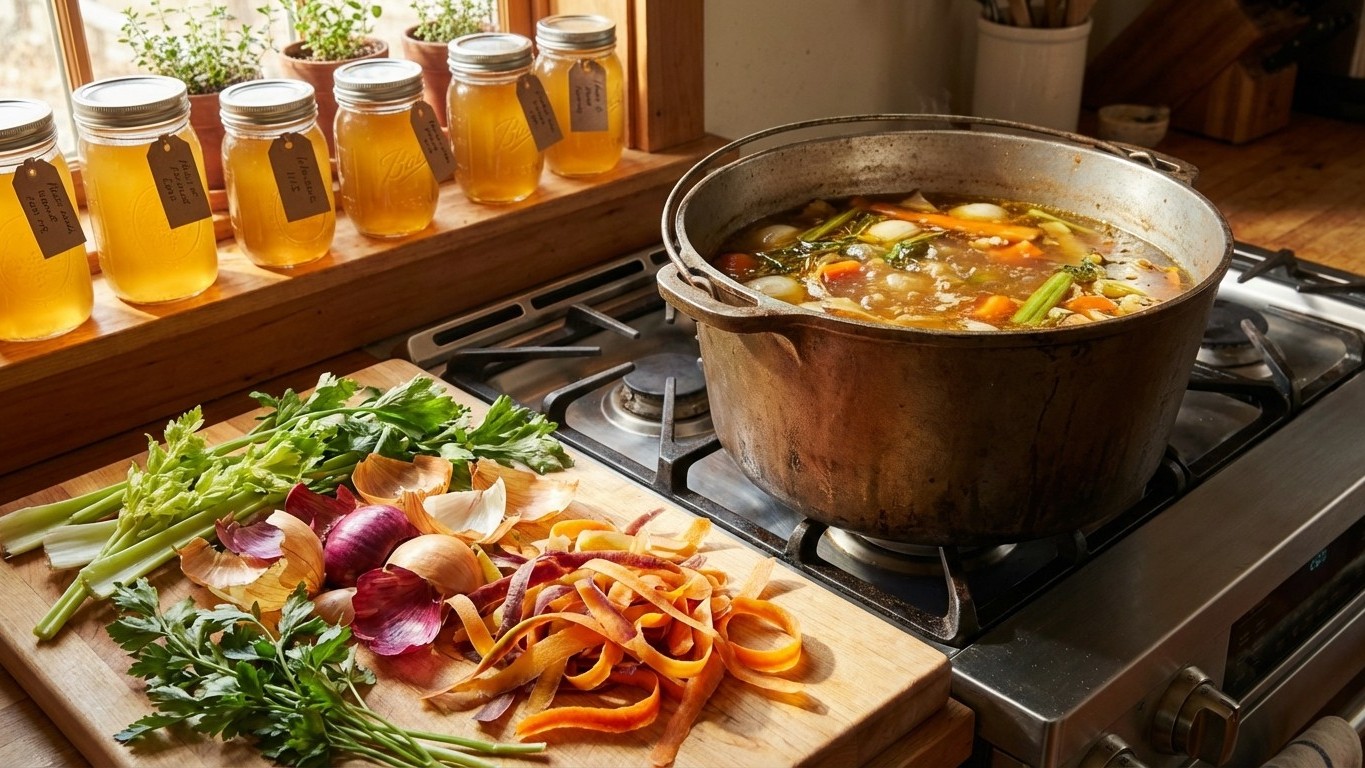
Every Time I used to peel carrots or chop onions, those colorful scraps would go straight into the trash without a second Thought-it-was-tacky-these-90s-accessories-are-everywhere-in-2026-looks”>Thought. But Everything changed when Buying-fresh-herbs-once-i-discovered-this-simple-jar-trick”>I Discovered the transformative power of homemade vegetable broth made from What I once considered waste. This golden elixir has revolutionized my cooking and completely shifted my perspective on Kitchen-gold”>Kitchen sustainability.
The revelation came during a particularly expensive grocery run when I found myself spending nearly twelve dollars on a few cartons of store-Bought broth. That Evening, as I prepped vegetables for dinner and watched those vibrant peels and ends pile up, something clicked. Why was I throwing away ingredients that could create something infinitely better than what I Was buying?
The Magic Behind Vegetable Scrap Broth
Creating broth from vegetable scraps isn’t just about sustainability—it’s about unlocking flavors that commercial broths simply can’t match. When you simmer onion skins, carrot tops, celery leaves, and herb stems together, you’re extracting concentrated nutrients and complex flavors that have been building up in these often-discarded parts of the plant.
The science behind this process is fascinating. Vegetable peels and outer layers often contain higher concentrations of vitamins, minerals, and flavor compounds than the flesh we typically eat. Onion skins, for instance, are packed with quercetin, a powerful antioxidant, while carrot peels contain concentrated beta-carotene. When these elements slowly release into simmering water, they create a nutrient-dense liquid that serves as an incredible foundation for countless dishes.
What makes this homemade version superior to store-bought alternatives isn’t just the fresh flavor—it’s the complete absence of preservatives, excessive sodium, and artificial additives. You control every element, creating a pure, clean-tasting broth that enhances rather than overwhelms your cooking.
Building Your Scrap Collection Strategy
The key to consistent broth-making lies in developing a smart collection system. I keep a large freezer bag specifically designated for vegetable scraps, adding to it throughout the week as I prepare meals. This approach means I’m never scrambling to find enough ingredients for a batch, and the frozen scraps Actually break down more easily during cooking, releasing their flavors more readily.
Not all scraps are created equal, though. The foundation of exceptional broth starts with aromatic vegetables—onions, carrots, and celery form the holy trinity, but their scraps are equally valuable. Onion skins add deep color and rich flavor, while carrot peels contribute natural sweetness. Celery leaves, often discarded, bring an herbaceous note that’s impossible to replicate.
Herb stems deserve special mention here. Those parsley, cilantro, and dill stems you typically discard pack intense flavor. Mushroom stems add an incredible umami depth that transforms ordinary broth into something restaurant-quality. Even the fibrous ends of asparagus, which many consider inedible, contribute a subtle earthiness that rounds out the flavor profile beautifully.
However, certain vegetables should be avoided or used sparingly. Brassicas like broccoli and cabbage can create overly sulfurous flavors, while potato peels might make the broth cloudy. Citrus peels, unless organic, can introduce unwanted bitterness from wax and treatments.
The Simple Process That Changes Everything
The actual broth-making process is remarkably straightforward, yet the results feel like culinary magic. Once my freezer bag reaches capacity—usually after about a week of cooking—I transfer everything to my largest stockpot. The ratio is intuitive rather than precise: enough scraps to fill the pot about one-third full, then covered completely with cold water.
The simmering phase requires patience but minimal active attention. I bring the mixture to a gentle boil, then reduce the heat to maintain a barely perceptible simmer. This low, slow cooking process, typically lasting 45 Minutes-daily-since-age-50-what-her-cardiologist-discovered-after-one-year”>Minutes to an hour, allows the vegetables to release their essence without becoming bitter or overpowering.
During cooking, I add a few bay leaves and a generous pinch of salt, but the beauty lies in the scraps themselves providing all the complexity needed. The kitchen fills with an incredibly comforting aroma that signals something special is happening.
Straining requires nothing more sophisticated than a fine-mesh strainer, and the resulting liquid ranges from pale gold to deep amber, depending on the scraps used. The spent vegetables, having given their all to the broth, can Finally-growing-back-this-2-minute-evening-routine-changed-everything-for-her”>Finally-figured-out-why-my-rice-pudding-always-failed-it-was-all-about-the-proportions”>Finally go to compost, having served their fullest purpose.
Transforming Your Everyday Cooking
This homemade broth has become my Secret weapon in the kitchen, elevating everything from simple rice dishes to complex soups. Where recipes call for water, I substitute this flavorful liquid, instantly adding depth and richness that makes people wonder about my cooking secrets.
The economic impact is equally impressive. That twelve-dollar grocery store broth expense has virtually disappeared from my budget, replaced by something infinitely better made from what I once Threw Away. A single batch typically yields six to eight cups of broth, equivalent to multiple store-bought containers.
Storage is simple and flexible. The cooled broth keeps in the refrigerator for up to a week, but I prefer freezing it in ice cube trays for convenient single-serving portions. These flavor cubes become instant cooking enhancers, perfect for deglazing pans, starting risottos, or adding quick depth to weeknight meals.
This Simple shift in kitchen habits has created a beautiful cycle of sustainability and flavor enhancement. Every vegetable preparation becomes an investment in future meals, and the guilt of food waste has Transformed into anticipation for the next batch of liquid gold. Once you experience the difference this homemade broth makes in Your cooking, you’ll wonder how you ever managed without it.