
Picture this: you’re enjoying a cozy evening with your favorite vanilla candle when disaster strikes. A clumsy elbow sends hot wax cascading onto your beloved cream-colored throw pillow. Sound familiar? Last weekend, I found myself in this exact predicament, staring at what seemed like a fabric funeral waiting to happen. Rather than panic, I decided to turn this mishap into an experiment, testing five popular Candle Wax removal methods to see which one truly delivers results.
The battlefield was set: one innocent pillow cover bearing a generous splatter of burgundy candle wax, five different removal techniques I’d gathered from various sources, and my determination to save both the fabric and my dignity. What followed was an afternoon of scientific curiosity that would forever change how I approach wax emergencies.
The ice cube Method: A Chilly Disappointment
Armed with confidence from countless Pinterest pins, I started with the classic ice cube approach. The theory seemed sound: freeze the wax until it hardens, then scrape it off cleanly. I placed ice cubes directly on the stain, waited patiently for ten Minutes-since-i-do-this-simple-trick-under-the-covers-the-life-changing”>Minutes-since-i-do-this-simple-trick-under-the-covers-the-life-changing”>Minutes-since-i-do-this-simple-trick-under-the-covers-the-life-changing”>Minutes-daily-since-age-50-what-her-cardiologist-discovered-after-one-year”>Minutes, and began my careful scraping mission with a butter knife.
The reality? Frustratingly mediocre. While some surface wax did flake away, the deeper embedded portions remained stubbornly attached to the fabric fibers. Worse yet, the kitchen-powder-does-the-job-in-your-cabinets”>Moisture from the melting ice seemed to spread the remaining wax slightly, creating a larger affected area. The method removed perhaps thirty percent of the stain, leaving me with a lighter but still very visible mark that screamed “candle accident” to anyone within viewing distance.
The ice method felt like trying to remove a tattoo with an eraser – technically doing something, but nowhere near the complete solution I desperately needed.
Heat and Paper Towels: The Classic Iron Technique
Next up was the iron method, a technique my grandmother swore by for Removing wax from tablecloths. The process involves placing paper towels on both sides of the stained fabric, then applying a warm iron to draw the wax into the absorbent paper. This method had the advantage of seeming both scientific and traditional, which gave me hope.
Setting my iron to a medium heat setting, I carefully positioned fresh paper towels and began the extraction process. To my delight, I could Actually-makes-you-look-younger”>Actually-makes-you-look-younger”>Actually-Explains”>Actually see the wax transferring onto the paper towels, leaving behind increasingly cleaner fabric with each application. The method required patience and multiple paper towel changes-everything”>changes-everything”>Changes-everything”>Changes-everything-in-5-minutes”>Changes-everything-in-30-seconds”>Changes, but progress was undeniably visible.
However, this technique hit a wall when it came to the final traces of wax. Despite multiple attempts with fresh paper towels and adjusted temperatures, a faint shadow of the original stain persisted. The iron method achieved roughly seventy percent success – impressive, but not the complete victory I was seeking. Additionally, I worried about potential heat damage to the fabric, especially with repeated applications.
The Surprising Champion: Liquid Dish Soap and Hot Water
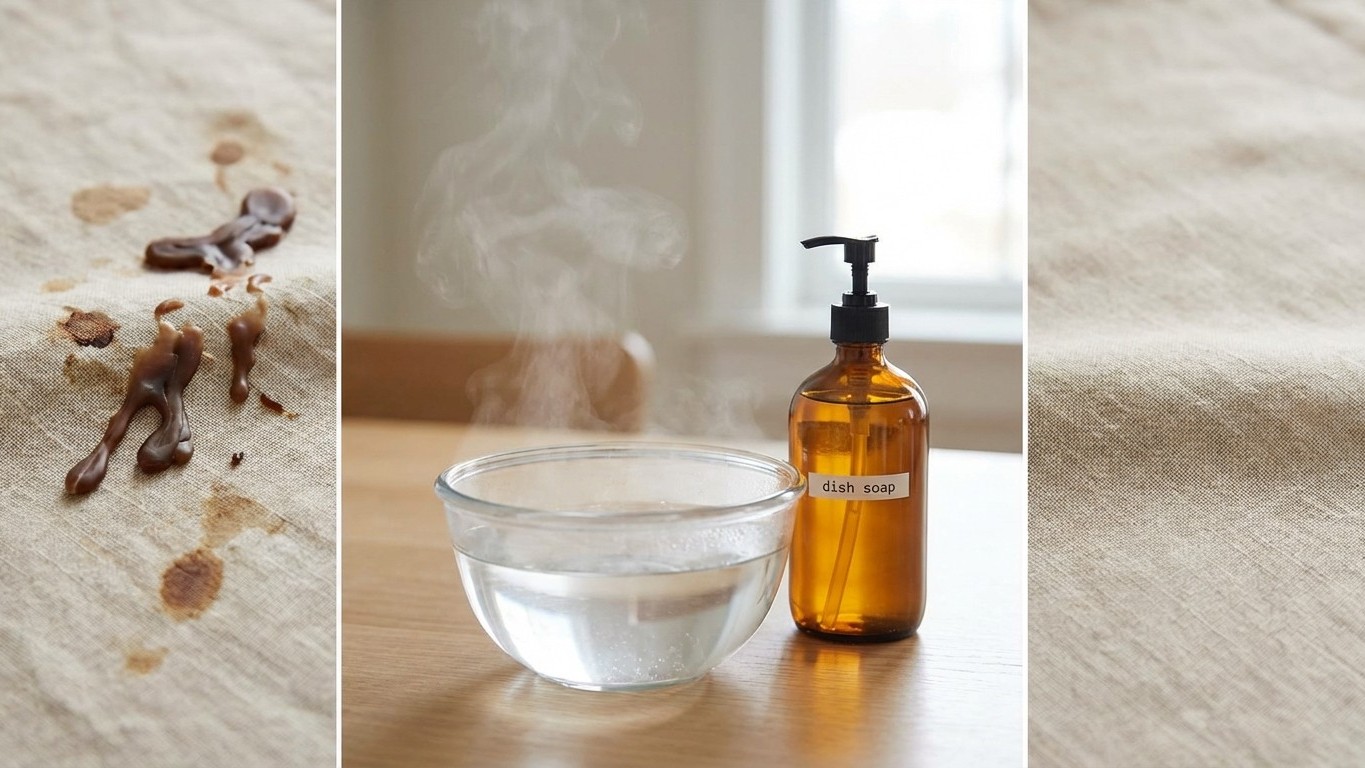
Skeptical but thorough, I moved on to what seemed like the most mundane solution: liquid dish soap mixed with hot water. This method felt almost too Simple to be effective, especially after the more elaborate techniques had only achieved partial success. The instructions were straightforward – work a small amount of liquid dish soap into the remaining stain, then rinse with very hot water.
What happened next genuinely shocked me. The combination of quality dish soap and hot water didn’t just remove the remaining wax – it completely eliminated every trace of the stain. The fabric looked-right-this-simple-rule-changes-everything”>Looked as pristine as the day I bought it, with no discoloration, residue, or texture changes. The simplicity was almost insulting to the complexity of my previous efforts.
The science behind this success makes perfect sense in hindsight. Dish soap is specifically formulated to break down oils and greasy substances, while hot water helps dissolve and flush away the loosened particles. Candle wax, being essentially a petroleum-based product, responds beautifully to this degreasing action. The method worked so effectively that I immediately tested it on a separate wax drip I’d discovered on my dining room tablecloth – with identical perfect results.
The Other Contenders: Mixed Results
For completeness, I also tested rubbing alcohol and a commercial stain remover. The rubbing alcohol showed modest promise, lightening the stain somewhat but lacking the complete removal power of the dish soap method. The commercial stain remover, despite its confident marketing claims, performed surprisingly poorly, barely outpacing the ice cube technique.
These experiments reinforced an important lesson about household solutions: sometimes the most effective remedies are hiding in plain sight, masquerading as mundane Everyday products.