
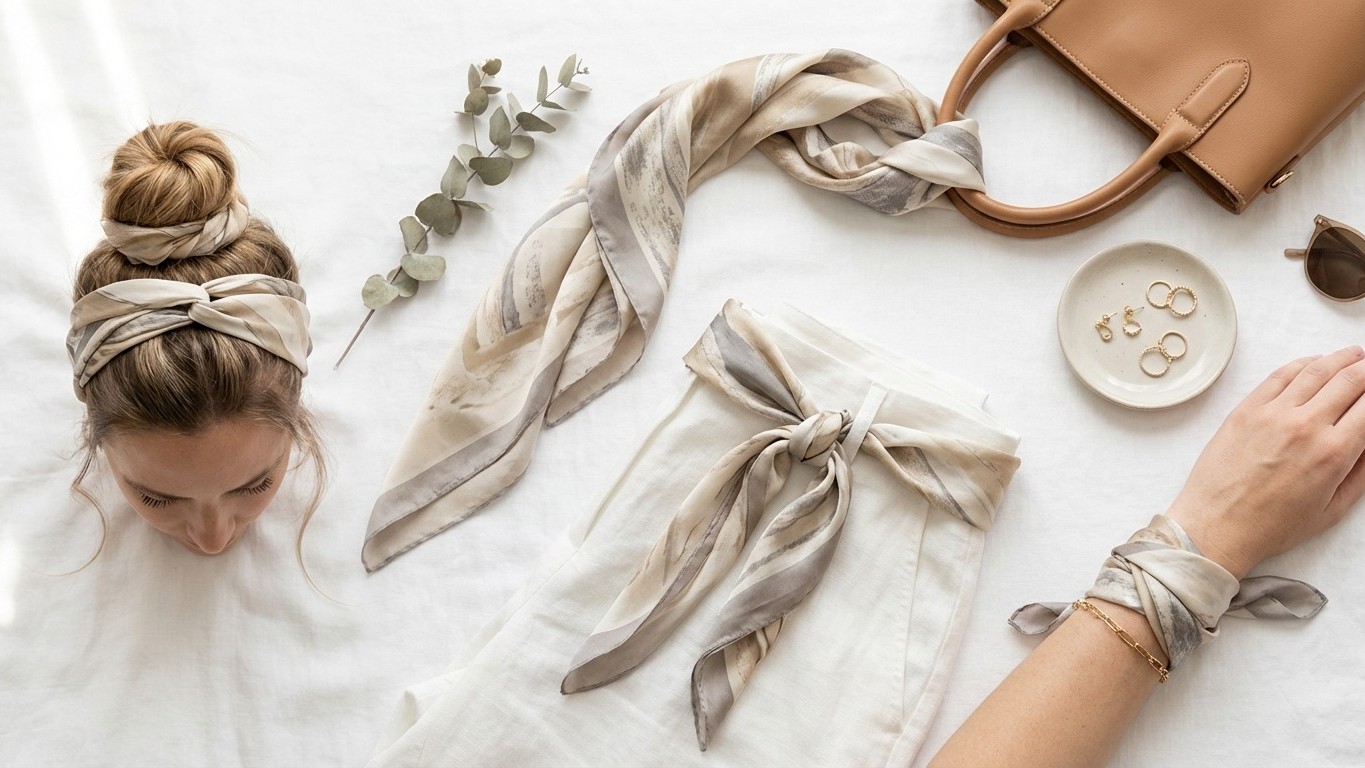
The fashion revelation hit me during a particularly expensive shopping trip when I realized I was reaching for yet another headband, belt, and bag charm. In that moment of clarity, I Simple-proportion-rule”>simple-trick-under-the-covers-the-life-changing”>Simple-trick-under-the-covers-the-life-changing”>Simple-trick-under-the-covers-the-life-changing”>Simple-trick-under-the-covers-the-life-changing”>Simple-rule-changes-everything”>Looked down at the simple silk square in my hands and wondered: what if This One piece could replace everything I was about to buy? That single question Changed My Entire approach to Accessories forever.
A classic silk scarf, measuring roughly 35 inches square, possesses an almost magical versatility that most of us vastly underestimate. While we typically think of scarves as neck accessories for chilly weather, the truth is that a well-chosen square can transform into virtually any accessory your outfit demands. The key lies not in the scarf itself, but in mastering the art of creative knotting and strategic placement.
The Hair Accessory Revolution
The first technique that completely transformed my styling routine involves turning your scarf into the ultimate hair accessory. Start by Folding your square diagonally, then continue folding until you achieve a band roughly two inches wide. This creates the perfect foundation for multiple looks. Wrap it around your head like a classic headband, positioning it just behind your hairline, and tie the ends at the nape of your neck for an effortlessly chic Parisian vibe.
But the magic doesn’t stop there. Take that same folded band and thread it through a low ponytail, wrapping it around the elastic and tying a small knot underneath. Suddenly, you’ve created a sophisticated hair tie that elevates even the simplest hairstyle. For shorter hair, try the turban twist: place the center of the folded scarf at your forehead, bring the ends back, cross them at the nape, then bring them forward and tie at the top. This technique works beautifully for protecting your hair while gardening or adding drama to an evening look.
The Belt Alternative That changes everything
Perhaps the most game-changing discovery involves using your scarf as a belt. This technique works particularly well with oversized blazers, flowy dresses, or high-waisted trousers. Take your scarf and fold it lengthwise until you achieve your desired width – typically between one to three inches works best. Thread it through your belt loops or simply wrap it around your waist, positioning it where a traditional belt would sit.
The beauty of the scarf belt lies in its adaptability. Unlike rigid leather or fabric belts, a scarf can be adjusted to create different silhouettes throughout the day. Tie it loosely for a relaxed, bohemian feel, or cinch it tightly to create an hourglass shape. The flowing ends can be left to drape naturally, tucked in for a cleaner look, or even styled to cascade asymmetrically for added visual interest.
For a more structured approach, try the chain belt effect. Fold your scarf into a narrow band and tie small knots at regular intervals along its length Before wrapping it around your waist. This creates a unique textural element that mimics expensive chain belts but with infinitely more personality.
Bag Enhancement and Neck Styling Mastery
Your handbag can be instantly elevated with strategic scarf placement. The simplest approach involves tying your scarf to the handles of your bag, but the real sophistication comes in the execution. Fold your scarf lengthwise to create a band, then wrap it around one handle, threading it through the fold to secure it. Let the ends flow naturally, or tie them in a bow for a more feminine touch. This technique works especially well with structured bags, adding softness and color to otherwise rigid silhouettes.
For a more adventurous approach, try weaving your scarf through a chain or leather strap bag. This creates an entirely new bag aesthetic and allows you to coordinate your accessory perfectly with your outfit’s color palette.
The classic neck styling shouldn’t be overlooked in this accessory revolution. The key is moving beyond the basic loop. Try the side knot technique: drape the scarf around your neck with one end significantly Longer than the other, then tie a knot at shoulder level on one side. This creates an asymmetrical focal point that draws attention upward while maintaining sophisticated elegance.
The Wrist and Ankle Game-Changers
The final frontier in scarf versatility involves the extremities. A scarf can create stunning wrist accessories that rival expensive bracelets. Fold your scarf into a thin band and wrap it multiple times around your wrist, securing with a small knot. For added texture, try braiding three thin scarf strips together before wrapping. This technique works particularly well with silk scarves, as the material’s natural sheen catches light beautifully.
Don’t overlook ankle styling, especially during warmer months when this unexpected detail can elevate simple sandals or sneakers. The same wrapping technique used for wrists translates perfectly to ankles, creating a bohemian-inspired accent that photographs beautifully and adds interest to otherwise simple footwear.
The real magic of mastering these five scarf techniques lies not just in the money saved, but in the creative freedom gained. One carefully chosen scarf in a versatile pattern and color can adapt to countless outfit combinations, travel seamlessly, and solve unexpected styling challenges. You’ll find yourself reaching for that simple square instead of cluttering your accessories drawer, proving that sometimes the most elegant solution is also the most simple.