
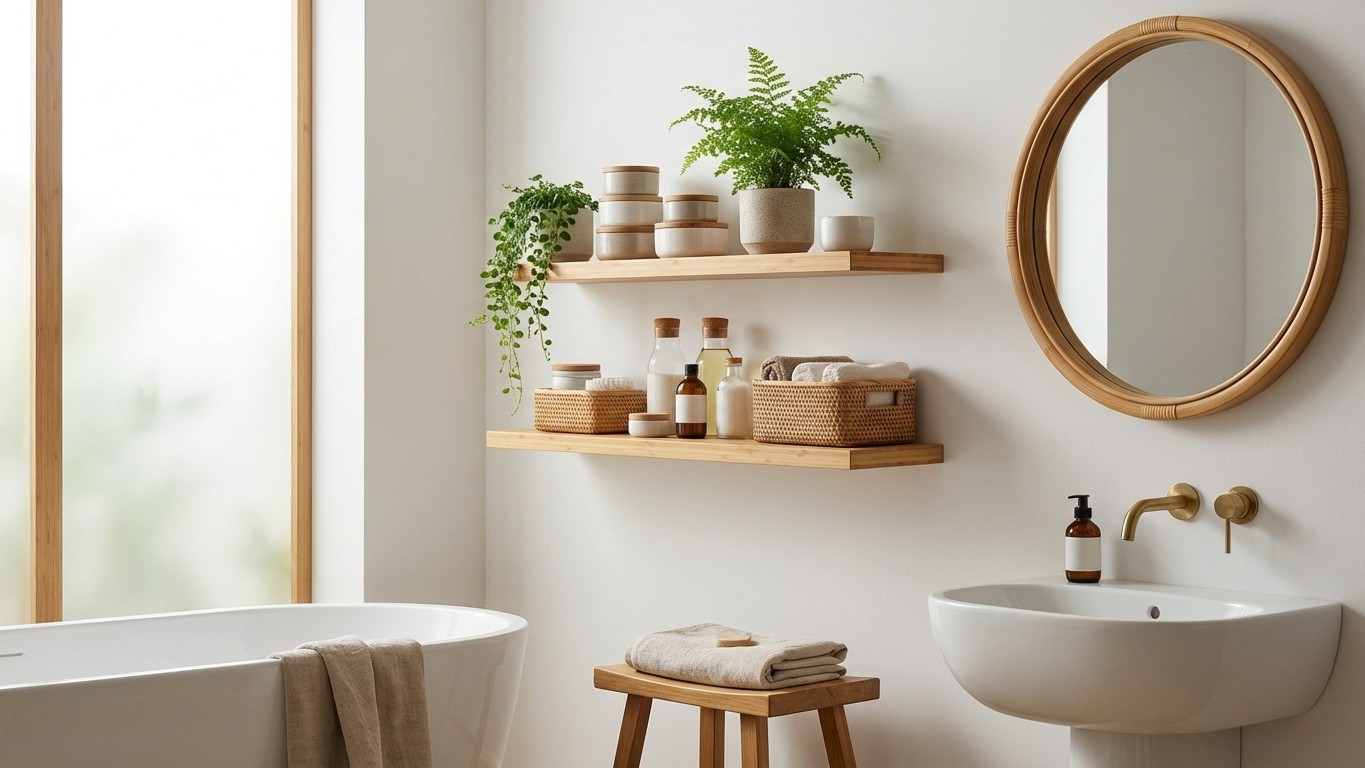
When my cramped bathroom cabinet became an avalanche waiting to happen, I discovered something revolutionary in Without-creams-or-gadgets”>Japanese-2-minute-face-massage-that-erases-under-eye-bags-without-creams-or-gadgets”>Japanese home organization that Changed everything“>everything. The concept is beautifully Simple-trick-under-the-covers-the-life-changing”>Simple-trick-under-the-covers-the-life-changing”>Simple-trick-under-the-covers-the-life-changing”>Simple-trick-under-the-covers-the-life-changing”>Simple: instead of hiding everything behind cabinet doors where items get forgotten and pile up chaotically, you create visible, purposeful storage that celebrates both function and tranquility.
This transformation began when I realized that traditional Western bathroom storage fights against our natural habits. We stuff products into dark cabinets, forget what we own, buy duplicates, and constantly battle the frustration of items falling every time we open a door. Japanese design philosophy, rooted in the principles of seiton (orderliness) and ma (the power of negative space), offers an entirely different approach that feels almost meditative in its simplicity.
The Foundation of Visible Harmony
The core principle involves replacing closed storage with open, carefully curated displays where every item has a designated place and purpose. Think floating shelves positioned at eye level, elegant wall-mounted containers, and purposeful positioning that turns everyday essentials into a serene visual composition. This isn’t about exposing clutter—it’s about conscious curation where only items you truly use earn a place in your daily environment.
The magic happens when you begin selecting containers that complement each other aesthetically. Natural materials like bamboo, warm wood tones, and simple ceramic vessels create cohesion without demanding perfection. Each morning routine becomes more intentional when you can see exactly What You have and where everything belongs, eliminating the frantic searching that used to start my days with stress.
Space multiplication occurs naturally through strategic vertical thinking. Wall-mounted corner units, behind-the-toilet shelving, and narrow vertical towers utilize previously wasted space while maintaining the clean lines essential to this aesthetic. The key insight is that when organization becomes beautiful, you naturally maintain it better, creating a positive cycle that keeps your space both functional and peaceful.
Implementing the Daily Flow System
Japanese organization emphasizes workflow over storage volume, which completely shifted how I arranged my bathroom essentials. Instead of categorizing by product type, I organized by daily routine sequence. Morning skincare essentials occupy the most accessible spots, while less frequent items live in designated zones that remain visually calm but practically accessible.
The transformation extends beyond mere placement to embracing the concept of ichigo ichie—treasuring each moment and interaction. When your bathroom storage supports your daily rituals rather than frustrating them, your entire morning routine becomes more mindful and efficient. This approach naturally reduces the tendency to accumulate products you don’t need, as the visible nature of open storage Actually-makes-you-look-younger”>Makes You conscious of what you actually use versus what simply takes up space.
Temperature and humidity considerations become more intentional with open storage, leading to better product preservation and a deeper understanding of how your space functions. Items that need protection from moisture find homes in simple covered containers, while others benefit from air circulation that closed cabinets prevented.
The Unexpected Benefits
The psychological impact proved equally valuable. The visual calm of organized, purposeful storage reduces mental clutter and decision fatigue. When everything has a place and that place makes sense within your routine, you spend less mental energy on bathroom logistics and more on enjoying your self-care rituals.
Guests consistently comment on the serene, spa-like atmosphere this organization creates, but the real victory is the daily sense of competence and tranquility. The bathroom evolved from a utilitarian space where things got shoved out of sight into a carefully composed environment that supports wellness and mindfulness.
Creating Your Own Space Revolution
Starting this transformation requires honest assessment rather than wholesale replacement of Everything you own. Begin by emptying your current storage completely and evaluating each item’s role in your actual daily routines. Items that don’t serve your current lifestyle can find new homes, while remaining essentials get thoughtful placement in your newly opened space.
The investment in proper containers and shelving pays dividends in both function and peace of mind. Quality pieces that coordinate visually and serve multiple purposes reduce overall clutter while creating the cohesive aesthetic essential to this approach. Remember that this isn’t about achieving Instagram-perfect minimalism, but about creating a system that genuinely supports your needs while bringing visual calm to your daily environment.
This Japanese-inspired approach proves that small space limitations become opportunities for creativity and intentionality. By ditching traditional hidden storage for thoughtful, open organization, you gain not just Physical-therapists-say-this-everyday-object-relieves-lower-back-pain-better-than-medication”>Physical space but also daily moments of calm in our often chaotic world.