
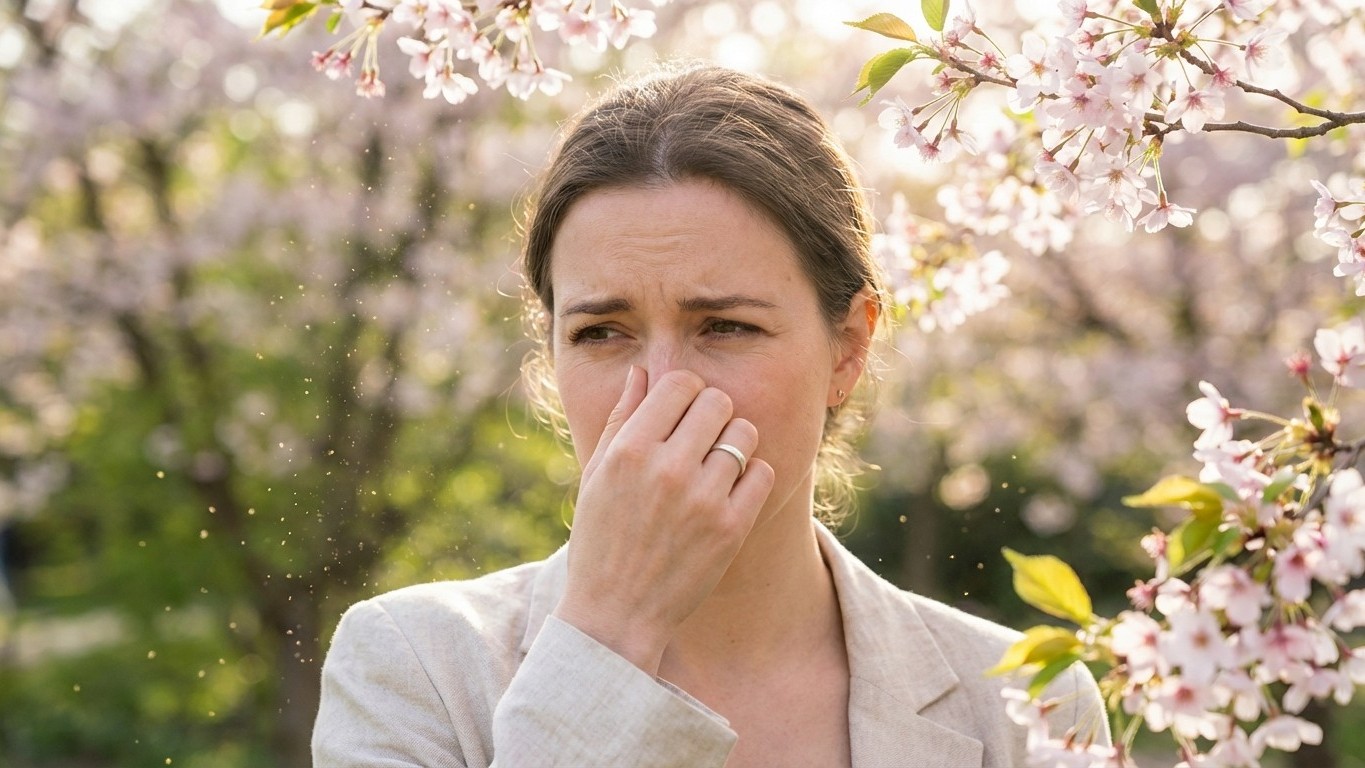
The trees gave it away. Not the calendar, not a thermometer, the trees. The moment temperatures nudge above Freezing for a few consecutive days, maples, elms, and birches begin releasing pollen into the air, and across the country, millions of people wake up with a familiar feeling: a scratchy throat, heavy eyes, that general sense of being slightly dismantled. The reflex conclusion? “Must be a cold.” Reached for the orange juice, maybe some DayQuil. Waited it out. And then waited some more.
The reality, for a significant chunk of those people, is that no cold was ever coming. Spring allergy season was already there, and it was the only culprit all along.
Key takeaways
- One specific itch doctors say gives away allergies every time, and most people completely miss it
- The subtle timing difference that separates a cold from seasonal allergies (and why it matters for treatment)
- Climate change is making spring allergy seasons longer and more intense than ever before
The Symptom That Changes Everything
One way to tell allergies apart from a cold is itchiness. “Itching, it is the number one symptom of allergy,” says Dr. Rachel Schreiber, an allergist based in Rockville, Maryland. “That could be itching in your upper airway, itching in your eyes, ears, throat, the roof of your mouth.” That last detail is the one most people miss. The roof of your mouth. If you’ve ever experienced that maddeningly specific itch on the inside of your mouth during spring — the one no amount of pressing your tongue to the palate can fix, that’s Your Immune System talking, not a rhinovirus.
One of the biggest differences between a cold and allergies is the presence of itching. If your nose, throat, or eyes are itchy or watery, you’re most likely dealing with allergies. Viruses don’t cause itching, but histamines do. That biological distinction is the whole key. Allergies happen when your immune system overreacts to harmless substances like pollen, dust, or mold. Your body mistakenly identifies these as threats and releases chemicals called histamines to attack them, and this causes the swelling, congestion, sneezing, and itchy, watery eyes you experience. The cold virus, by contrast, invades your respiratory tract and triggers a different kind of immune response, one that doesn’t produce that maddening itch.
Allergies have a significant itch factor. If you’re experiencing itchy eyes, ears, nose or throat, it’s almost certainly allergies, because the same allergens that can cause other symptoms, like sneezing and coughing, can also affect the lining of your eyes, leading to dryness, redness, itching and burning. A cold can make your eyes water. But that relentless, burning itch? That’s a different conversation entirely.
The Other Clues Your Body Is Sending
Itching may be the headline, but the body provides other evidence if you know how to read it. The speed of onset, for one, is telling. Allergy symptoms tend to appear quickly after exposure to allergens like pollen, dust mites, or pet dander, while cold symptoms develop gradually over a few days. You step outside on a windy afternoon, oaks, birch, beech, ash, cottonwood and other trees are releasing pollen into the air, and once airborne, that pollen can travel for miles. As temperatures rise and winds pick up, waves of higher pollen counts follow — and within minutes, your nose is running. That’s not how colds work.
Then there’s the fever question. If you’re running a fever, that usually points to something else. “The thing that does not happen with allergy, but does happen with infection, is fever,” Dr. Schreiber explains. You shouldn’t experience body aches and pains with allergies either : “if you have chills, it’s more likely you have a cold, the flu or another infection.” No fever, no aches, just that persistent, suffocating congestion that shows up every time you’re near a blooming tree? That’s a pollen allergy. Almost certainly.
Duration is the third pillar. Colds typically run their course within seven to ten days, while allergy symptoms can last weeks or months. If you have allergies, your symptoms will flare up at certain times throughout the year when the allergens you’re sensitive to are present. If you have a tree pollen allergy, your symptoms will first appear in the early spring, and can last for several weeks until that particular allergy season has ended. Spring allergy season is starting sooner than it used to, with March, April and May representing the peak of tree pollen season before it transitions into grass pollen season in May, June and July. That’s potentially months of what people casually dismiss as “one cold after another.”
Here’s the Counterintuitive Part
Most people assume spring allergies are a kind of minor seasonal inconvenience, something you just push through with some tissues and a stoic attitude. The numbers say otherwise. Up to 60 million Americans brace for the parade of annual miseries: stuffy nose, sniffling, sneezing, coughing and itchy, runny eyes that may grind on for weeks or even months as grass, trees and weeds roar back to life. That is not a minor inconvenience. That is a massive, recurring, chronically misdiagnosed health condition hiding in plain sight.
And 2026 isn’t offering anyone a break. As longer days and more sunshine signal the arrival of spring, rising temperatures bring tree pollen, one of the earliest and most common triggers of spring allergy symptoms. Doctors are already sounding the alarm: “Runny eyes, sneezing, a stuffy nose — for many people, those symptoms are all too familiar once pollen hits the air,” and experts at Richmond Allergy and Asthma Specialists are warning this could be “a very bad allergy season.” What’s driving it? In California, allergy season is sticking around longer each year, as shifting climate patterns and breezy weather mean pollen from grasses, trees and weeds travels farther and lingers longer. A warmer winter means less frost to knock out dormant allergens, and a faster, more intense spring surge.
What to Actually Do About It
Knowing it’s an allergy, not a cold, matters because the treatment path is completely different. Dr. Schreiber recommends getting on allergy medications immediately, because “what Happens with the body is when you start to have an allergic reaction, your body is actually primed from the year before.” Your immune system, already has its alarm bells calibrated from last season. Don’t wait for symptoms to get unbearable before acting.
Antihistamines block histamine production and reduce symptoms over time, and they work best when taken consistently, not just when symptoms flare. Pair that with a nasal steroid spray to target inflammation at the source, and you’ve got the basic toolkit most allergists recommend. Beyond medication, showering and changing clothes after being outside to rinse away pollen, keeping windows closed and relying on air conditioning, and using saline nasal rinses to flush allergens from nasal passages are practical daily moves that add up. Timing matters outdoors too — pollen levels are high early in the morning, evening is better, and pollen levels drop the day after it rains.
If over-the-counter options aren’t cutting it, for those seeking more lasting symptom control, allergen immunotherapy might be an option, available as allergy shots or tablets, immunotherapy works by gradually training the immune system to tolerate allergens. It’s the long game, but for chronic sufferers, it can be genuinely life-changing.
The deeper question worth sitting with: how many “bad cold seasons” in your past were actually your immune system staging an annual protest against spring? Because if itchy eyes and an itchy palate show up every March like clockwork, that’s not bad luck. That’s your body, speaking very clearly, every single year. The only question is whether you’re finally ready to listen.