
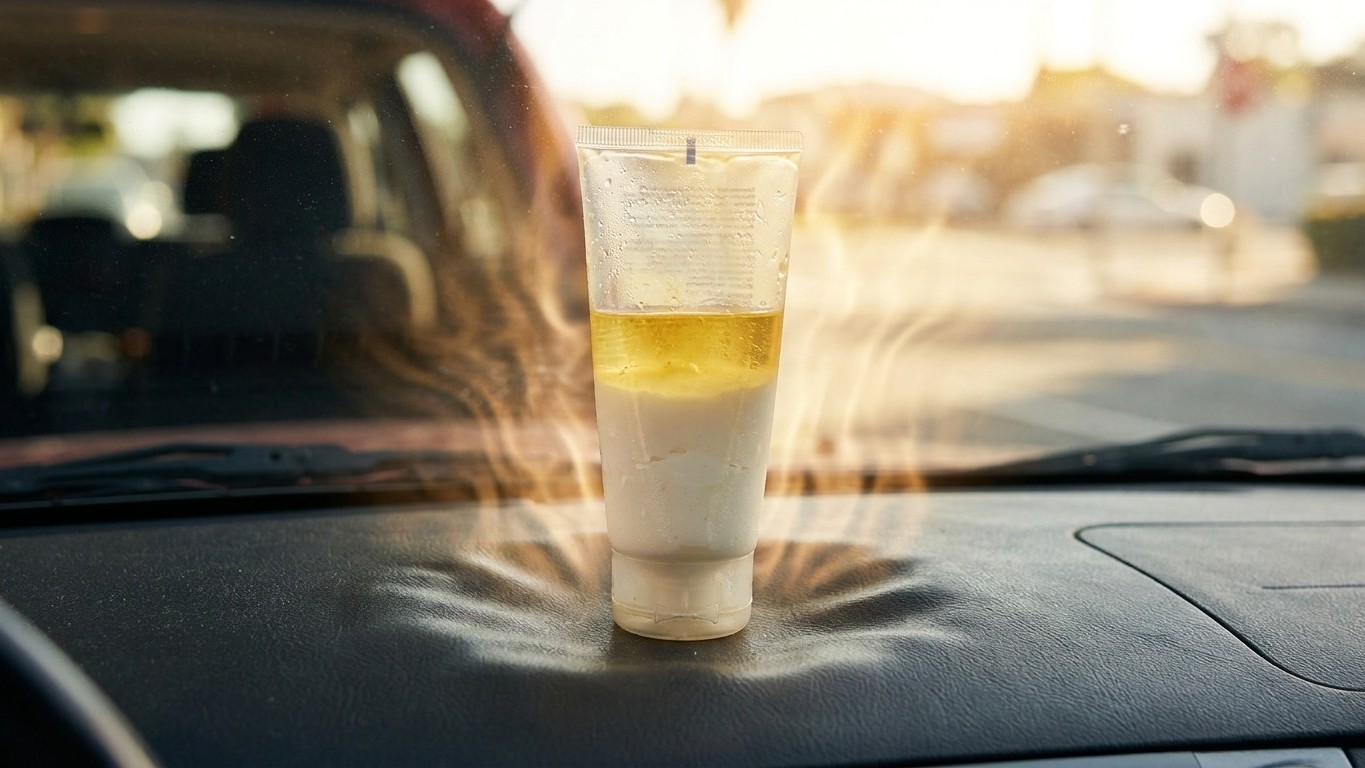
Skin cancer is the most common cancer in the United States, more cases are diagnosed each year than all other cancers combined. And yet, millions of Americans are heading into warm weather with a bottle of SPF that stopped protecting them somewhere between last Fourth of July and the back of a beach bag left in a hot car. The false security is perhaps the biggest issue here. You applied something. You feel covered. You’re not.
Key takeaways
- Sunscreen ingredients break down in heat far faster than the 3-year expiration date suggests
- Old sunscreen creates false confidence, making you stay in the sun longer without real protection
- Chemical filters like avobenzone can lose more than half their SPF effectiveness after expiration
Three Years on Paper. Much Less in Real Life.
Sunscreen does expire, but it has a long shelf life. According to the FDA, sunscreens must maintain their SPF and broad-spectrum protection for three years. That sounds reassuring. But the three-year clock starts at manufacture, not at purchase, and it assumes proper storage, which is where most of us quietly fail.
“Any ingredient in a personal care product, even inactive ones, like emulsifiers and preservatives, can degrade over time,” with this degradation “often accelerated by suboptimal storage conditions, so storing sunscreen in a hot car may make it ineffective even before its expiration date.” That bottle wedged under your car seat since last August? Functionally, it may already be expired.
Chemical filters like avobenzone and octinoxate are particularly susceptible. Studies show these ingredients can lose significant protective capacity within 12–24 months, especially if stored in hot conditions. And avobenzone, the main UVA-blocking filter in most American chemical sunscreens, is unstable by nature and can break down under sun exposure, losing its effectiveness over time. It’s an irony worth sitting with: the ingredient protecting you from the sun degrades when exposed to sunlight.
The numbers can be stark. Expired sunscreens often provide far less protection than labeled SPF values suggest. Studies show that after expiration, SPF values can drop by more than half, with protection against UVA rays diminishing unpredictably, meaning relying on an expired SPF 50 could be as ineffective as using no sunscreen at all under strong sun exposure conditions.
The Problem Isn’t Just Expiration : It’s False Confidence
Here’s the counter-intuitive part: applying old sunscreen might actually be worse than not applying any at all, psychologically speaking. Using degraded sunscreen isn’t just ineffective, it gives you false confidence. You think you’re protected, so you stay out longer or skip other protection measures. That extra hour on the patio, the skipped reapplication, the uncovered shoulders — none of it would have happened if you’d known you were unprotected.
Sunscreen does lose its effectiveness over time, and dermatologists stress the need to respect the expiration date. One skin cancer specialist has seen numerous sunburns on patients who realized too late that their sunscreen was expired. Sunburns, as a reminder, are not just an afternoon inconvenience. Each one accumulates.
Beyond degraded SPF, there’s another dimension most people overlook: expired sunscreen may contain ingredients that have broken down or become unstable, potentially causing skin irritation or allergic reactions. If you notice any unusual reactions or skin sensitivity after applying sunscreen, it’s best to discontinue its use and consult a dermatologist. Your face developing a mystery rash mid-July is not a great trade-off.
How to Actually Tell If Your Bottle Is Still Good
The expiration date, frustratingly, isn’t always easy to find. The FDA doesn’t require manufacturers to date their products, and even when there is a date, it’s not always easy to spot. On sunscreen tubes, check the crimped part at the top or the side or bottom of a bottle for an embossed date. Some packaging carries a small open-jar symbol, this number indicates the product’s shelf life after opening. For example, if you see “12M,” it means the sunscreen is good for 12 months after opening it.
No date anywhere? Use the sniff-and-squirt test. Regardless of the sunscreen’s expiration or purchase date, toss it if the contents have separated, changed color, look watery, or have a funny smell. These are all signs of spoilage. Expired chemical sunscreens tend to degrade to a dingy yellow color, looking more like Dijonaise than the ivory white lotion you remember buying. Not exactly an appetizing sign.
Storage matters enormously and deserves more attention than most skincare routines give it. Exposing your sunscreen to heat can cause the formula to separate and become ineffective, so avoid leaving it in the car on hot days. Keep sunscreen in a cool, dark place, a bathroom cabinet works, a beach bag in the trunk does not. A container stored in your bathroom cabinet is fine. One in your beach bag in the trunk of your car probably isn’t.
Mineral vs. Chemical: Not All Bottles Age the Same Way
There’s a meaningful difference between how mineral and chemical formulas hold up over time. Physical sunscreens have a longer shelf life and are more stable compared to chemical sunscreens. This is because zinc oxide is a stable inert ingredient that does not degrade under sunlight or release free radicals. Chemical filters, by contrast, are built around molecular reactions, reactions that, given enough heat and time, simply run out of steam.
That said, expired sunscreen is still better than no sunscreen. If your sunscreen is slightly past its expiration date but looks, smells, and feels the same, it may still be usable, especially if it’s a physical sunblock containing zinc oxide or titanium dioxide, as these active ingredients are photostable and don’t change molecular structure easily.
Current data finds that only 12% of U.S. adults report wearing sunscreen daily, while more than one-quarter (28%) say they do not wear sunscreen at all. Against that backdrop, haggling over whether a slightly-past-date mineral formula still works seems like a secondary problem. The primary one is getting people to use sunscreen consistently at all. “Realistically, if you’re using sunscreen every day, the way it’s directed, each bottle shouldn’t last you more than a few weeks or a couple of months,” notes one Cleveland Clinic dermatologist, which puts the expiration debate in an unexpected light. If your bottle has been sitting untouched since last summer, the question isn’t just whether it expired. It’s why you didn’t use it up.
Sources : skincancer.org | aad.org