
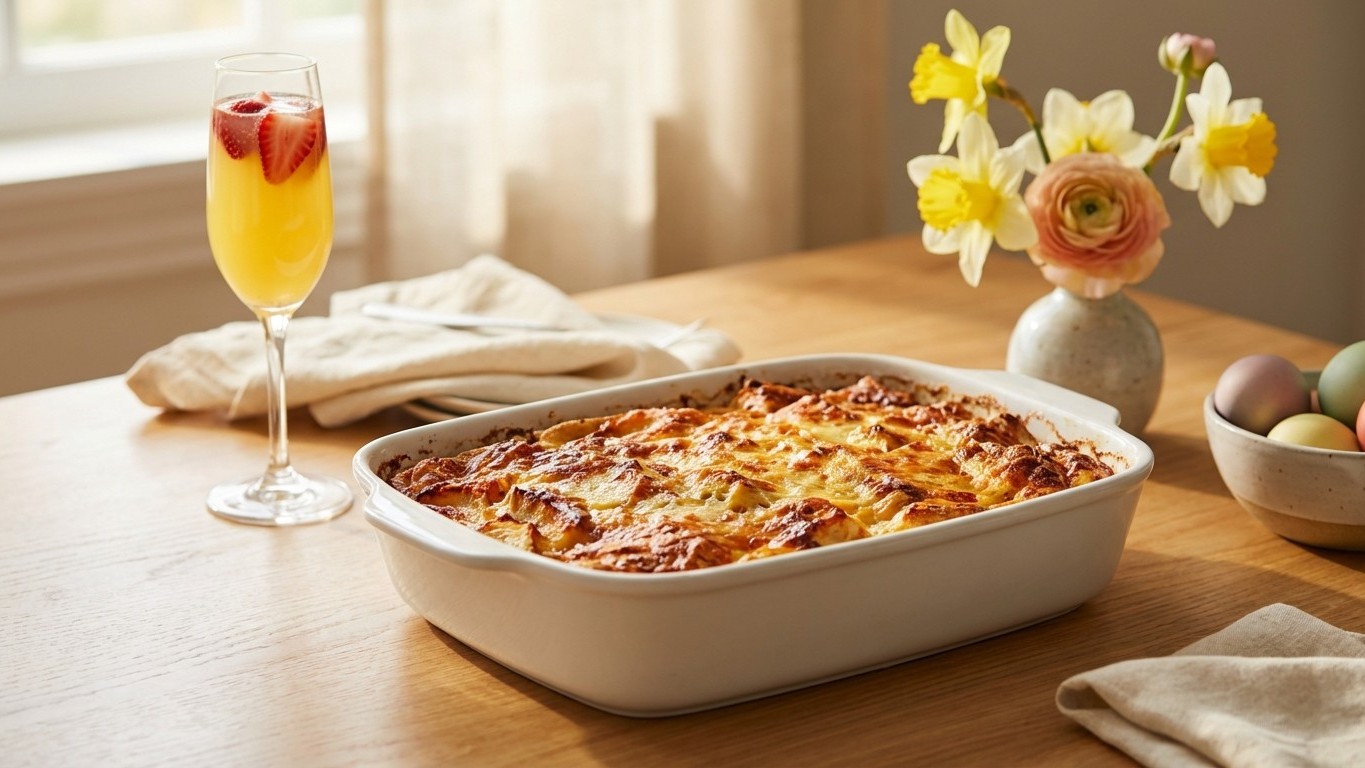
The smell of something savory baking low and slow, the clink of champagne flutes being arranged on a linen-Covered table, the first soft light of a spring morning filtering through the kitchen window. Easter brunch hits differently when it’s actually planned, when you’re not scrambling for eggs (the literal kind) at 9am while guests are already at the door.
The secret that seasoned hosts quietly know? The whole thing works on make-ahead logic. If you’re still cooking while people arrive, you’ve already lost the morning. Casseroles and cold-bar setups exist precisely to liberate you from the stove, and Easter is the perfect excuse to lean fully into this approach.
Key takeaways
- What separates a soggy casserole disaster from an impressive centerpiece—and why timing matters more than ingredients
- A mimosa bar strategy that goes beyond juice and Prosecco to make non-drinkers feel genuinely celebrated
- The exact Saturday-to-Sunday timeline that buys you back an entire calm hour before guests arrive
The Make-Ahead Casserole Strategy That Actually Works
A good brunch casserole is basically a promise you make to your Saturday-night self: assemble tonight, sleep soundly, reheat tomorrow. The concept is simple, but the execution has a few non-negotiable rules that separate a soggy disappointment from something genuinely impressive.
Bread-based egg casseroles (think strata-style dishes layered with brioche or sourdough, eggs, cheese and mix-ins) need at least eight hours in the refrigerator before baking. This isn’t optional, the bread has to fully absorb the custard, otherwise the texture splits between dry chunks and wet pockets. Assemble yours Saturday evening, cover tightly with plastic wrap, and let the fridge do the heavy lifting overnight. Sunday morning, it goes straight into a cold oven that you then bring up to temperature, which prevents the edges from overcooking before the center sets. Pull it around 350°F for 45 to 55 minutes, Covered the first half, uncovered the second for a golden top.
For the filling, this is where you can genuinely impress without trying hard. A combination of caramelized leeks and smoked Gruyère is the kind of thing that makes people ask for the recipe when it’s actually a 20-minute prep. Spinach, artichoke and feta reads as fancy; sausage, sharp cheddar and roasted red pepper reads as crowd-pleasing. Both are correct answers. The point is to commit to a flavor direction rather than throwing everything in.
A second casserole slot, one sweet, one savory, is a move I genuinely endorse for groups of eight or more. A French toast bake made with challah, orange zest, cinnamon and a brown sugar pecan topping satisfies the dessert-for-breakfast crowd Without requiring you to stand over a griddle. It also reheats beautifully, which matters when timing is never quite as coordinated as you’d planned.
The Supporting Cast: What Else Goes on the Table
Casseroles are the anchor, but the surrounding spread is what makes a brunch feel generous rather than just filling. A simple roasted asparagus with lemon and flaky salt takes about 12 minutes in a hot oven and can be served at room temperature, no reheating drama. A fruit platter built around whatever is actually good in mid-spring (strawberries, blood oranges if you can still find them, honeydew) adds color without effort.
One thing worth reconsidering: the idea that you need a protein centerpiece beyond your casserole. A beautiful ham looks dramatic but tends to dominate both the table space and your Saturday afternoon. A smoked salmon board, by contrast, requires zero cooking, just good sourcing, a handful of accoutrements (capers, thinly sliced red onion, cream cheese, cucumbers, dill) and a pretty surface to arrange it on. Done in fifteen minutes, and it photographs beautifully, which your guests will appreciate whether they admit it or not.
Building a Mimosa Bar That Earns Its Space
The mimosa bar has become something of a brunch cliché, which is exactly why it needs a slightly elevated approach to stay interesting. The baseline (one bottle of Prosecco, one carton of orange juice) is fine for a Tuesday. Easter deserves a little more intention.
Set up a dedicated station with at least three juice options: classic orange, fresh grapefruit, and something like pomegranate or passion fruit for color contrast. Pre-chill everything. Cold juice into warm sparkling wine is a small crime. The sparkling wine itself doesn’t need to be expensive, a good Cava or domestic brut sparkler is absolutely the right call here — but it should be properly cold, opened fresh in small batches rather than left to go flat in a single open bottle.
The detail that actually elevates the setup: small add-ins that guests can customize. A bowl of fresh raspberries or sliced strawberries to drop into the glass. A tiny pitcher of elderflower liqueur for those who want something a little more floral. A few sprigs of fresh mint. These additions cost almost nothing but transform the bar from a self-serve drink station into something that feels considered.
For non-drinkers (and there are always more than you’d expect), a sparkling water option with the same juice selection and fruit add-ins means nobody is standing there with a sad cup of tap water. A homemade lavender simple syrup stirred into sparkling water with a squeeze of lemon is the kind of thing that makes non-drinking guests feel genuinely catered to rather than accommodated.
One practical note on glassware: champagne flutes look elegant but they’re awkward to hold during a buffet-style brunch where people are also carrying plates. Wide-mouthed wine glasses or even stemless options are far more functional and, honestly, more relaxed in a way that fits the spirit of the day.
The Timeline That Keeps Sunday Morning Calm
Saturday evening: assemble both casseroles, prep the salmon board components (keep them separate, assemble Sunday morning), make the simple syrup if using, set the mimosa station up minus the ice and bottles.
Sunday morning, two hours before guests arrive: casseroles go in the oven, asparagus is trimmed and ready on a sheet pan, fruit is cut, salmon board gets assembled, bar gets the ice, bottles and juice.
Thirty minutes before arrival: casseroles rest covered with foil (they hold beautifully for up to 30 minutes), asparagus goes in, you change out of the clothes you’ve been cooking in.
The table is set. The glasses are lined up. The kitchen smells like butter and something sweet with cinnamon. Whether Easter brunch for you means a small family gathering or twenty people sprawling through the living room, the question worth sitting with is this: what would you actually do with that extra hour you just bought yourself?