
A foundation sponge that has gone a week without a wash can hold more bacteria than a toilet seat. That comparison comes from a widely cited 2021 study of beauty sponges, which found most of the ones in regular use were contaminated with E. coli, staph and other organisms. Brushes fare better, but not by much.
Here is the schedule dermatologists and Professional makeup artists keep returning to, followed by the part almost everyone gets wrong: drying.
- Foundation, concealer and cream-blush brushes need washing weekly, or every two uses for acne-prone skin.
- Powder brushes can go two to three weeks between washes.
- Brushes must be dried flat or bristle-down, never upright in water, to protect the glue in the ferrule.
- Sponges should be rinsed after every use, washed with soap weekly, and replaced every one to three months.
The schedule, by brush type
Frequency depends on what a brush touches. Liquids and creams feed bacteria and trap pigment in the bristles, while powders are far more forgiving.
Foundation, concealer and cream-blush brushes come first. Wash them weekly, or every two uses if your skin is acne-prone.
That sounds excessive. It isn’t.
A foundation brush picks up sebum, sweat, dead skin cells and product, then presses the mix back into your face each morning. Warm, damp and nutrient-rich, it is exactly the environment microbes like. Brushes used near the eyes, like lip brushes and anything dipped in gel liner, belong in the same weekly category, since the eye area is where an infection does the most harm.
Powder brushes (blush, bronzer, setting powder, highlighter) can go two weeks, three at the outside if you use them only a few times a week. Dry product is less hospitable to bacteria, though it still builds up and turns blending into a muddy affair.
Eyeshadow brushes sit in the middle. Fluffy blending brushes can wait two weeks, while the dense ones you use with cream shadow or to pack on glitter deserve a weekly rinse.
Sponges follow different rules entirely. Rinse after every use and wash with soap weekly, and replace them every one to three months, sooner if they crumble or hold a stain.
Spot-cleaning versus the full wash
Between deep washes, a quick spot-clean extends the life of a brush. A spritz of isopropyl alcohol or a dedicated brush cleaner, wiped on a clean paper towel, removes surface product in seconds.
Alcohol evaporates fast, which is the point. It is also drying, so it is a stopgap and not a substitute for soap, and repeated use will make natural bristles brittle.
For the full wash, a gentle shampoo does the job (baby shampoo is a longtime favorite among artists), as does a mild dish soap for heavy foundation buildup. A drop of olive oil first helps dissolve stubborn waterproof formulas. Then comes the technique, which matters more than the product.
Run lukewarm water over the bristles, pointing downward. Swirl the brush in your palm or on a silicone mat with a little cleanser, rinse until the water runs clear, and gently squeeze out the excess with a towel.
Never let water reach the ferrule, the metal band holding the bristles. Water that seeps in dissolves the glue, and the brush starts shedding within a few months. Franchement, this is the most common way people destroy a good brush, and they do it while trying to take care of it.
Drying is where brushes die
Lay them flat. That is the whole rule, and it is routinely ignored.
Standing a wet brush upright in a cup sends water down into the ferrule, which loosens the glue and breeds mildew at the base of the bristles, out of sight. Hanging brushes bristle-down, with the handle clipped above, is the Professional version of the same logic: gravity pulls water away from the glue instead of toward it.
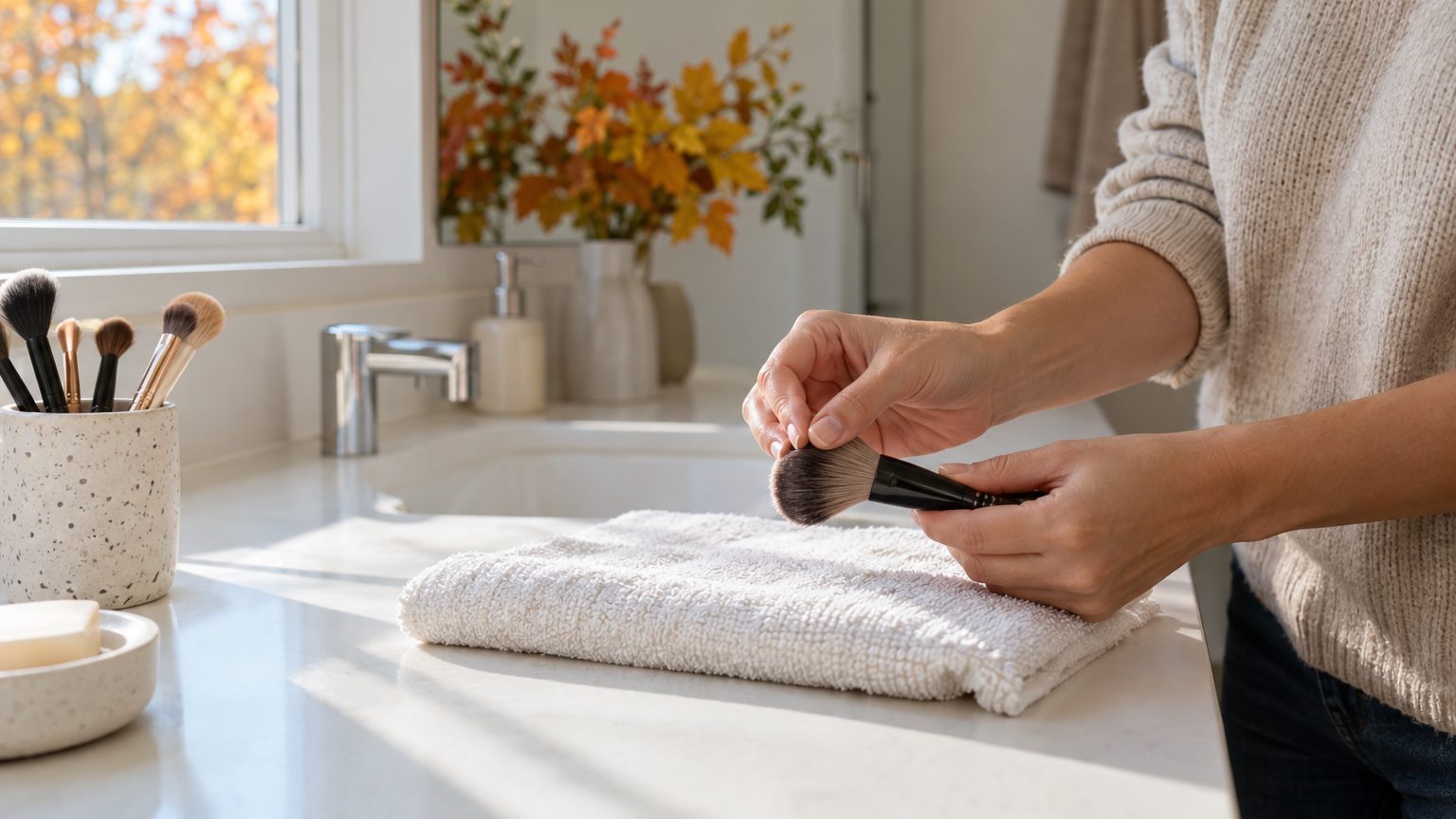
The simplest setup costs nothing. Set a towel on the counter and hang the brush head slightly over the edge of the counter, so the bristles stay in open air and keep their shape. Reshape the head with your fingers first, since bristles dry in whatever position you leave them.
Allow at least eight hours, and a full day for dense foundation brushes. Damp bristles used too early are worse than dirty ones.
Skip the hair dryer. Heat melts the adhesive and frizzes synthetic fibers, which is a quick way to turn a good brush into an expensive dust mop.
Plan the wash around your schedule. Sunday evening works well, because brushes are dry by Monday morning and you are never forced to reach for a damp one.
When washing is not enough
Even well-kept brushes have a lifespan. Bristles that stay splayed after drying, shed in handfuls, or smell musty after a wash have reached the end, and it is time to replace them.
Natural-hair brushes tend to outlast synthetics if treated gently, since the cuticle of the hair holds up well, but they dislike harsh detergents. Synthetic brushes handle frequent washing better and are less prone to harboring bacteria, a point in their favor for liquid products.
Skin matters too. If you have active breakouts, eczema or a recent infection, wash more often than any chart suggests. Some dermatologists advise setting aside a separate set of brushes while a flare-up is healing.
One last detail that surprises people: brushes stored in a closed makeup bag or drawer stay damp longer and gather more bacteria than those kept in an open, airy spot. Keep a small cup on the vanity, bristles up, once everything is fully dry.