
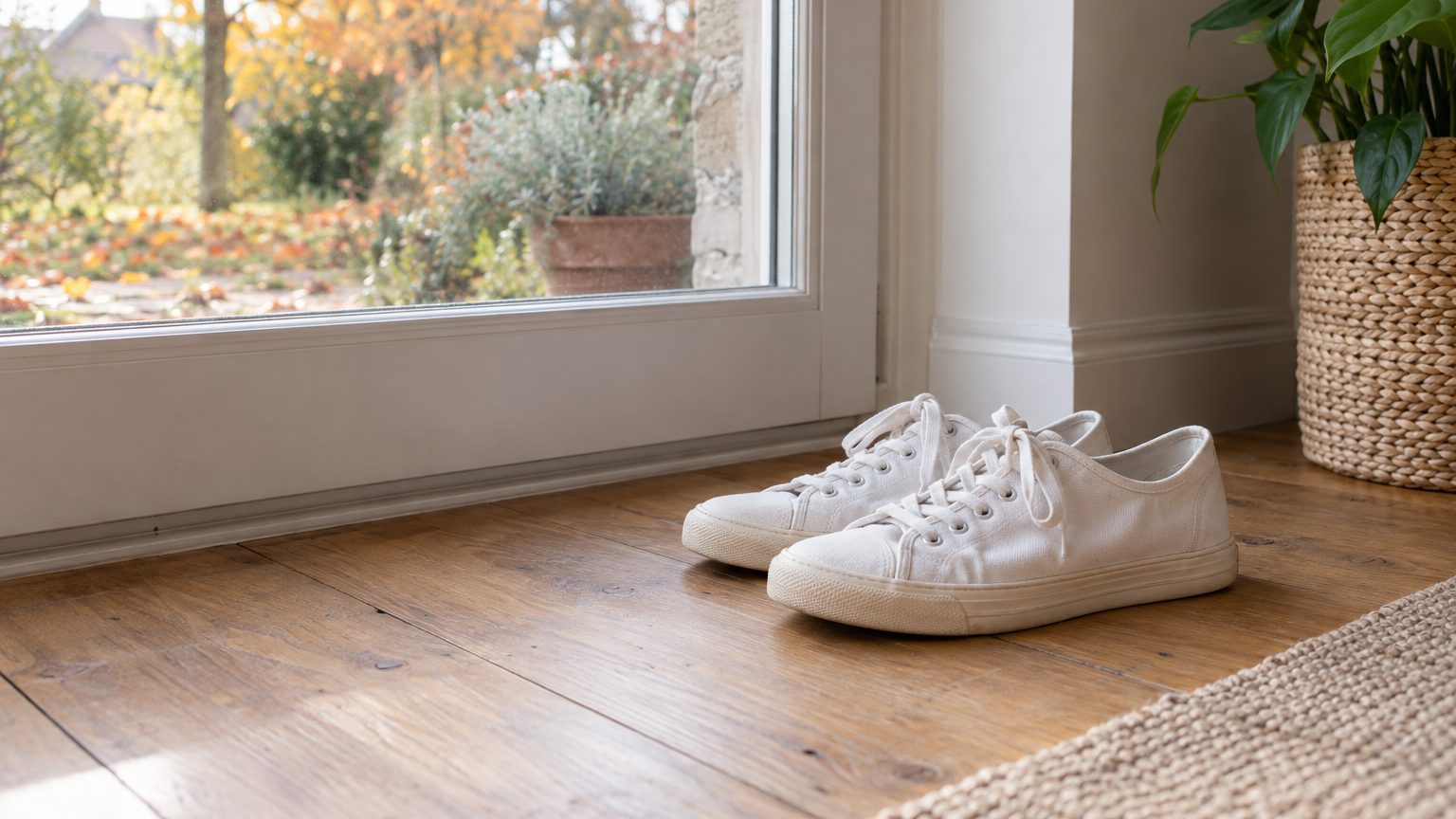
A cream-colored halo creeps along the midsole, the canvas takes on a faint tea tint, and the toe box looks older than the rest of the shoe. The culprit is rarely dirt that survived the wash. It is almost always something the wash left behind, or something the drying added.
Cleaning sneakers is a chemistry experiment nobody signed up for.
- Detergent residue trapped in fabric and foam oxidizes into a dull tan film as it dries.
- Polyurethane midsoles yellow under UV light and oxygen, even on a sunny balcony.
- Chlorine bleach can turn nylon and foam yellow rather than white, so it should be avoided.
What the rinse cycle leaves behind
Detergent is built to cling to fibers, and a sneaker is a far thicker sponge than a T-shirt. Canvas, mesh, foam padding and glued layers all trap soap that a standard cycle, calibrated for towels and jeans, never fully flushes out. As the shoe dries, that film oxidizes and turns a dull tan, and because it stays slightly tacky it grabs fresh dirt with every wear. A generous scoop of detergent, the most common instinct, makes the problem worse.
Water chemistry adds its own layer. In hard water regions, which cover a large share of the United States, dissolved iron and manganese can deposit on pale fabric and leave a rusty, yellow-beige cast that no amount of scrubbing lifts. Fabric softener is another quiet offender, since it coats fibers on purpose.
Chlorine bleach is the one shortcut to skip entirely. On nylon, spandex-blend knits and some foams, it can turn the material yellow rather than white, and it weakens adhesives. Several major shoe manufacturers advise against it in their care guides.
Rinse, then rinse again, then rinse a third time.
For hand washing, remove laces and insoles, use cool water, a soft brush and a small amount of mild liquid detergent, about a teaspoon. In the machine, use a mesh bag, a cold delicate cycle and an extra rinse if the washer allows it. The goal is less soap, more water.
The sun myth, and what heat really does
Everyone’s grandmother swore by drying whites in the sun, and for cotton laces and plain canvas she was right, since UV light and oxygen have a mild bleaching effect on those fibers. The midsole is another story. Most are polyurethane or EVA foam, and polyurethane in particular yellows when exposed to UV light and oxygen, the same way an old plastic appliance goes ivory on a windowsill. Franchement, parking a pair of white sneakers on a sunny balcony is a bet that the canvas will win and the foam will lose.
Heat is the other accomplice, and the dryer is its favorite hideout.
A tumble dryer or a radiator speeds up oxidation, softens the glue holding the sole to the upper and can warp the foam. Slow, damp drying brings a different flaw. Moisture travels outward from the inner layers (insole, lining, any dirt trapped inside) and deposits it at the surface as it evaporates, leaving a tide line that looks exactly like yellowing. Stuffing the shoes with plain white paper towels or a clean white cloth pulls that moisture inward, and swapping the material once or twice during drying helps. Newspaper is a bad idea, because the ink transfers.
There is a third cause that has nothing to do with washing at all. Textile chemists call it phenolic yellowing: a common antioxidant additive in rubber and foam reacts with nitrogen oxides in the air, sometimes in cardboard boxes or plastic bags, and stains white material a pale yellow. It can happen in a dark closet.
Getting the white back
For fabric uppers, an oxygen-based whitening soak (the kind sold for laundry, not chlorine) in cool to lukewarm water for a few hours often does most of the work. A paste of baking soda and a little water, worked in with a soft brush, handles localized dinginess and water stains. Rinse thoroughly afterward, because a leftover paste becomes the next residue problem.
Rubber and foam midsoles respond to mechanical cleaning better than chemistry. A damp melamine sponge lifts scuffs and surface grime in seconds, and it often reads as “whiter” because the dirt, not the material, was the issue. The popular DIY method, hydrogen peroxide cream plus UV light, does bleach some yellowing, but results can be patchy, and it can speed up the next round of oxidation. Treat it as a last resort on shoes you can afford to experiment on.
Never mix peroxide with vinegar, since the combination forms a corrosive acid.
A routine that keeps the problem from starting
The cleanest white sneakers usually belong to people who wash them least. Brushing off dry dirt after wearing, spot cleaning with a damp microfiber cloth and mild soap, and saving full washes for when they are truly needed keeps the soap-and-water cycle to a minimum. A fabric protector spray applied to clean, dry uppers reduces how much dirt sticks in the first place.
Dry them in the shade, in a ventilated room, with a fan nearby if the weather is humid. For storage, leave them out of sealed plastic bags and avoid cardboard shoeboxes for long periods, and tuck in a few silica gel packets to keep moisture and fumes in check. Rotating pairs also helps, since foam needs a day to rebound and release the moisture it absorbed.
One last distinction is worth knowing. Yellowing on a polyurethane midsole is mostly cosmetic, but the same chemistry, hydrolysis in humid storage, can make the foam brittle, crumbly or sticky after several years. If the midsole feels chalky or cracks under your thumb, no whitening trick will help, and the shoe is no longer safe to walk in.