
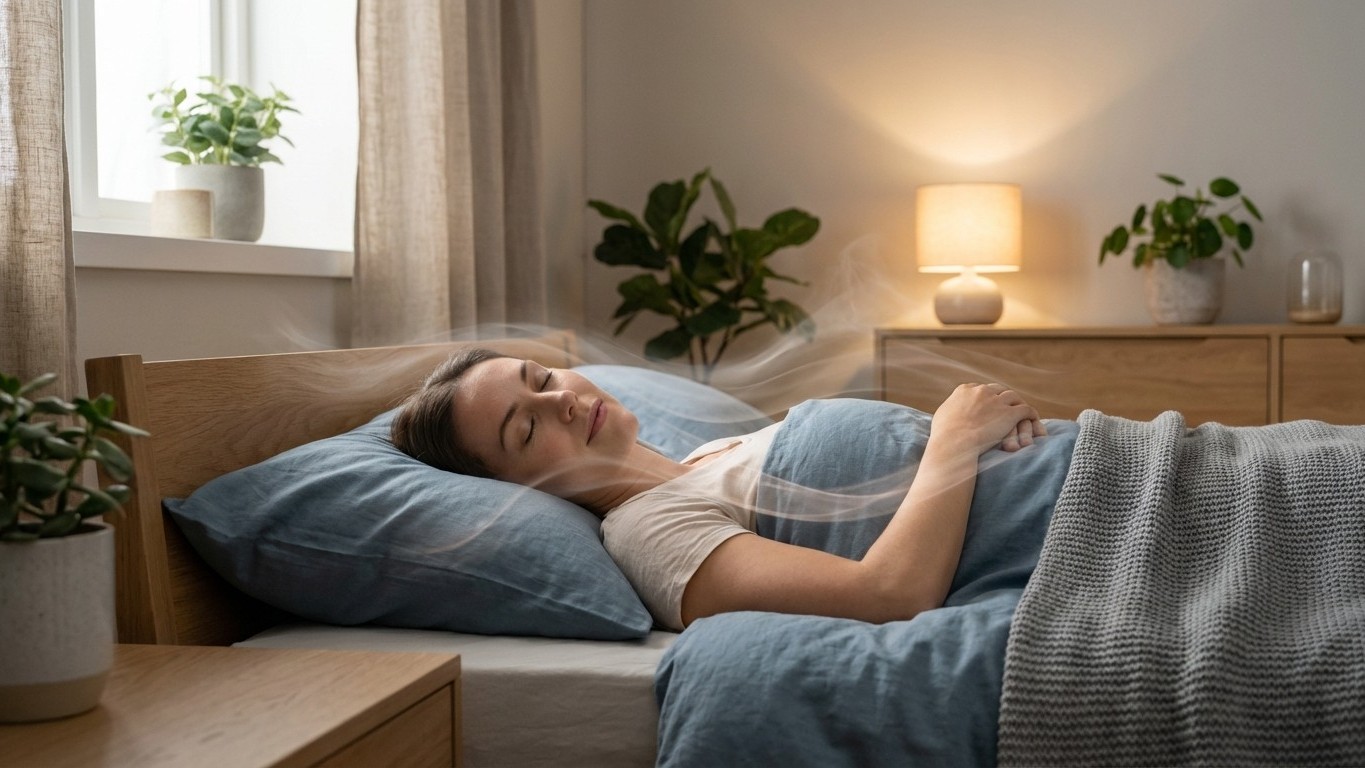
Imagine slipping under your covers and drifting off to sleep within 10 minutes, night after night. One in 3 People in the United States experience sleep deprivation, yet some have discovered a remarkably simple technique that transforms their bedtime routine. This isn’t about expensive gadgets or complex meditation practices—it’s a breathing Method so effective that it was originally developed during World War II and helped U.S. Navy preflight school airmen Fall Asleep in 120 seconds with supposedly a 96% success rate.
The technique gaining widespread attention is known as the 4-7-8 breathing method, and its simplicity is deceptive. The 4-7-8 breathing technique is a style of intentional breathwork that can calm your mind and body, popularized in 2015 by integrative medicine specialist Andrew Weil, MD, though it has ancient roots in the yogic practice of pranayama. What makes this method particularly powerful for sleep is its ability to activate your parasympathetic nervous system—essentially switching your body from alert mode to rest mode.
The Science Behind the 10-Minute Sleep Revolution
Research Actually-solid”>Reveals why this breathing pattern is so effective for rapid sleep onset. In a laboratory study of 43 healthy young adults, participants performed three sets of the 4-7-8 breathing method (six cycles per set), and immediately after the exercise, heart rate and systolic blood pressure decreased and high-frequency heart rate variability increased, showing rapid autonomic calming effects. This physiological response is exactly what Your Body needs to transition into sleep.
The technique works by flooding your body with oxygen while simultaneously triggering a relaxation response. Calming your mind and reducing your anxiety can go a long way toward a good night’s sleep, and 4-7-8 breathing is associated with both, and it’s also been shown to decrease heart rate and blood pressure, which put your body in the right state for sleep. This dual action—mental calming and Before-their-feet-hit-the-floor-it-protects-their-backs”>Physical-therapists-say-this-everyday-object-relieves-lower-back-pain-better-than-medication”>Physical preparation—creates the perfect conditions for rapid sleep onset.
The 4-7-8 technique forces your mind and body to focus on regulating your breath, rather than replaying your worries, which can be especially helpful when you lie down at night to go to sleep. Instead of lying there with racing thoughts about tomorrow’s presentation or replaying the day’s conversations, your mind becomes occupied with counting and breathing, creating a natural mental reset.
How to Master the 4-7-8 Technique Tonight
The beauty of this method lies in its accessibility—you can practice it anywhere, anytime, Without-creams-or-gadgets”>Without-creams-or-gadgets”>Without any special equipment. Here’s how to perform the technique that’s helping people fall asleep in minutes:
Position your tongue throughout this breathing technique toward the roof of the mouth, with the tip of your tongue touching the back of your two front teeth. This tongue position is crucial as it helps create the proper airway for the controlled exhalation that makes this technique so effective.
Start with a deep exhale—with any breathing technique, it’s ideal to start with an exhale, letting your breath out through your lips, Making-a-major-comeback-and-dermatologists-actually-approve”>Making a whooshing sound. This initial release helps clear your lungs and prepares your body for the rhythmic breathing Pattern That follows.
The actual technique follows a specific count: Completely exhale through your mouth, making a whoosh sound, close your mouth and quietly inhale through your nose to a mental count of four, hold your breath for a count of seven, exhale through your mouth, making a whoosh sound for a count of eight, and repeat the process three more times for a total of four breath cycles.
What’s particularly important to understand is that keeping to the ratio of four, then seven and then eight counts is more important than the time you spend on each phase. Don’t worry about perfect timing—focus on maintaining the proportional relationship between the three phases.
Why This Works When Other Methods Fail
Unlike counting sheep or trying to clear your mind completely, the 4-7-8 method gives your brain something specific to focus on while simultaneously preparing your body for sleep. The technique is helping an individual focus on their breathing and the numbers require some concentration, which can actually be a welcome distraction from other things that may be keeping you awake—the individual is not sitting there focused on Why They cannot sleep, which is probably the main value.
The effectiveness compounds with practice. With practice and repetition, you can teach your nervous system to do some pretty cool things—it takes some time for the nervous system to respond to this type of breathwork, and the more we do it, the more we allow our bodies to go into that parasympathetic mode. This means that while you might not fall asleep in exactly 10 minutes on your first attempt, your sleep latency will likely decrease with consistent practice.
Research supports this cumulative effect. A study of 64 healthy adults found that doing a 30-day Evening slow-paced breathing intervention (about 15 minutes each night) significantly improved subjective sleep quality and increased nighttime cardiac vagal activity compared with a control group. Even more encouraging, a study found that a single 20-minute session of slow, paced breathing before sleep reduced sleep-onset latency, decreased number of awakenings, shortened awake time during the night and increased sleep efficiency.
Creating Your Perfect Sleep Environment
While the 4-7-8 technique is powerful on its own, combining it with proper sleep hygiene amplifies its effectiveness. Most people sleep better in a room that’s slightly cool, with room temperature around 65°F to 68° F at night. This temperature range helps your body’s natural cooling process that signals it’s time for sleep.
Keep your room cool, dark and quiet, as exposure to light in the evenings might make it more challenging to fall asleep, so avoid prolonged use of light-emitting screens just before bedtime. The blue light from devices can interfere with melatonin production, making even the most effective breathing techniques less powerful.
Consider incorporating this technique into a broader bedtime routine. Reserve an hour before bedtime to wind down away from stressful, stimulating activities, with relaxing steps like putting away electronic devices, reading for pleasure in soft light, taking a warm bath, or doing some easy stretches, progressive muscle relaxation, or deep breathing.
The most remarkable aspect of the 4-7-8 technique is its universality—it works regardless of your age, stress level, or sleep challenges. Deep breathing is a natural sleep aid and, best of all, it’s completely free and easy to do, with research showing that it can be effective for people with insomnia, and how slow, deep breathing—especially when used with sleep hygiene techniques—can help people initiate sleep faster.
Tonight, as you slip under your covers, you have the opportunity to transform your relationship with sleep. this simple breathing pattern, practiced by military personnel and sleep specialists alike, offers a drug-free, accessible solution to one of modern life’s most common challenges. The technique that takes just minutes to learn could give you back hours of precious sleep, night after night. Your journey to 10-minute sleep onset begins with your very next breath.