
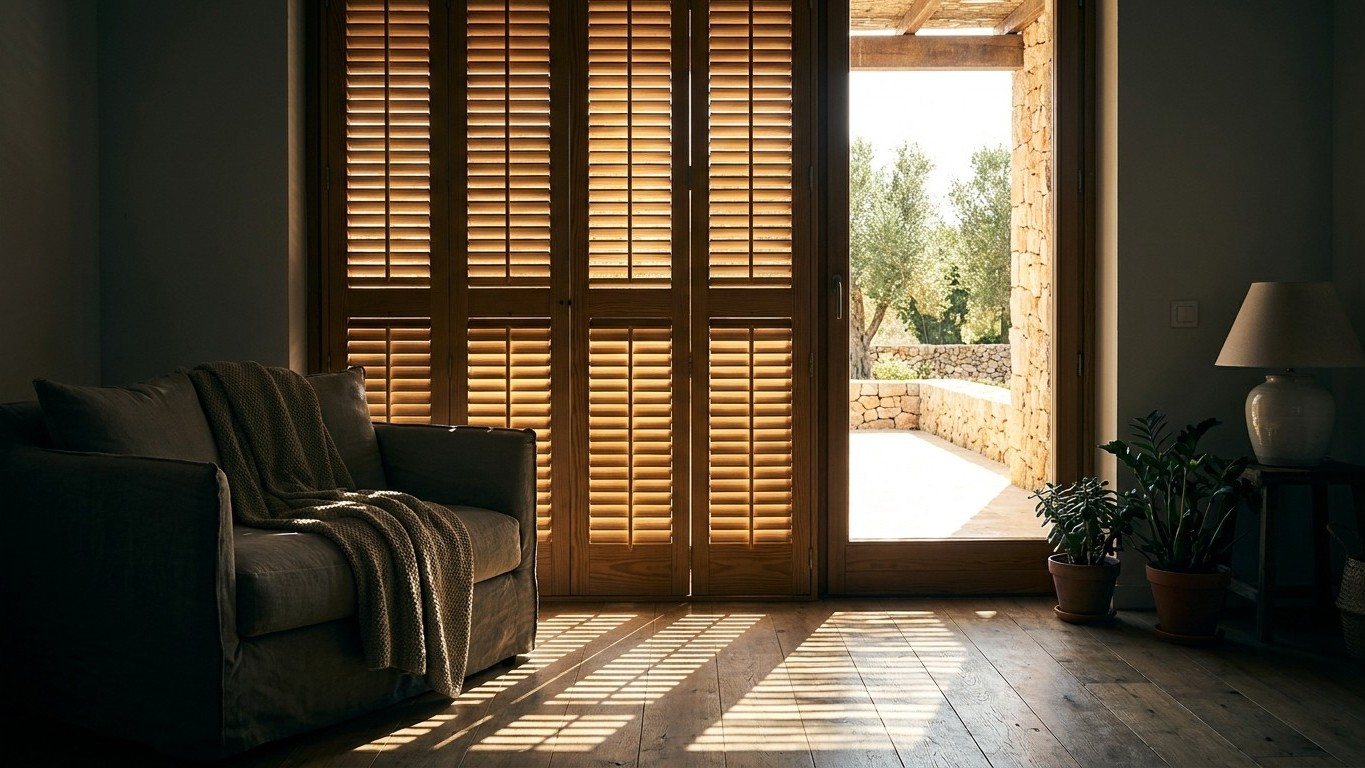
Ten hours. That’s how long the shutters stayed shut in my living room last Tuesday, from 10am to 9pm, while a heatwave pressed against the windows like a hand on glass. No fresh air. No “airing out.” Just closed slats, drawn curtains, and a strange, almost eerie coolness settling into a room that, for years, I’d been unknowingly cooking.
The habit felt harmless: throw open every window at midday, let the breeze move through, “refresh” the stale air. Turns out that breeze wasn’t refreshing anything. It was a 95-degree hairdryer, and I’d been pointing it at my own couch for a decade.
Key takeaways
- A simple 10-hour experiment revealed something counterintuitive about keeping homes cool during extreme heat
- The ‘fresh air’ instinct during midday heat might be actively making your home hotter—and why temperature math beats intuition
- One free habit change could make a measurable difference for vulnerable people in your home, especially during dangerous heat events
The Math I Never Did
The logic collapses the moment you compare temperatures instead of trusting instinct. The principle is simple: during daylight hours, outdoor air is warmer than indoor air, so opening windows lets heat in. I’d been treating my house like a lung that needed to breathe, when it actually needed to behave more like a cooler.
British interior trends specialist Johanna Constantinou put it plainly when several experts were consulted on the subject: one of the biggest mistakes people make is having all the windows open during the hottest part of the day, when it’s actually far more effective to keep windows, curtains and blinds closed from late morning through to early evening, then open windows strategically once temperatures drop to create cross ventilation. That’s not a design tip. That’s basic thermodynamics dressed up as decorating advice.
The UK Red Cross frames it almost identically for anyone without central air: opening a window doesn’t always mean you’re cooling your home, and if the air outside is warmer you could risk making it worse, so during the hottest parts of the day, it’s best to close windows to keep the warmer air out. I read that line twice. It described, with unsettling precision, exactly what I’d been doing wrong since I moved in.
Here’s the part that surprised me most: even shut windows aren’t a full defense on their own. Even with the windows closed, sun shining through the glass can warm your home up quickly. Glass acts like a greenhouse pane, trapping radiant heat regardless of whether the sash is cracked open. Shutters, blinds, or heavy curtains are what actually block that solar gain before it ever reaches the room.
What Changed at 10am, and Why It Mattered
The morning of my experiment, I closed every shutter before the sun hit the west-facing windows, something the U.S. government’s own emergency preparedness guidance treats as a first line of defense against heat stress at home. Cover windows with drapes or shades, and weather-strip doors and windows. No oven that day either, since adding insulation to keep the heat out, and Using Your Oven less, helps reduce the temperature in your home. Dinner was cold noodles and a very smug sense of restraint.
By early afternoon, the difference wasn’t subtle. Rooms that usually turned into greenhouses by 2pm stayed livable. The bedroom, normally unbearable by bedtime, held onto something close to actual coolness. I didn’t need the fan running constantly, which, frankly, aligns with what health agencies keep repeating and what most of us ignore: electric fans may provide comfort, but when the temperature is in the high 90s, they will not prevent heat-related illness. A fan pushes hot air around a hot room. It doesn’t make hot air less hot.
At 9pm, once the outdoor temperature finally dipped below the indoor one, I opened Everything, wide, on opposite sides of the house. That timing Matters More Than people assume. A product expert advised that once temperatures start to drop in the evening, that’s the best time to open windows and allow cooler air to circulate, and creating a cross-breeze by opening windows on opposite sides of the house can help cool rooms down more quickly. The house exhaled. I finally understood what a genuine “airing out” was supposed to feel like, because I’d never actually done it correctly before.
The Habit I’m Not Going Back To
What stung a little was realizing how many summers I’d spent “helping” the heat move in, one open window at a time. My old midday routine wasn’t neutral. It was actively working against me, importing outdoor heat and letting it settle into walls, fabric, and furniture that then radiated it back all evening.
The fix costs nothing and requires no gadgets, which is oddly satisfying in a culture obsessed with buying our way out of discomfort. Close everything up before the sun gets aggressive, usually mid-morning depending on your home’s exposure. Leave it sealed through the punishing hours. Reopen only once the outside air genuinely cools down, and let the cross-breeze do the work you used to assign to a fan running on high all day.
This isn’t just comfort trivia, either. Older adults, young children, and people with chronic medical conditions are at high risk for heat-related illness, and more than 700 people die from extreme heat every year in the United States. Knowing when to seal a house shut, rather than instinctively throwing it open, isn’t a lifestyle quirk. It’s a small, free habit that can genuinely lower risk for the people most Vulnerable in your own home.
The house cools down to sleeping temperature these nights faster than it used to, usually within an hour of opening the windows after sunset. I still catch myself, some mornings, reaching for the window latch out of pure muscle memory before stopping and checking the thermometer first. Old habits apparently die slower than heatwaves.
Sources : britbrief.co.uk | redcross.org.uk