
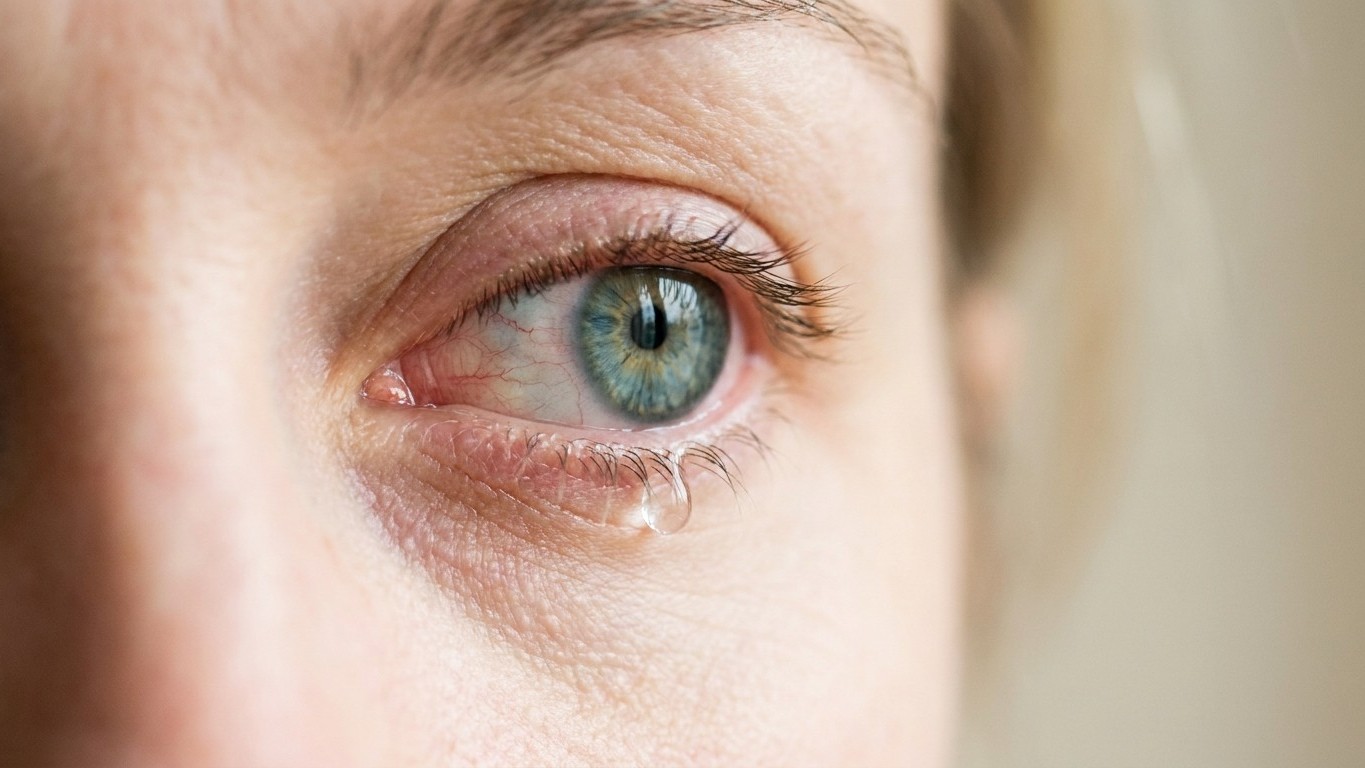
Red, gritty, and weeping by the second day. That’s how it started: not a dramatic flash of pain, just an eye that looked like I’d been crying for hours when I hadn’t. I’d worn contact lenses in the shower for over a decade, rinsing shampoo out with my eyes half closed, never once thinking about what was hitting my face along with the water. My ophthalmologist thought about it immediately. She asked one question before even examining me: “Do you shower with your lenses in?”
I did. Almost every American contact lens wearer does. Nearly 85% of wearers reported ever showering in contact lenses, according to a CDC-backed survey of tens of thousands of lens users. It’s such a normal habit that most people don’t register it as a habit at all, just something you do while multitasking your morning routine. Turns out that’s exactly the problem.
Key takeaways
- A common shower habit puts millions of contact lens wearers at risk of a preventable but serious eye infection
- The culprit is an invisible parasite found in most tap water that becomes dangerous only when trapped against your cornea
- Late diagnoses and permanent vision damage are common because the infection mimics other eye conditions
The Invisible Hitchhiker in Every Shower
What my doctor put under the slit lamp wasn’t bacteria in the way I’d imagined bacteria. It was an amoeba, a single-celled organism called Acanthamoeba, and it’s not some rare contaminant from a broken pipe. Most water is not germ-free, and there are many different kinds of germs in water that can cause eye infections, but a particularly dangerous one, an ameba called Acanthamoeba, is commonly found in tap water, lake water, well water, and other water sources. The EPA confirms it plainly: Acanthamoeba is a microbe that is very common in the environment, including in tap water.
Here’s the part that reframes everything: this organism isn’t dangerous to drink. It’s harmless sitting in a glass on your nightstand. The danger only appears when it gets trapped against the cornea by something like, say, a soft contact lens acting as a tiny biological cage. Water can cause soft contact lenses to change shape, swell, and stick to the eye, which is uncomfortable and can scratch the cornea, making it easier for germs to enter the eye and cause infection. The amoeba doesn’t need to fight its way in. The lens practically hands it a seat.
Why Contact Lens Wearers Are Ground Zero
The numbers are the part that genuinely unsettled me. More than 75% of cases of Acanthamoeba keratitis are found in people who wear contact lenses, according to the American Academy of Ophthalmology, and there are about 1,500 cases a year in the US. That sounds small against 40 million wearers, until you realize the infection is almost entirely preventable and almost entirely self-inflicted through habits nobody flags as risky. A CDC investigation into an outbreak in Iowa found something equally telling: among affected contact lens wearers, most reported recent water exposure, including swimming in lakes or rivers while wearing contacts, showering while wearing contacts, or cleaning contacts with tap water.
What surprised me most wasn’t the shower detail, it was learning that gas-permeable and orthokeratology lens wearers, who are often told to rinse with tap water as part of their care instructions, run into the exact same trap. Showering while wearing lenses was more common in SCL wearers (86%) than GP lens wearers (67%), and yet plenty of guidance still tells rigid-lens wearers that a tap rinse is fine. It isn’t a fringe behavior confined to careless people skipping hygiene. It’s baked into the instructions some of us were given.
The Diagnosis That Takes Months, Not Days
My case turned out mild, caught early enough that a few weeks of antimicrobial drops cleared it. Plenty of people aren’t so lucky, largely because Acanthamoeba keratitis doesn’t announce itself clearly. It is often incorrectly diagnosed as bacterial or viral keratitis, which can cause poor treatment and pain management, and many cases have been misdiagnosed as herpes simplex keratitis, which is treated with steroids instead of the antiparasitic treatment the infection actually needs. In the Iowa outbreak data, the average interval from symptom onset to diagnosis was 1.2 months, and late diagnoses contributed to poor vision outcomes.
The symptoms to watch for, per the EPA, include severe pain in the eye, the sensation of a foreign body in the eye, and a whitish halo at the periphery of the eye, with an infection that can last weeks to months and never fully heals despite treatment in severe cases. That last phrase stopped me cold when I first read it. Never fully heals. For an infection triggered, in a meaningful share of cases, by nothing more exotic than a normal shower.
Breaking a Habit Nearly Everyone Shares
The fix, according to every major health authority I checked, is almost embarrassingly simple: lenses out before the water goes on. To protect against Acanthamoeba keratitis and other eye infections, contact lens wearers should wash their hands with soap and water and dry them before handling contacts, remove contact lenses before showering, using a hot tub, or swimming, and clean, rub, and rinse lenses every time they take them out. The CDC adds a smaller but useful tweak: keeping your contact lenses outside the bathroom entirely, to reduce the risk of water contamination from steam and splashes you don’t even register.
My ophthalmologist’s advice was blunter, and it’s the line I now repeat to every contact lens wearer I know: treat the lens case like a sterile medical device, because that’s technically what it is, and treat your shower like it’s full of hitchhikers you can’t see. It is. One study of household water found Acanthamoeba organisms present across a meaningful share of homes tested, chlorine levels included. Mine, apparently, was one of them.
Sources : cdc.gov | journals.lww.com