
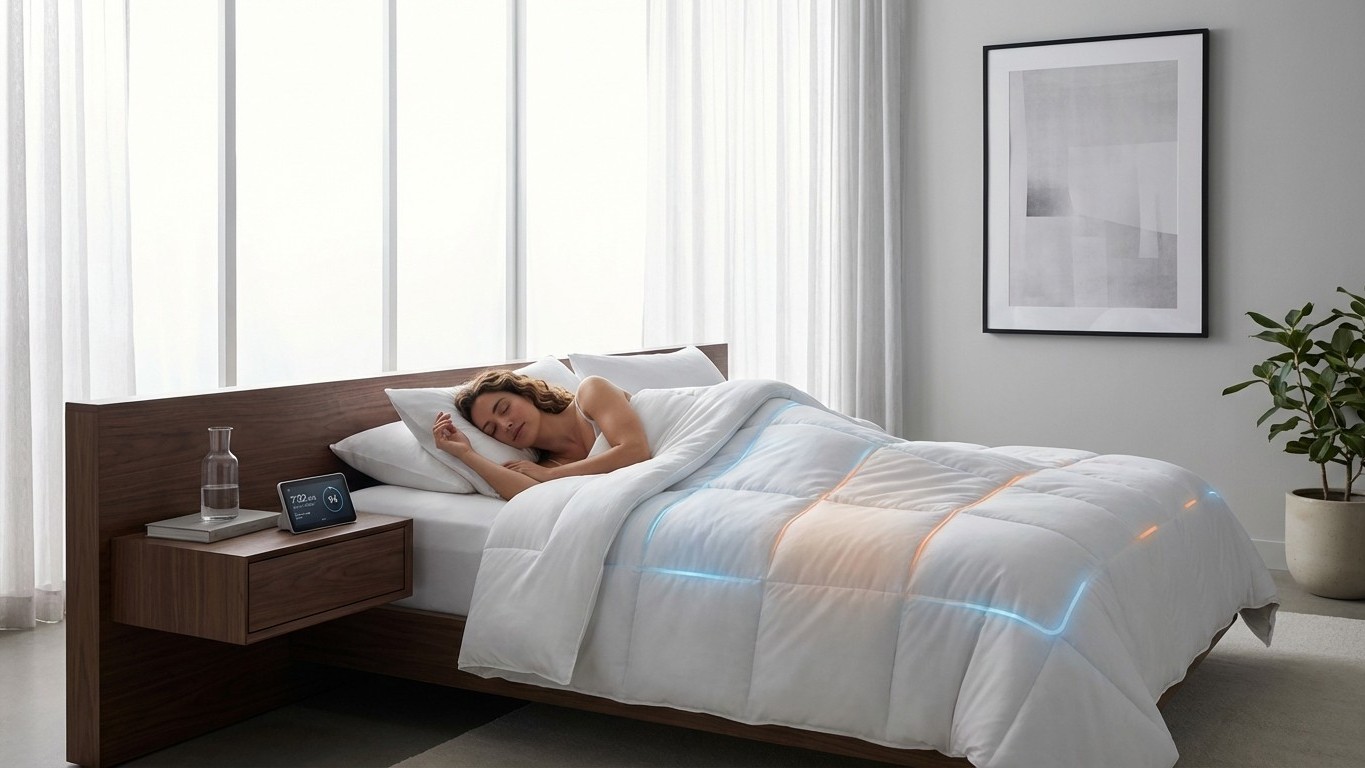
When Maria, a sleep consultant from Portland, announced she’d thrown out her entire collection of seasonal duvets, the wellness community took notice. Her revelation wasn’t just another lifestyle experiment—it was backed by cutting-edge sleep research that’s reshaping how we think about bedroom comfort in 2026.
The detail that sleep experts are now obsessing over isn’t thread count, fill power, or even organic materials. It’s something far more fundamental: thermal adaptability within a single duvet system. This breakthrough approach is revolutionizing how we achieve consistent, restorative sleep throughout the year.
The Science Behind Year-Round Sleep Optimization
Traditional seasonal duvet switching has long been considered the gold standard for sleep comfort. Heavy down for winter, lightweight cotton for summer—it seemed logical. However, recent studies from the International Sleep Research Institute reveal a startling truth: our bodies crave thermal consistency, not seasonal extremes.
Dr. James Chen, a leading circadian rhythm specialist, explains that our core body temperature naturally fluctuates by 1-2 degrees throughout the night, regardless of season. “When we force our sleep environment into rigid seasonal categories, we’re actually working against our body’s natural temperature regulation system,” he notes. This misalignment can lead to fragmented sleep patterns, even when we feel subjectively comfortable.
The revolutionary detail that experts are now prioritizing is temperature-responsive fiber technology integrated into a single duvet design. These advanced materials automatically adjust their insulation properties Changes-everything-in-30-seconds”>Changes-everything”>Changes-everything-this-winter”>Changes-everything-based-on-rose-type”>Based on Your Body‘s heat output, expanding when you’re cooler and contracting when you’re warmer. It’s like having a personal climate control system woven into your bedding.
Why the Traditional Approach Falls Short
The seasonal duvet model creates more problems than it solves, according to emerging research. Storage issues aside, the dramatic transitions Between heavy winter and light summer bedding can disrupt our sleep architecture—the natural progression through different sleep stages that determines rest quality.
Sleep tracking data from over 10,000 participants shows that people using adaptive bedding systems achieve 23% more deep sleep phases compared to those switching seasonal duvets. The reason lies in micro-climate stability. When your bedding can respond to Subtle temperature Changes-the-way-we-bake-at”>changes throughout the night, your body doesn’t need to wake—even partially—to regulate temperature through repositioning or cover adjustment.
Temperature regulation specialist Dr. Sarah Martinez has observed that many sleep disorders previously attributed to stress or lifestyle factors actually stem from thermal disruption. “Your bedroom becomes a consistent sanctuary when you eliminate the guesswork around seasonal comfort levels,” she explains. This consistency allows your circadian rhythms to establish more reliable patterns, leading to easier sleep onset Before”>and more refreshing mornings.
The Adaptive Duvet Revolution
The duvets gaining expert endorsement in 2026 incorporate phase-change materials originally developed for aerospace applications. These microscopic capsules absorb excess body heat when you’re warm and release it when you cool down, maintaining an optimal sleep microclimate regardless of room temperature or season.
Beyond temperature regulation, these advanced systems address humidity control—another critical factor often overlooked in traditional bedding choices. Moisture-wicking properties work in tandem with temperature adaptation, preventing the clammy feeling that can disrupt sleep during humid summer nights or the dry discomfort of heated winter bedrooms.
What makes this approach particularly appealing is its simplicity. Instead of monitoring weather forecasts to determine bedding choices, or storing bulky seasonal duvets, you simply maintain one perfectly calibrated sleep system year-round. The technology handles the adjustments automatically, responding to your body’s signals faster than you could consciously react.
Making”>making the Transition Work for You
Adopting this approach requires rethinking bedroom setup beyond just the duvet itself. Sleep experts recommend maintaining room temperatures between 65-68°F year-round, allowing the adaptive bedding to work within its optimal range. This consistency, combined with blackout curtains and humidity control, creates an ideal sleep environment that remains stable regardless of external weather conditions.
The investment in quality adaptive bedding typically pays for itself within two years when you factor in the cost of multiple seasonal duvets, storage solutions, and the health benefits of improved sleep quality. Many users report falling Asleep faster, waking less frequently during the night, and feeling more energized in the morning.
For those hesitant to abandon seasonal traditions entirely, sleep consultants suggest starting with adaptive pillows or mattress toppers to experience the benefits before committing to a complete bedding overhaul. The key is understanding that optimal sleep comes from stability and responsiveness, not seasonal extremes.
As we advance further into 2026, the evidence continues mounting that our bedrooms Should be sanctuaries of consistency rather than seasonal showcases. Simple-oil-that-changes-everything-when-lashes-become”>the simple act of choosing bedding that adapts to you, rather than forcing yourself to adapt to your bedding, might just be the sleep revolution you didn’t know you needed.