
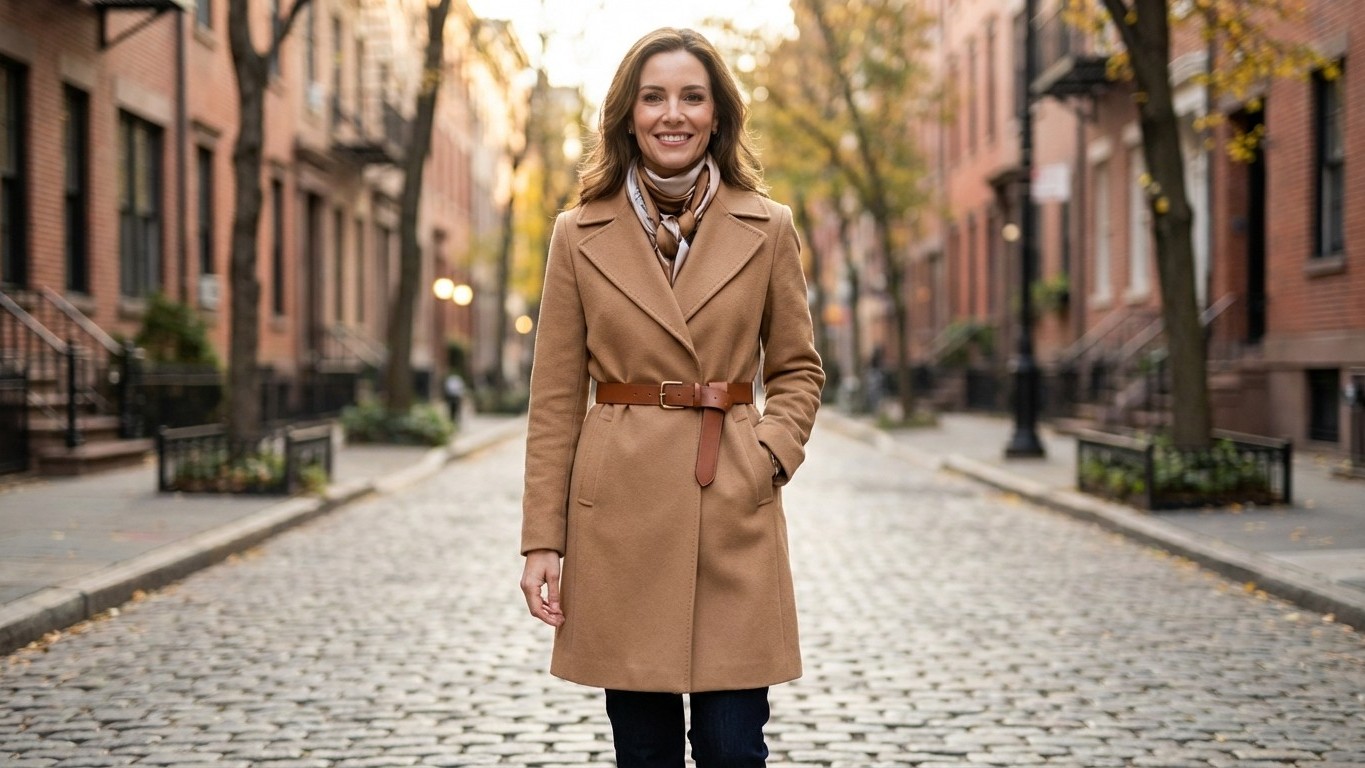
For years, I was that person who threw on a coat like an afterthought—open, loose, and frankly, unflattering. My winter outerwear felt more like a necessity than a style choice, something to endure rather than embrace. That all changed during a styling consultation when a seasoned fashion professional showed me how a single belt could revolutionize my entire approach to coat wearing.
The Revelation That Changed Everything
The stylist took one look at my oversized wool coat hanging open over my outfit and immediately reached for a leather belt from my closet. “Most people think belting a coat is complicated,” she explained, “but there’s a specific technique that works every time, regardless of your body type or coat style.” What happened next completely transformed how I understood outerwear styling.
The key isn’t simply wrapping any belt around your waist and calling it done. The magic lies in the positioning and the way you create structure. She demonstrated by taking the belt and placing it slightly higher than my natural waistline, about two inches above where I would typically wear it with a dress. This immediately created a more flattering silhouette, giving my torso Better proportions and making my legs appear longer.
But the real genius was in how she secured it. Instead of pulling the belt tight like you would with regular clothing, she created gentle gathering at the sides while maintaining a looser fit at the back. This Technique allows the coat to maintain its shape and warmth while creating an intentionally styled look that feels effortless yet polished.
Why This Technique Works So Beautifully
The belt positioning creates what stylists call a “defined waist moment”—essentially giving structure to what would otherwise be a shapeless outer layer. This is particularly transformative for oversized coats, which can easily overwhelm smaller frames or create an unflattering boxy silhouette on anyone.
When done correctly, this belting method serves multiple purposes beyond just looking good. It prevents the coat from billowing open in wind, keeps you warmer by creating a more secure closure, and Instantly elevates your overall appearance from casual to intentionally styled. The higher placement also creates the illusion of longer legs, which is universally flattering regardless of height.
The psychological impact shouldn’t be underestimated either. There’s something about wearing a properly belted coat that changes how you carry yourself. You stand taller, feel more put-together, and approach your day with greater confidence. It’s remarkable how such a simple adjustment can shift your entire energy.
Adapting the Technique for Different Coat Styles
What makes this approach so versatile is how it adapts to various coat styles and personal aesthetics. For structured wool coats, a matching leather belt creates a classic, timeless look that works beautifully in professional settings. The contrast between textures adds visual interest without being overwhelming.
Puffer coats and down jackets benefit from this technique too, though the approach requires slight modification. With bulkier outerwear, the belt should sit at the natural waist rather than above it, and you’ll want to choose a wider belt to balance the coat’s volume. This prevents the belt from getting lost in the puffiness while still creating that essential defined waistline.
For longer coats and trenches, the higher belt placement becomes even more critical. It breaks up the vertical line and prevents the coat from overwhelming your frame. Trench coats, in particular, were designed to be belted, but most people belt them too low. The higher placement creates a more modern, fashion-forward interpretation of this classic style.
Making It Your Own
The beauty of this technique lies in its adaptability to personal style preferences. Conservative dressers can stick with matching belts in neutral tones for a seamless, professional appearance. Those who enjoy making fashion statements might experiment with contrasting colors or interesting textures—a chain belt with a wool coat, or a woven fabric belt with a structured blazer-coat.
Color coordination doesn’t have to be exact, but it should be intentional. A black belt with a navy coat works beautifully, as does brown leather with camel or beige tones. The goal is creating harmony rather than perfect matching, which often looks more sophisticated and less studied.
Seasonal considerations play a role too. Lighter-weight belts work better with spring and fall coats, while winter outerwear can handle more substantial belts that won’t get lost under the bulk. Pay attention to proportions—your belt should complement your coat’s weight and structure, not compete with it.
this simple styling revelation has completely changed my relationship with outerwear. What once felt like a necessary evil now becomes an opportunity to create polished, intentional looks that make me feel confident and put-together. The best part is how effortless it becomes once you understand the technique—a small adjustment that delivers major style impact, proving that sometimes the most transformative fashion advice comes in the simplest packages.