
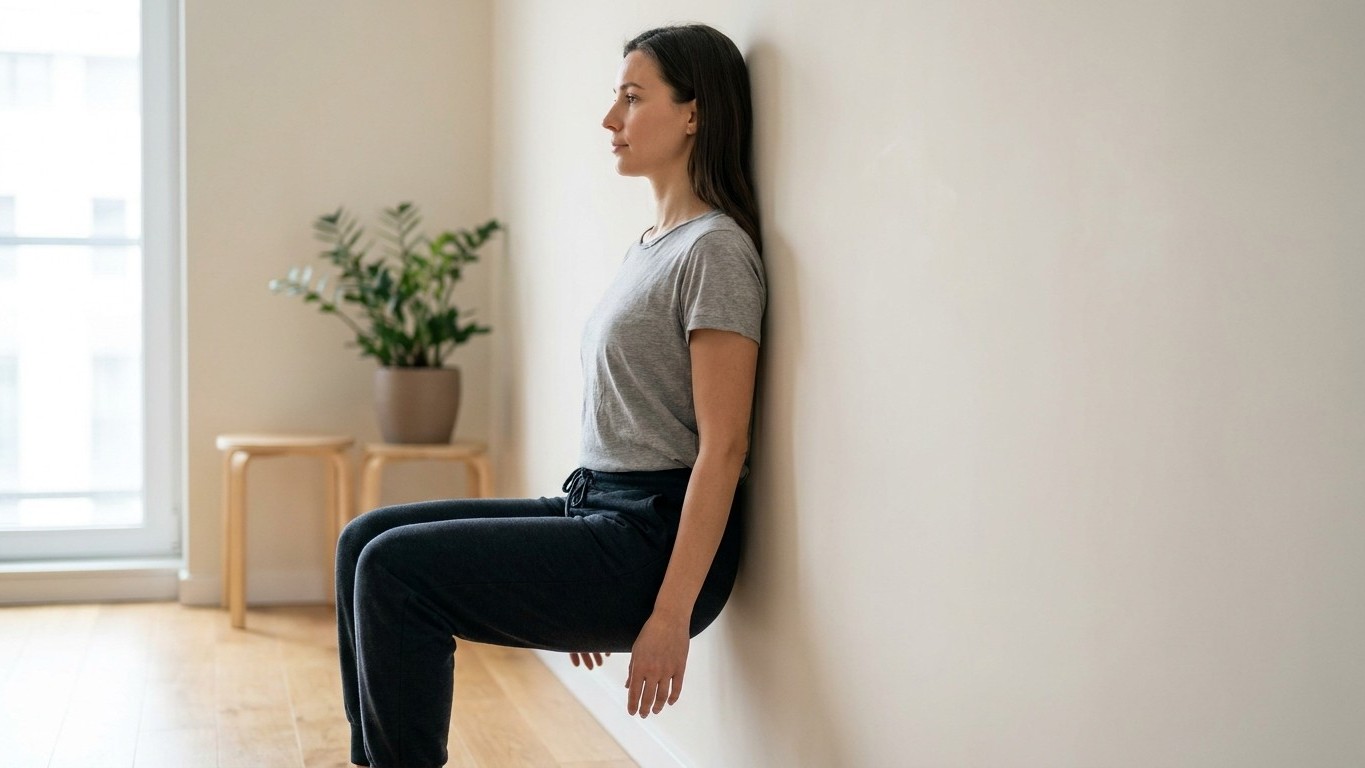
Ten mmHg. That’s the average drop in systolic blood pressure researchers recorded after a few weeks of a two-minute wall sit, repeated four times, three days a week. No sneakers required. No 10,000-step goal to chase around the block. Just a wall, a bent knee, and about ten total minutes of holding still.
For years, the standard prescription for high blood pressure was cardio, cardio, cardio. Walk more. Jog. Bike to work. That advice wasn’t wrong, exactly, but it turns out it was incomplete. Previously published research shows that exercise in general is associated with significant reductions in blood pressure, with aerobic exercise such as walking, running, and cycling the type primarily recommended for managing blood pressure, but this recommendation is largely based on older data that exclude newer forms of exercise like isometric training. Franchement, that’s the kind of gap in the science that changes how doctors talk to patients once it’s finally filled in.
Key takeaways
- Researchers analyzed 270 studies involving 16,000 people and found one exercise type that beats all others for blood pressure control
- This unglamorous gym-class staple produces results in just 10 minutes per session—no equipment, no sneakers, no special clothes required
- Cardiologists are cautiously rewriting decades of exercise advice, but there’s a safety catch you need to know first
What the biggest review of blood pressure exercise found
A team from Canterbury Christ Church University and the University of Leicester pulled together the most comprehensive analysis yet on exercise and blood pressure, published in the British Journal of Sports Medicine. This was a systematic review combining the results of 270 trials carried out around the world between 1990 and 2023, involving almost 16,000 participants both with and without health conditions. They sorted every protocol into five buckets: aerobic training, resistance training, high-intensity interval training, combined training, and isometric exercise (the kind where muscles stay tense but nothing actually moves).
The numbers tell an unambiguous story. Performing isometric exercises such as planks and wall sits over time was associated with an average 8.24 mmHg decrease in systolic blood pressure and a 4 mmHg decrease in diastolic blood pressure. Compare that to the alternatives: high-intensity interval training produced 4.08 and 2.50 mmHg decreases, aerobic training such as running or cycling produced 4.49 and 2.53 mmHg decreases, dynamic resistance training produced 4.55 and 3.04 mmHg, and combined aerobic and weight training produced 6.04 and 2.54 mmHg decreases. Isometric training beat every single category, sometimes by double.
And within that category, one exercise stood above the rest. The most effective isometric exercise for lowering resting blood pressure was wall sits, according to study co-author Dr. Jamie O’Driscoll, a registered clinical scientist in cardiology. A quiet, unglamorous move that most of us associate with punishment drills in gym class. Isometric exercises turned out to be almost twice as effective at lowering blood pressure compared with just doing cardiovascular exercise, according to study author Jamie O’Driscoll, an associate professor of lifestyle medicine at the University of Leicester.
Even walking, the poster child of heart-healthy advice, came up short by comparison. The study also compared specific exercises, showing that walking was less effective at lowering blood pressure than cycling or running, and still, these forms of cardio were less effective than isometric wall squats. Ten thousand steps, it seems, just doesn’t move the needle the way ten minutes against a wall does.
The ten-minute protocol doctors are pointing to
Here’s where it gets practical, and refreshingly simple. “Performing 4 x 2 minutes of wall sits, with 2-minutes’ rest in between, three times per week, is an effective way to reduce your blood pressure,” said O’Driscoll. Do the math and each session runs about ten minutes, most of it spent resting between sets. The isometric exercise programs analyzed in the study commonly had participants do each exercise four times, with a break in between, holding the position for up to two minutes.
You don’t need equipment, a gym membership, or even a change of clothes. Stand with your back against a wall, feet hip-width apart, place your feet one or two steps away from the wall, keep your arms at your sides, and bend your knees until you hit an angle you can hold for at least 30 seconds. Beginners shouldn’t feel obligated to hit the full two minutes right away. If you haven’t done isometric exercises before, holding a position for 20 to 30 seconds is a good starting point, and it’s normal for your body to start to shake as the muscle tires before you build up to more time.
If wall sits feel too intense on the knees or back, there are alternatives that produce comparable results. If a wall squat is too intense, research shows that isometric handgrip (squeezing a spring-loaded device) or isometric leg extensions also produce comparable benefits. Even planks are earning their place in this conversation. A 2025 study found that just one session of four 2-minute planks could lower blood pressure for a full 24 hours afterward.
Why this isn’t a permission slip to skip your walk
Here’s the nuance that gets lost in headlines. This research doesn’t say cardio is useless, it says the exercise hierarchy we’ve been taught for decades needed an update. The other types of exercises did show associations with lowering blood pressure as well, but this does suggest that you may want to add something isometric to your weekly routine. Cardiologists interviewed about the findings tend to frame isometric work as an addition, not a replacement. One expert says he wouldn’t recommend doing only isometric exercises but instead adding them to a program that also includes aerobic and resistance training, since combined training seems to provide the biggest benefit for both blood pressure control and overall health.
There’s also a safety wrinkle worth knowing before you plant yourself against the nearest wall. Isometric exercise is an accessible, time efficient intervention for reducing blood pressure, though guideline recommendations for its use remain sparse due to safety concerns, prompting researchers to study the proportion of participants whose blood pressure exceeded predefined limits during the exercise itself. Isometric holds can cause a temporary spike in blood pressure while you’re actually doing them, even though the long-term resting effect trends downward. Anyone with uncontrolled Hypertension or a cardiac history should run this by a doctor before adding wall sits to the routine, rather than treating it as a casual coffee-break habit.
Sources : zmescience.com | forbes.com