
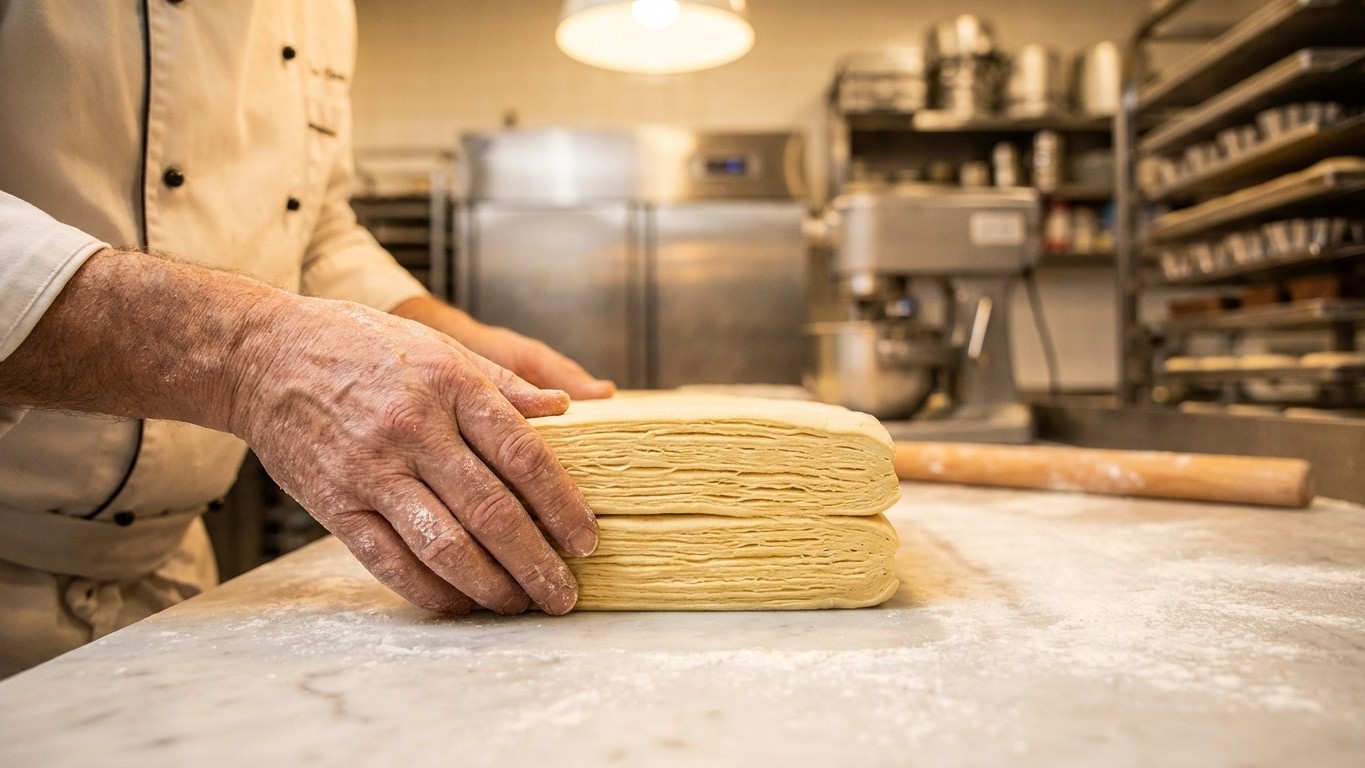
Walk into any professional Kitchen-gold”>Kitchen-staple-works-miracles-on-my-electric-kettle”>Kitchen where croissants emerge golden and flaky, where pie crusts shatter at first bite, and where puff pastry rises in perfect layers, and you’ll witness a Ritual that most home bakers unknowingly skip. It’s not about expensive equipment or Secret ingredients—it’s about a fundamental technique called “resting the dough” that transforms good pastry into extraordinary pastry.
Professional pastry chefs understand that dough is a living entity, and like any living thing, it needs time to relax and develop. This resting period, known technically as “autolyse” when applied to certain doughs, allows the gluten networks to relax while moisture distributes evenly throughout the mixture. The result? Dough that rolls easier, bakes more evenly, and achieves that coveted flaky texture that makes people close their eyes in bliss.
The Science Behind Perfect Pastry
When you mix flour with fat and liquid, you’re creating more than just a mixture—you’re building a complex structure. The proteins in flour form gluten chains when hydrated, creating elasticity but also tension. Meanwhile, fat creates barriers Between these protein networks, which ultimately become the flaky layers we crave. However, Without proper resting time, this delicate balance remains unstable.
During the resting phase, several crucial transformations occur simultaneously. The flour fully hydrates, absorbing every drop of moisture evenly. The gluten relaxes from its initial stressed state, Making the dough more pliable and less likely to shrink during baking. Perhaps most importantly, the fat—whether butter, lard, or shortening—firms up to the ideal consistency for creating distinct layers.
Temperature plays a critical role in this process. Professional kitchens maintain specific temperatures not just for food Before-turning-on-a-backup-heater-could-save-your”>Safety, but because they understand how temperature affects dough structure. Cold fat creates steam pockets when it hits oven heat, leading to those coveted flaky layers. Room temperature fat, however, melts into the flour, creating a tender but dense result.
The Professional Technique That Simple-rule-changes-everything”>Changes Everything
The secret lies in a two-stage resting process that most recipes either skip entirely or mention only briefly. First, after initial mixing but before any rolling, the dough rests wrapped in plastic at room temperature for 30 Minutes-daily-since-age-50-what-her-cardiologist-discovered-after-one-year”>Minutes to an hour. This allows the flour to fully hydrate and the gluten to begin relaxing. Some pastry chefs extend this to several hours for particularly challenging doughs.
The second rest happens after shaping but before the final roll-out. This refrigerated rest, typically lasting at least 2 hours but often overnight, serves multiple purposes. The cold temperature firms the fat, making it easier to roll thin layers without breaking. The extended time allows enzymes in the flour to break down complex starches, contributing to both flavor development and texture improvement.
Master pastry chef Julia Child famously advocated for even Longer rests, sometimes keeping her puff pastry dough refrigerated for up to three days. Modern research supports her intuition—extended resting periods allow for more complete gluten relaxation and better fat distribution, resulting in superior texture and easier handling.
Transforming Your Home Baking
Implementing this professional technique requires nothing more than patience and planning. When making pie dough, mix your ingredients just until they come together, then wrap tightly and let rest at room temperature for 45 minutes. Notice how much easier it becomes to roll without cracking or springing back. For laminated doughs like croissants or puff pastry, plan for overnight rests between each folding session.
The transformation becomes immediately apparent in Your finished products. Pie crusts emerge from the oven with distinct, flaky layers instead of dense, tough bottoms. Croissants develop the honeycomb interior structure that distinguishes amateur attempts from professional results. Even simple biscuits benefit from a brief rest, becoming more tender and rising higher.
Temperature control becomes your ally in this process. Professional kitchens often have marble surfaces for pastry work because marble stays naturally cool, preventing fat from warming too quickly. Home bakers can achieve similar results by chilling their work surface, rolling pin, and even flour before beginning.
Beyond Technique: Understanding Your Ingredients
The resting process also reveals why ingredient quality matters so dramatically in pastry work. High-quality butter with proper fat content behaves predictably during rest periods, maintaining its structure while developing flavor. Lower-quality alternatives often contain more water, which can disrupt the delicate balance you’re Trying to achieve.
Flour selection becomes equally important when you understand resting’s role. Different protein levels respond differently to hydration and rest. Pastry flour’s lower protein content requires less resting time but benefits enormously from proper hydration. All-purpose flour needs longer rests to achieve similar gluten relaxation but offers more forgiveness for home bakers.
Professional pastry chefs often speak about “listening” to their dough, and this intuitive understanding develops from observing how dough changes during rest periods. Well-rested dough feels supple and responds smoothly to rolling. It doesn’t fight back or tear unexpectedly. This responsive quality is what separates memorable pastries from merely acceptable ones.
The next time you’re tempted to rush through pastry making, remember that the most crucial ingredient isn’t listed in any recipe—it’s time. Give your dough the rest it deserves, and watch as your home baking transforms into something that rivals the best professional kitchens. The difference isn’t just noticeable; it’s absolutely transformational.