
Sunday morning, March 8. The alarm goes off an hour earlier than your body thinks it should. The room is dark, darker than it was last week at this time. You lie there, groggy, already dreading Monday. Sound familiar? Every year, Daylight Saving Time arrives like an uninvited guest who rearranges all your furniture while you sleep.
The clocks have already sprung forward for 2026, and by now, millions of Americans have already felt the aftermath. But here’s the thing most people still get wrong: they treat it like a one-night inconvenience rather than a genuine physiological disruption. Sleep specialists are remarkably consistent on this point. The single most common mistake people make when the clocks spring forward is sleeping in on Sunday morning to compensate — the exact opposite of what the body needs.
Key takeaways
- The most common mistake during spring forward might be the exact opposite of what feels right
- One lost hour triggers a cascade of health risks throughout the entire week—far beyond just feeling groggy
- Sleep experts have a science-backed protocol that works better than you’d expect, and it starts before Sunday even arrives
Why that Sunday sleep-in backfires
The logic seems airtight: you lost an hour, so you catch up. But even though it may be tempting to sleep in after losing an hour, maintaining a regular schedule helps the body adapt more quickly. When you push your wake time later on Sunday, you are essentially signaling to your circadian system that the old schedule still applies. You delay melatonin suppression, you shift your hunger cues, and you make Sunday Night’s sleep, the one before the first brutal Monday back at work, significantly harder to initiate.
The natural internal body clock rhythm in people tends to be slightly longer than 24 hours, which means every day we tend to delay our sleep schedules. “Springing forward” goes against the body’s natural rhythm. It is similar to a mild case of jet lag caused by traveling east, in which you lose time and have trouble falling asleep at an earlier hour. Sleeping in on Sunday morning only deepens that east-bound jet lag effect. You land back at your desk Monday morning feeling like you flew to London overnight, Without the croissant.
What actually happens inside your body
Our internal clock, known as the circadian rhythm, is closely regulated by exposure to light and darkness. When the clock suddenly jumps forward by an hour, the brain doesn’t instantly adjust. Your body is still operating on the previous day’s schedule. This mismatch is not trivial. An abundance of accumulated evidence indicates that the acute transition from standard time to daylight saving time incurs significant public health and safety risks, including increased risk of adverse cardiovascular events, mood disorders, and motor vehicle crashes.
The numbers are genuinely startling. Studies have shown that during the entire week after the annual spring forward, Americans have more fatal car accidents, heart attacks and atrial fibrillations, may have an uptick in strokes, are more likely to get harsher legal sentences, and even cyber-loaf more in the office. One lost hour. That is the full extent of the disruption. And yet the downstream effects ripple through the entire week.
Losing an hour of sleep tends to be more difficult for the body than gaining one, which is why many people notice the spring transition more than the fall shift. People who already don’t get enough sleep may feel the effects more strongly. If someone is already sleep deprived, losing even one hour can worsen fatigue and concentration problems. Teenagers are especially hard hit: many adolescents naturally fall asleep and wake later than adults, so an earlier effective wake time can leave them especially tired for several days.
The fix that sleep experts actually agree on
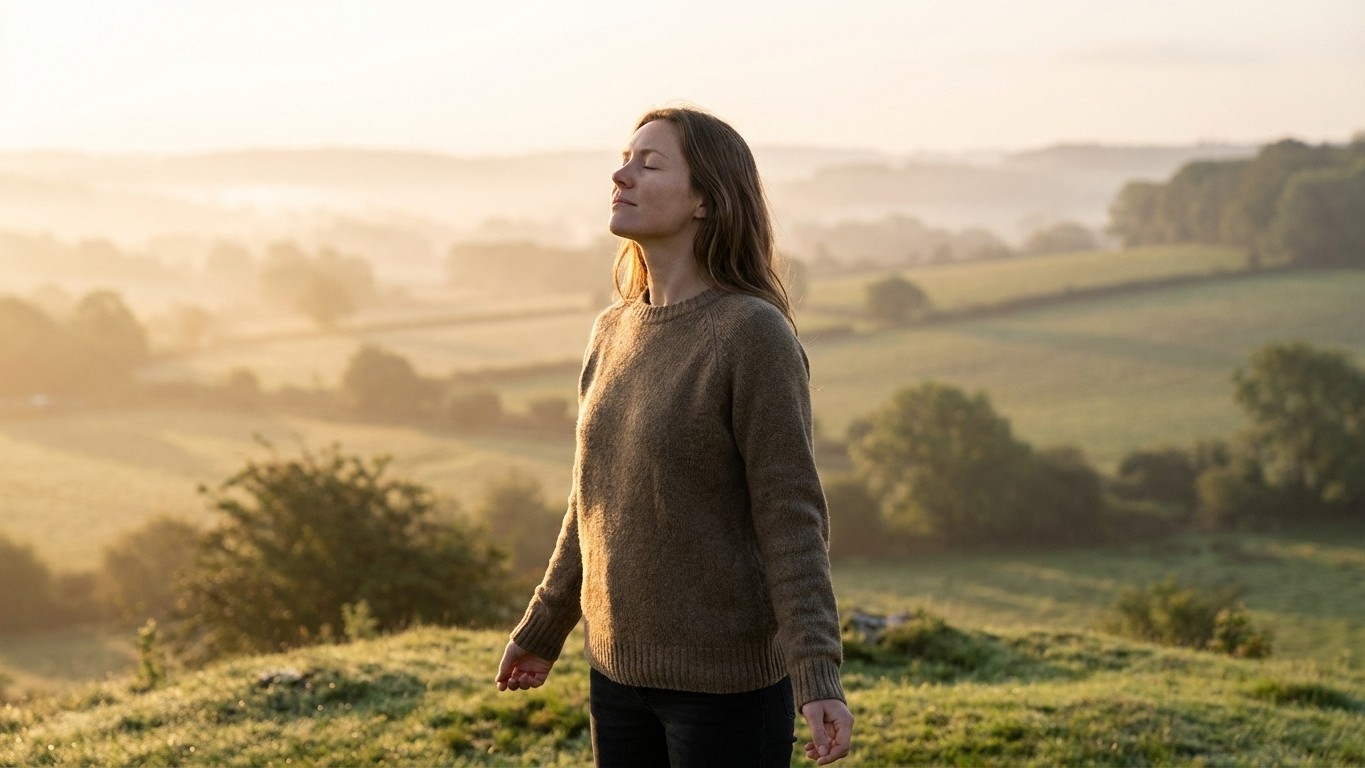
Counterintuitive as it sounds, the right move is to get up at your normal time on Sunday and head straight toward daylight. Exposure to morning light plays a major role in resetting the body clock. Light Signals the brain that it’s time to be awake and helps suppress melatonin, which gradually shifts the sleep cycle to match the new schedule.
This is where the science gets genuinely interesting. Because light and Exercise influence circadian rhythms separately through the SCN and peripheral clocks, respectively, scientists think that combining these cues, exercise and morning sunshine, may work better to shift internal clocks than either light or exercise alone. A brisk walk outside in the morning is not just feel-good advice. It is one of the most efficient biological levers available to you.
The ideal preparation, according to multiple experts, actually begins before the clocks change. The American Academy of Sleep Medicine advises trying to slowly adjust your schedule by going to bed around 15 to 20 Minutes earlier each day. The timing of other daily activities, such as meals and exercise, can also be gradually adjusted forward. Think of it as micro-dosing the time change across several days rather than absorbing it all at once on Sunday morning.
A few other habits worth adjusting: be mindful of caffeine and limit it after noon to prevent sleep disruptions. You may have the urge to nap while you adjust, but try to limit it if you can. Napping can make it harder to fall asleep at night. And late-night food or bright light later in the day can shift rhythms later, just as mornings are brightening earlier. Evening screen time, in this specific window, actively works against you.
Monday morning deserves a little grace
Sleep expert Jennifer Martin, a licensed clinical psychologist and professor at FIU Herbert Wertheim College of Medicine, says that “changing the clock this weekend will give many of us a bit of jet lag.” Her practical advice: if possible, avoid scheduling important meetings early Monday morning. Allow extra travel time, as the Monday after the time change can bring heavier traffic and a rise in accidents.
There is also the bigger-picture argument brewing in the background. Research strongly supports eliminating the time change and staying on permanent standard time, according to sleep experts, and the American Academy of Sleep Medicine has backed that position for years. But until policy catches up with biology, the annual ritual continues.
So the real question isn’t just how you survive the spring forward. It’s whether we’re finally ready to ask why we’re still doing this at all, or whether we’ll just keep setting our alarms, squinting at dark mornings, and promising ourselves we’ll go to bed earlier next year.