
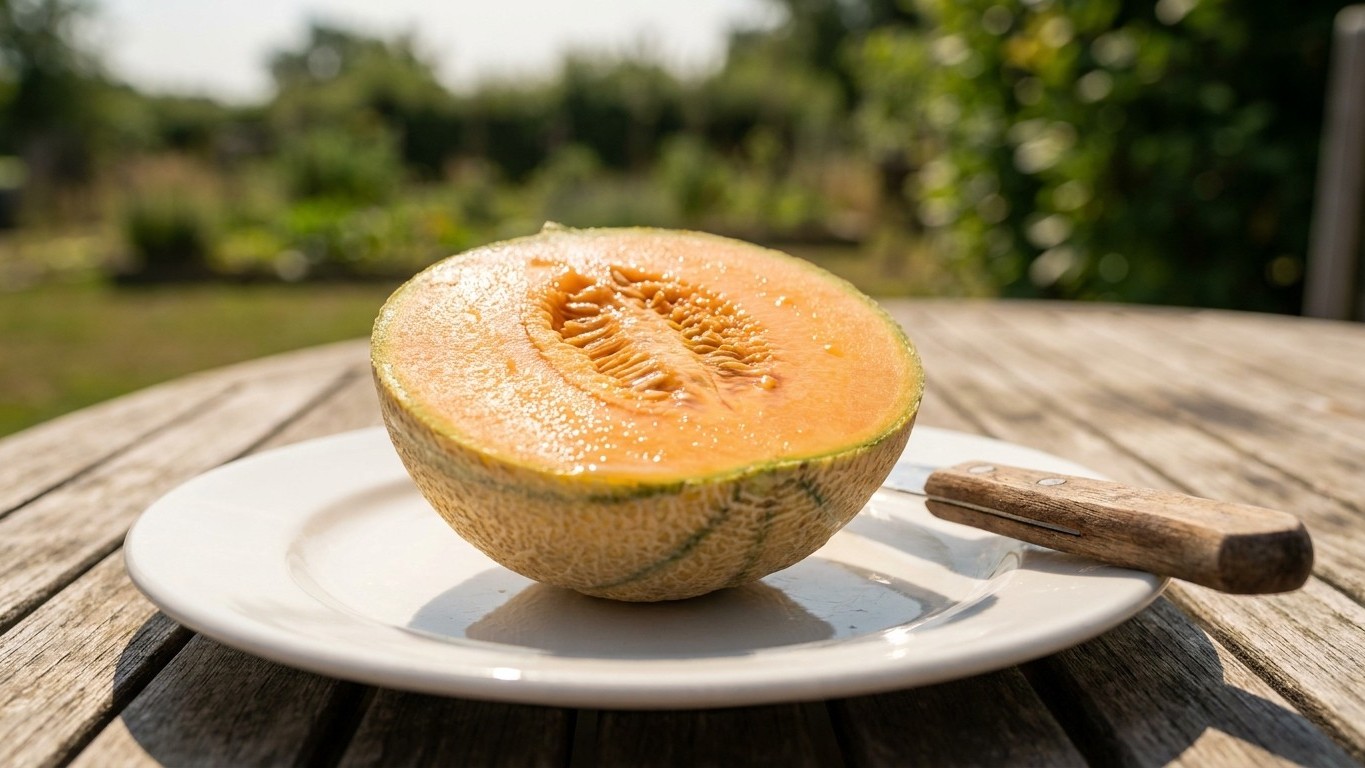
The knife breaks the rind, and right there, the clock starts ticking. That watermelon or cantaloupe sitting pretty on your appetizer table, glistening under the July sun, isn’t just aging. It’s becoming a bacterial buffet, and the transition happens faster than most home cooks realize.
Melon flesh sits at a nearly neutral pH, somewhere around 5.2 to 6.7 depending on the variety, according to guidance from the U.S. Food and Drug Administration. That’s the detail nobody mentions at the picnic. Unlike citrus or tomatoes, whose acidity keeps bacterial growth in check, melon offers close to zero natural defense once cut. Add warmth, moisture, and a few hours of neglect, and you’ve built a five-star hotel for Salmonella, Listeria, and E. coli.
Key takeaways
- The knife that cuts through melon rind also introduces surface bacteria directly into the flesh—and nobody can see it coming
- Bacteria can double their population in as little as 20 minutes at 90°F, but the fruit will still look appetizing hours later
- Cantaloupe outbreaks have hospitalized dozens and changed how food safety officials think about summer entertaining
Why Cut Melon Turns Risky So Quickly
The FDA and the USDA both flag melon, cantaloupe especially, as a recurring player in foodborne illness outbreaks. The rough, netted rind of a cantaloupe traps soil and bacteria in ways a smooth-skinned honeydew simply doesn’t. When the knife passes through, whatever was clinging to the outside gets a free ride straight into the flesh you’re about to serve.
Temperature is the accelerant. The USDA’s food safety guidelines are blunt about this: perishable food shouldn’t sit at room temperature for more than two hours, and that window shrinks to just one hour once the ambient temperature climbs above 90°F. A backyard table in July, easily. Bacteria that might take a lazy afternoon to multiply in your fridge can double their population in as little as twenty minutes under those conditions.
What makes melon particularly unforgiving is that it gives almost no warning. Spoiled meat smells off. Curdled dairy looks wrong. Cut melon left out for three hours can still look perfectly appetizing, still taste sweet, and still carry a bacterial load high enough to send someone to urgent care. There’s no sensory alarm bell here, which is exactly why it keeps showing up on outbreak lists that health departments track every summer.
The Storage Habits Worth Rethinking
Most people treat melon like bread or crackers, something that can survive an afternoon uncovered without consequence. Franchise catering companies and grocery deli counters know better, which is why prepackaged cut melon almost always comes refrigerated, not shelved at room temperature next to the granola bars.
The fix isn’t complicated, just inconvenient. Cut melon should go back into the refrigerator within two hours, ideally sooner in genuinely hot weather, and it should be stored in a sealed container rather than loosely covered with plastic wrap. The USDA also recommends discarding cut melon that has sat unrefrigerated beyond that window rather than gambling on a quick reheat or rinse, since washing fruit after the fact does nothing to eliminate bacteria that has already penetrated the flesh.
There’s a smarter serving strategy too, one that caterers have used for years without ever explaining why: keep the platter small and refill it. Instead of setting out an entire sliced watermelon at 11 a.m. for an afternoon party, cut portions in batches and rotate fresh servings out as the old ones near the two-hour mark. It requires a bit more trips to the kitchen, sure. But it also means nobody’s grabbing a slice at 4 p.m. that’s been marinating in 95-degree heat since brunch.
Ice Matters More Than people think, too. Nesting the serving bowl inside a larger bowl packed with ice, then swapping the ice as it melts, keeps the flesh several degrees cooler than the ambient air. It won’t fully replace refrigeration, but it buys real time, particularly for gatherings where a fridge run every ninety minutes just isn’t realistic.
The Cantaloupe Precedent Nobody Forgot
Cantaloupe has earned its reputation the hard way. Multiple documented outbreaks over the past two decades, tracked by the Centers for Disease Control and Prevention, have been traced back to contaminated cantaloupe, some resulting in dozens of hospitalizations and, in the more severe cases, deaths. The CDC’s investigations repeatedly point to the same vulnerability: that netted rind holds contaminants tightly, and once the fruit is cut, refrigeration becomes the only real safeguard against bacterial growth spiraling out of control.
This history is precisely why food safety officials treat melon Differently from most fruit in official guidance. It’s not paranoia, it’s precedent. Watermelon and honeydew carry somewhat lower documented risk thanks to their smoother rinds, but the FDA’s broader recommendation, refrigerate promptly, discard after two hours at room temperature (one hour in extreme heat), applies across the board regardless of variety.
Franchement, this is the kind of food safety rule that feels almost too simple to matter, which is probably why it gets ignored. Nobody wants to be the person hovering over the fruit platter with a kitchen timer. But the gap between “looks fine” and “is fine” with cut melon in summer heat is wider than with almost any other food on a typical appetizer spread.
A Few Adjustments That Actually Help
Before slicing anything, washing the whole melon under running water and scrubbing the rind with a clean brush removes a meaningful portion of surface bacteria before the knife ever gets involved. It sounds almost too basic to mention, and yet the CDC specifically calls out unwashed rinds as a common contamination pathway in outbreak investigations.
Cutting boards and knives deserve a second look too. Using the same board for melon that just handled raw chicken, without a proper wash in between, defeats the purpose of any other precaution. Cross-contamination from board to fruit is one of the more overlooked entry points, especially at outdoor gatherings where one cutting board tends to do double duty for Everything on the menu.
For anyone hosting outside through August, the real adjustment isn’t dramatic. Smaller batches, a cooler tucked under the table instead of a static platter, and cut fruit that goes back to the fridge the moment the meal winds down. None of it demands giving up melon at summer parties. It just means treating that sliced fruit with the same seriousness as the potato salad sitting three inches away, something most hosts already do instinctively without ever extending the same caution to what’s the more fragile item on the table.