
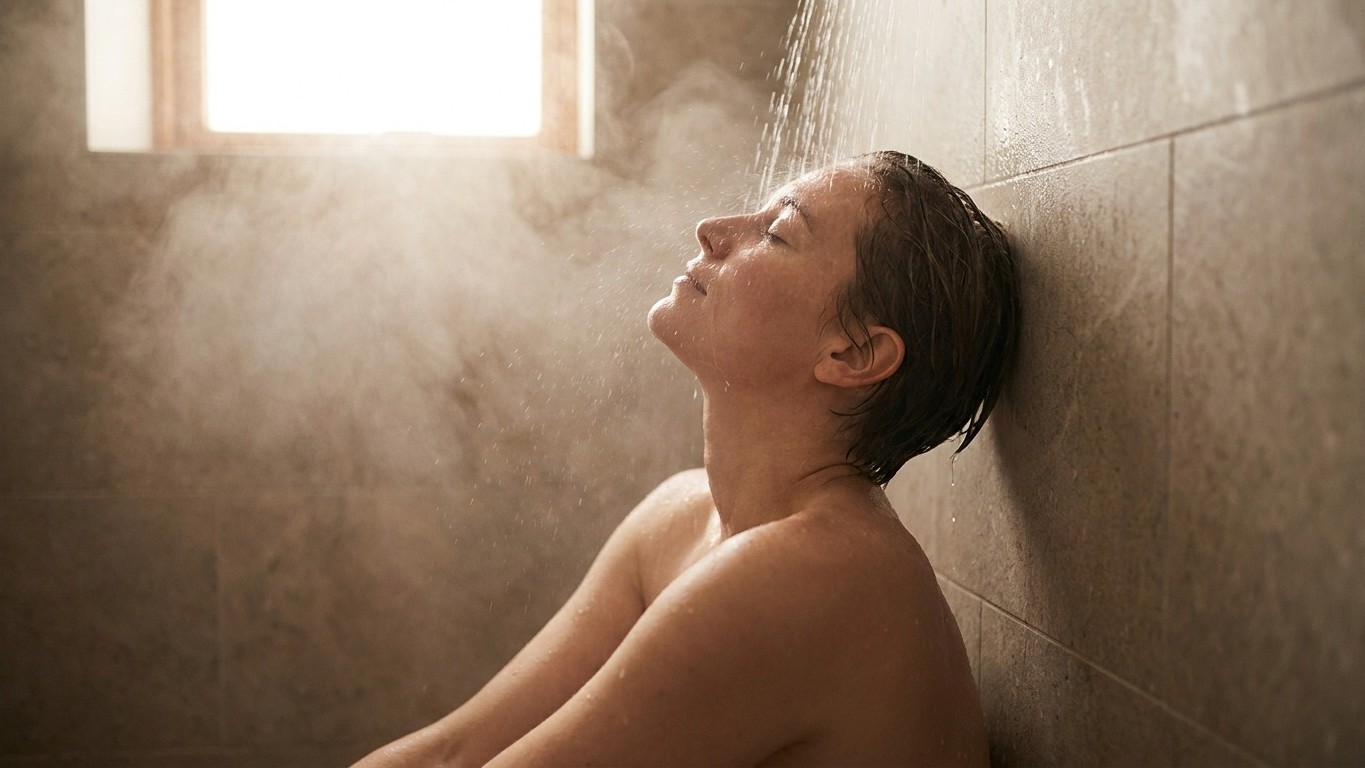
Step under a freezing shower right before bed and the science says you’re doing the opposite of what you think. That icy blast doesn’t speed up cooling. It slams the brakes on it.
The confusion makes sense on paper: cold water, cold body, right? But human thermoregulation doesn’t work like a thermostat you can just crank down. When cold water hits the skin, the initial reaction is vasoconstriction, narrowing blood vessels to conserve core heat, and this temporary response can slow the body’s ability to shed heat. Your skin gets cold. Your core, the part that actually needs to drop for sleep to kick in, barely budges, or in some cases even holds onto more heat than before.
Key takeaways
- Your body doesn’t fall asleep when it feels cold—it falls asleep when core temperature drops one degree Celsius through blood circulation
- Cold water actually triggers vasoconstriction, locking heat in your core while your extremities freeze—the opposite of what you need
- Warm showers 90 minutes before bed reduce sleep latency by 36%, but icy showers flood your system with cortisol and alertness hormones
The Real Mechanism Behind Sleep-Ready Cooling
Falling asleep isn’t triggered by feeling cold. It’s triggered by a specific internal shift. Sleep onset is linked to a natural drop in the body’s core temperature, signaling the brain that it is time to rest, and to transition into sleep, core temperature must decrease by approximately one degree Celsius. That drop happens through blood flow, not through skin temperature alone.
This is where warm water, counterintuitively, does the job better. Biomedical engineers at the University of Texas at Austin ran a systematic review of thousands of studies and found that warm baths and showers stimulate the body’s thermoregulatory system, causing a marked increase in the circulation of blood from the internal core of the body to the peripheral sites of the hands and feet, resulting in efficient removal of body heat and decline in body temperature. The heat doesn’t disappear when you’re in the shower. It gets redistributed toward your hands and feet, then radiates off once you step out into cooler air.
The numbers behind this are hard to dismiss as folklore. A meta-analysis pooling 13 human trials concluded that water-based passive warming for as little as ten minutes, between one and two hours before sleep, shortens sleep latency by approximately 36 percent. Researchers found the sweet spot sits at a water temperature of 40-42.5°C (104-108.5°F) for 10-15 minutes. Timing matters just as much as temperature: the optimal timing of bathing for cooling down of core body temperature in order to improve sleep quality is about 90 minutes before going to bed.
Why the Icy Version Fights Your Own Biology
A cold shower does eventually produce a cooling effect, just not the one people expect and not on the timeline they expect. Once cold exposure ends, the body begins vasodilation to restore warmth to the extremities, leading to a subsequent and rapid drop in core body temperature, and this net cooling effect, if timed correctly, aligns with the circadian rhythm. The key phrase there is “if timed correctly.” Jump straight from an icy shower into bed and you skip the part where that rebound cooling actually happens.
There’s also a hormonal wrinkle that gets overlooked. Cortisol, a stress hormone, is naturally lowest late in the evening, and introducing a sudden surge through cold exposure disrupts the body’s natural pattern and increases wakefulness. That jolt of alertness is exactly why athletes use cold plunges to recover and refocus, not to wind down. One sleep expert put it plainly: a chilly rinse forces more of the blood circulating in your body to your core. Your extremities go cold, your organs stay insulated, and the rapid heat-loss signal your brain is waiting for simply doesn’t arrive on schedule.
Timing can rescue a cold shower from being counterproductive, though. A period of 60 to 90 minutes before the intended bedtime is recommended to strike this balance, ensuring that the stimulating effects of norepinephrine and cortisol have passed, transitioning the body into the beneficial cooling phase. Take that same icy shower right before lights out, though, and you’re layering an alertness spike on top of a delayed cooling response. Not exactly a recipe for drifting off in ten minutes.
The Middle Ground Nobody Talks About Enough
Interestingly, hotter isn’t automatically better either. If you are going to take a shower at night to promote sleep, you might want to consider taking a warm shower instead of one that is steaming hot, since research shows that hot water may cause more dramatic changes to blood pressure in older adults. The goal is gentle vasodilation, not a sauna-level shock to the system.
For people who genuinely love the wake-up jolt of cold water but don’t want to sabotage their sleep, contrast showers offer a workaround worth trying. Finishing the cycle on hot lets blood rush out of the dilated vessels toward muscles and organs, taking heat away from the center of the body, and this approach is more favorable than an exclusively warm shower since it avoids becoming overheated. It’s a small adjustment, but it respects the sequence your body actually needs: constrict, then release.
None of this means an icy shower is inherently bad for you. Cold exposure has its own well-documented perks, just not at eleven p.m. Cold showers tend to heighten alertness and can paradoxically conserve heat through vasoconstriction, making them better suited to earlier in the day, which is why the Cleveland Clinic also favors mornings for the wake-promoting effect. Save the polar plunge for sunrise. Save the warm rinse, 90 minutes before your head hits the pillow, for the nights you actually want to fall asleep fast.
Sources : sciencedirect.com | news.utexas.edu