
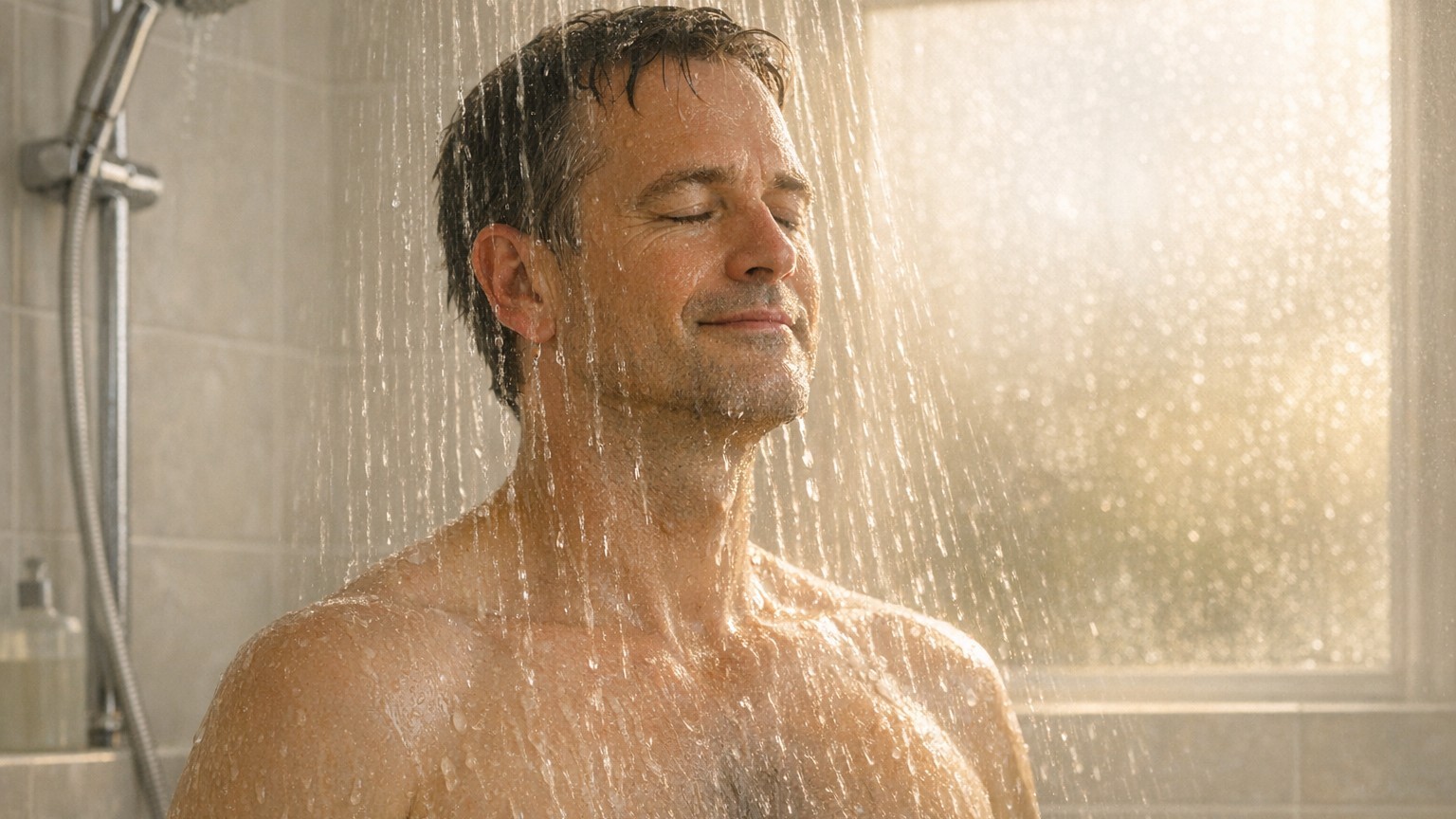
For years, watching my father step out of the bathroom looking perfectly calm and refreshed while the rest of us were still sweating from a cold shower rebound felt like a minor household joke. He was the only one who showered with water that was barely cooler than the air outside. We assumed he was being stubborn, or just out of touch. He was, as it turns out, completely correct, and the physiological explanation is both simple and deeply counterintuitive.
Key takeaways
- Cold water triggers your body’s protective reflex, constricting blood vessels and trapping core heat instead of releasing it
- Your body cools through vasodilation—widening blood vessels to push warm blood toward the skin—which cold showers prevent entirely
- The optimal temperature is surprisingly specific: around 26-27°C, cool enough to encourage cooling but warm enough to avoid defensive shutdown
The Cold Shower Trap
The reflex is perfectly understandable. Temperatures hit 95°F, your skin feels like a cast-iron skillet, and the most instinctive response in the world is to crank the shower to ice-cold. It provides about ninety seconds of genuine relief. Then you step out, and somehow, you feel worse.
This is not a coincidence. Jumping into a cold shower does the opposite of what actually needs to happen to cool down: less blood flows to the surface of the skin, which holds the heat in and around your organs instead of getting rid of it. The body reads the cold signal as a threat, responds defensively, and traps your core heat inside. A cold shower snaps the pores shut, so while you feel cooler immediately, your internal core temperature has no release, and within a few minutes, you actually feel hotter than before you took it.
The large temperature difference between warmed skin and cold water leads to immediate constriction of blood vessels. This is a natural reaction of the body, which thus protects itself from getting cold. The mechanism is elegant in a cruel way: your nervous system interprets the ice-cold water as a cold environment that requires heat conservation, not heat dissipation. The result is the opposite of what you were after.
What Your Body Is Actually Trying to Do
To understand why lukewarm works, you first Need to Understand what “cooling down” actually means physiologically. It is not about your skin temperature, it is about your core.
The body’s optimal temperature is around 37°C. This temperature ensures body systems function properly. When the core gets too hot, the temperature-regulating center of the brain starts sending nervous signals to blood vessels and muscles near the skin, telling them to activate cooling mechanisms. If the core stays at high temperature for too long (around 39-40°C), this can lead to organ damage.
The primary cooling tool the body uses is vasodilation, widening the blood vessels near the skin surface so that warm blood from the core can travel outward, release its heat, and return cooled. The sympathetic active vasodilator system is responsible for 80% to 90% of the substantial cutaneous vasodilation that occurs with whole body heat stress, and skin blood flow can reach 6 to 8 liters per minute during hyperthermia. That is a staggering volume of blood being redirected toward the surface to shed heat — and cold water shuts the whole system down.
Cold water won’t actually lower the body’s core temperature, which is what the body is working desperately hard to stabilize during a heatwave. It only creates the sensation of cooling, briefly, at the skin level. The physics are working against you the entire time.
The Right Temperature, Backed by Science
Frankly, this is the part where folk wisdom and peer-reviewed research arrive at the same destination. My father’s lukewarm instinct was not a quirk, it was thermoregulation working as designed.
On a hot day, a tepid or lukewarm bath or shower is the way to go, evidence suggests 26-27°C is most effective. This helps bring blood to the surface to cool, without being cold enough to cause the body to think it needs to conserve its heat. That narrow band is doing something precise: it presents a temperature cool enough to encourage vasodilation and blood flow toward the skin, but not so cold that the body panics and reverses course.
Studies indicate that the ideal water temperature during hot days is between 26 and 27 degrees Celsius, not too cold, not too hot, exactly what’s needed to allow the body to cool down safely and efficiently. In practice, that means water that feels slightly cool to the touch but nowhere near cold. The kind of temperature most of us impatiently skip right past.
There is a bonus effect that almost no one mentions: when we get hot, sweat mixes with sebum and bacteria on our skin, producing body odor. Cold water has been shown to be less effective at removing and breaking down sebum compared to warmer water. The cold shower that feels so refreshing is, in a small irony, also less hygienic.
The Stakes Are Higher Than Comfort
This might all seem like a minor optimization, a few degrees of shower temperature, a question of personal comfort. The stakes are higher than they appear.
Heat-related mortality for people over 65 years of age increased by approximately 85% between 2000–2004 and 2017–2021. Experimental studies show that older adults exhibit reduced sweating and cutaneous vasodilation, attenuated cardiovascular and autonomic adjustments, and impaired hydration status, limitations that result in greater heat storage, faster increases in core temperature, and a higher risk of dehydration and fatigue compared to younger adults. For that population, a cold shower that triggers vasoconstriction and traps core heat is not just uncomfortable. It is genuinely risky.
A warm sensation on the skin leads to increased blood flow to the skin and increases heat loss from the body. Keeping cool in summer will be more effective with a warm shower (water temperature about 33°C) rather than a cold shower. It will seem warm initially, but after a few minutes will provide better comfort in the long term.
My father, who spent decades in the South and never owned air conditioning until his sixties, arrived at this conclusion through pure observation. No study, no expert, just the noticed pattern that the cold shower left him worse off, and the slightly warm one left him genuinely settled. The science caught up with what his body already knew. The real surprise is how many of us are still turning the dial the wrong way every single summer, chasing a relief that evaporates the moment we step off the tile.
Sources : quora.com | mayoclinicproceedings.org