
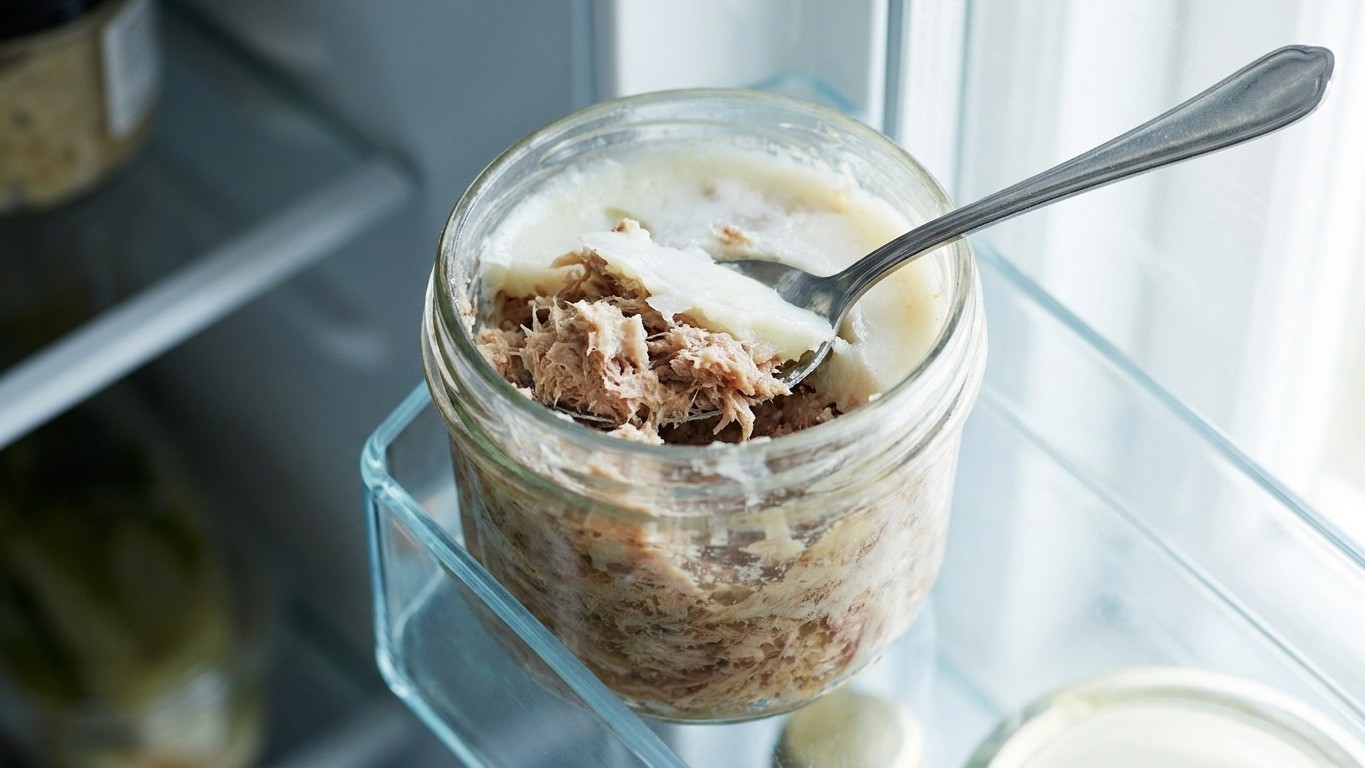
The jar sat in the back of the fridge for six days, maybe seven, wrapped tight in its own lid because surely the cold was doing its job. That was the logic: rillettes are fatty, salted, preserved pork, refrigerated at a steady chill, so time shouldn’t matter much once the temperature stays low. Turns out that reasoning gets the science almost exactly backward.
The bacterium responsible for most rillettes-related food poisoning scares isn’t slowed down by your refrigerator the way ordinary spoilage organisms are. Unlike most other foodborne bacteria, Listeria can grow at refrigerator temperatures (40°F or below), and the longer contaminated foods are stored in the refrigerator, the more opportunity the bacteria have to multiply. That single fact upends the comforting idea that “cold equals safe.” Cold slows down almost everything in your kitchen. Listeria shrugs.
Key takeaways
- Most bacteria hate the cold, but one deadly pathogen actually grows stronger in your refrigerator
- Opening the jar breaks the protective fat seal — and the clock starts ticking immediately
- Federal guidelines say opened rillettes are safe for only 1-2 days, not the week you thought
The bacteria that treats your fridge like home
Most foodborne pathogens, salmonella, E. coli, campylobacter, need warmth to multiply, which is exactly why refrigeration works as a defense against them. Listeria monocytogenes plays by different rules. Federal food safety agencies have documented that Listeria is persistent and grows in cool temperatures, even as low as 31 degrees Fahrenheit, and when food comes into contact with contaminated surfaces, the bacteria can grow rapidly despite aggressive cleaning and sanitizing. That’s barely above freezing. Microbiologists have known this for decades: optimal growth occurs at 86°F to 98°F, but, unlike most bacteria, L. monocytogenes also grows well at refrigerator temperature, and by so-called cold enrichment, it can be separated from other contaminating bacteria by long incubation in this temperature range.
Refrigeration was never designed to eliminate Listeria in the first place. Optimal refrigeration temperatures of 40°F or below stop the multiplication of most other foodborne bacteria, but refrigeration does not kill most bacteria at all. It’s a pause button for some organisms, a non-event for this one. And the danger compounds with time: the risk from L. monocytogenes in foods that support its growth increases substantially when such foods are stored in refrigerators that are too warm, or when foods are stored for extended periods. Seven days in a cold fridge isn’t protection. It’s an incubation window.
What “opened” actually breaks
Traditional rillettes rely on a clever bit of food engineering: a thick cap of rendered fat sealed over the meat, cutting off oxygen and blocking bacterial entry almost as effectively as a can. That seal is why an unopened jar can sit safely for weeks. The moment a knife goes in, though, that barrier is gone for good. Air gets in. So do whatever bacteria are living on the knife, the spoon, your hands, or the inside walls of your refrigerator.
This is precisely the scenario US regulators warn about with pâté and similar refrigerated meat spreads, a close American cousin to rillettes in both texture and risk profile. The FDA’s consumer guidance on ready-to-eat foods is unambiguous about who should avoid them entirely once opened and chilled: do not eat refrigerated pâtés or meat spreads; canned or shelf-stable pâtés and meat spreads may be eaten. The distinction isn’t about the meat itself. It’s about whether the product still lives inside a sealed, heat-treated environment or has been exposed to air, tools, and time.
Cross-contamination compounds the problem in ways that have nothing to do with the rillettes themselves. Refrigerator shelves, drawer liners, and even the rubber door seal can harbor Listeria colonies that transfer onto whatever sits nearby, a risk the FDA flags directly when it recommends setting the refrigerator to 40°F or below and washing the inside walls and shelves, cutting boards, countertops, and utensils that may have contacted contaminated foods, then sanitizing them with a bleach solution. A spotless-looking jar can still pick up bacteria from a shelf that hasn’t been wiped down in months.
So how many days is actually safe?
Here’s where the myth collides with an inconvenient number. Federal food storage guidelines, developed by USDA’s Food Safety and Inspection Service with Cornell University and the Food Marketing Institute, put an opened pâté-style spread at a strikingly short window: pâté keeps just 1 to 2 days in the refrigerator after opening. Not a week. Not even four days. Two, at the outside, and that’s assuming a properly functioning fridge at 40°F, clean utensils every time, and no lingering at room temperature during serving.
Compare that to the sealed version sitting in a pantry. A canned or hermetically jarred product, thanks to industrial heat processing well above boiling, can last on a shelf for years untouched. Crack that seal, though, and the clock most other refrigerated ready-to-eat food follows kicks in immediately, regardless of how cold the fridge runs. Temperature was never the variable that mattered most once the seal breaks. Time is.
Who really needs to worry, and what to do instead
Not every eater faces equal stakes here. Listeriosis tends to pass unnoticed, or as a mild stomach upset, in otherwise healthy adults. The calculation changes sharply for pregnant women, older adults, and anyone with a weakened immune system, the exact groups the FDA and CDC name as facing severe complications, including miscarriage and fetal death, from this specific pathogen. For that reason, the safest habit isn’t just watching the calendar on an open jar, it’s rethinking whether refrigerated rillettes belong on the table at all for someone in a high-risk category, sealed can or not once opened.
For everyone else, the fix is almost embarrassingly simple: portion out what you’ll eat, scoop with a clean utensil each time instead of double-dipping straight from the jar, reseal tightly, and treat day two as the finish line rather than day seven. A freezer, oddly enough, does more good here than a colder fridge setting ever will, since freezing halts Listeria’s growth even though it won’t kill bacteria already present. The next time that jar looks perfectly fine after a week in the cold, remember that Listeria doesn’t leave visible clues. No smell, no film, no off color. Just a bacterium quietly doing the one thing your refrigerator was never built to stop.
Sources : ohioline.osu.edu | fsis.usda.gov