
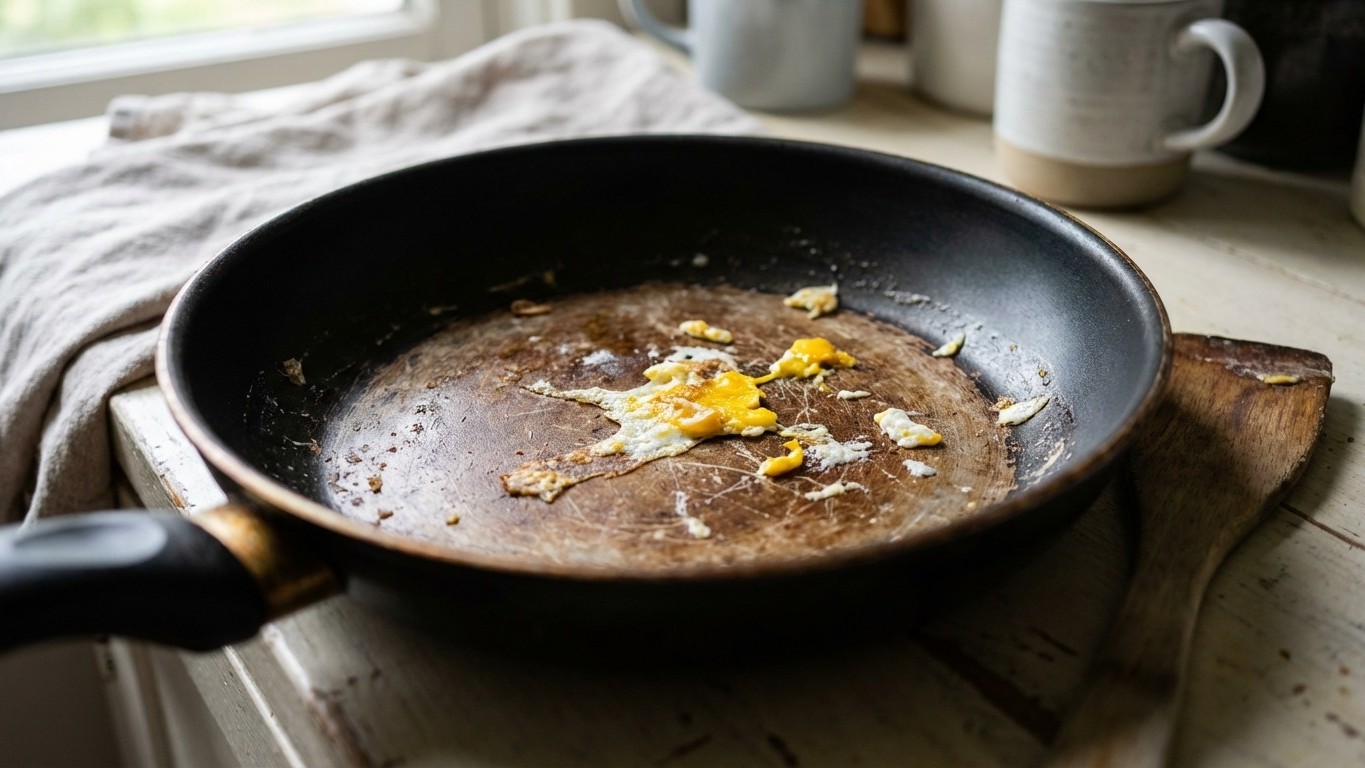
That sinking feeling when your supposedly “premium” nonstick pan starts grabbing onto eggs like superglue after just a few months of use isn’t just frustrating—it’s revealing a dirty secret the cookware industry would rather you didn’t know. While manufacturers promise years of effortless cooking, the reality is that most nonstick surfaces begin deteriorating from the very first use, and the way we‘ve been taught to care for them is often completely wrong.
the Truth about nonstick coating failure lies in understanding what’s actually happening at the molecular level. That smooth, slippery surface you paid premium prices for is typically made from polytetrafluoroethylene (PTFE), commonly known by the brand name Teflon. This coating works by creating an incredibly low-friction surface that prevents food from bonding with the metal beneath. However, PTFE has a fatal flaw: it’s surprisingly fragile and begins breaking down the moment it encounters high heat, aggressive cleaning, or even normal wear from cooking utensils.
The Heat Damage You Can’t See
Most home cooks unknowingly destroy their nonstick pans through heat abuse, often within the first few weeks of ownership. While manufacturers typically rate their cookware as safe up to 400-500°F, the reality is more nuanced. The moment your pan reaches around 300°F—which happens faster than Most People realize—the PTFE coating begins to soften and release toxic fumes. At 500°F, the coating starts to break down rapidly, creating microscopic gaps where food can stick.
Here’s what’s particularly insidious: you can’t see this damage happening. The pan might look perfectly fine while its nonstick properties are steadily diminishing. Every Time you preheat that pan on medium-high heat (which easily reaches 400°F on most stovetops), you’re essentially creating invisible wounds in the coating. These microscopic imperfections become anchor points where proteins and starches can grab hold, leading to the frustrating sticking that signals your pan’s premature demise.
The temperature issue becomes even more complex when you consider that different areas of your pan heat unevenly. The center typically gets hotter than the edges, meaning the coating deteriorates faster in some spots, creating an inconsistent cooking surface that makes even simple tasks like scrambling eggs an exercise in frustration.
The Washing Machine Effect
While heat damage is the primary culprit, the way most people clean their nonstick pans accelerates the destruction process dramatically. Despite marketing claims about dishwasher safety, the combination of high-temperature water, harsh detergents, and aggressive spray cycles creates a perfect storm for coating degradation. The detergents used in dishwashers are specifically formulated to break down grease and food residues—but they’re also incredibly Effective at breaking down the chemical bonds in PTFE coatings.
Even hand washing can be problematic if done incorrectly. Those innocent-looking non-abrasive sponges often contain cleaning agents that gradually wear away the coating. More damaging still is the common practice of washing a hot pan with cold water, which creates thermal shock that can cause the coating to crack and peel at a microscopic level.
the real kicker? That satisfying feeling of getting your pan “Really-happens-in-your-body-after-a-short-night-s”>Really clean” by Scrubbing away every trace of oil or food residue is actually counterproductive. A thin layer of oil acts as a protective barrier for the coating, and removing it completely exposes the PTFE to more direct damage during subsequent cooking sessions.
The Manufacturing Reality Check
Perhaps the most eye-opening truth about nonstick pan failure is that many are essentially designed to fail. The coating application process varies dramatically between manufacturers, and cheaper pans often receive coatings that are too thin to withstand normal home cooking demands. What’s marketed as a “three-layer” or “five-layer” coating system often includes layers that are mere nanometers thick—barely more substantial than a Heavy coat of paint.
Professional chefs rarely rely on nonstick pans for good reason: they Understand that truly durable nonstick performance is largely incompatible with the high-heat cooking techniques that create The best flavors. The pans that do hold up well tend to be significantly more expensive and come with usage restrictions that most home cooks find impractical.
Extending Your Pan’s Life (And When to Give Up)
Understanding the science behind nonstick failure empowers you to dramatically extend your cookware’s useful life. Keep temperatures below 300°F by cooking on low to medium-low heat, allowing adequate preheating time rather than rushing with high heat. Hand wash with warm water and gentle dish soap immediately after cooking, while the pan is still slightly warm but not hot. Store your pans with soft separators between them, and accept that a light coating of oil between uses actually helps preserve the nonstick surface.
However, once sticking becomes a regular occurrence despite proper care, it’s time to accept reality. Attempting to revive a degraded nonstick coating with oils, special treatments, or aggressive cleaning will only make things worse. The molecular damage is irreversible, and continuing to use a compromised nonstick pan can actually release more harmful compounds into your food.
The most liberating realization might be that nonstick isn’t Always-check-Buying-my-humidifier”>Before-buying-a-coat-on-sale”>Always necessary. Learning to cook effectively with stainless steel or cast iron—which actually improve with age and proper seasoning—can free you from the endless cycle of replacing failed nonstick cookware. Your wallet, your health, and Your cooking skills will all benefit from embracing techniques that work with durable materials rather than fighting the inevitable failure of synthetic coatings.