
Picture this: you’re running late for work, jump in your car, and find yourself staring through a completely fogged windshield. You grab whatever cloth is handy, start wiping frantically, and end up with a streaky mess that somehow makes visibility even worse. Sound familiar? What if I told you that our grandparents had this whole window-clearing thing Changes-everything-in-5-Minutes-since-i-do-this-simple-trick-under-the-covers-the-life-changing”>Minutes-since-i-do-this-simple-trick-under-the-covers-the-life-changing”>Minutes-since-i-do-this-simple-trick-under-the-covers-the-life-changing”>Minutes“>Changes-everything-in-30-seconds”>Changes-everything”>Figured Out decades ago, using a Technique so Stopped–buying-fresh-herbs-once-i-discovered-this-simple-jar-trick”>Simple and effective that professional window cleaners still swear by it today?
The Secret isn’t in expensive anti-fog sprays or microfiber cloths that promise the world but deliver disappointment. It’s Actually-makes-you-look-younger”>Actually-makes-you-look-younger”>Actually-explains”>Actually-worked”>Actually hiding in plain sight in your bathroom cabinet, and once you try this method, you’ll wonder why anyone ever settled for streaky, half-cleaned windows that fog up again within Minutes.
The Science Behind Crystal-Clear Results
The magic ingredient? Plain old shaving cream. Yes, the same foam your grandfather used every morning contains exactly what you need to create an invisible barrier that prevents condensation from forming on glass surfaces. Unlike modern chemical solutions that often leave residue or create their own streaking problems, shaving cream works by leaving behind an ultra-thin layer of surfactants that break the surface tension of water droplets Before they can form.
When moisture hits a treated surface, instead of clinging and creating that familiar foggy haze, water molecules simply slide away or form such tiny droplets that they remain completely transparent. It’s the same principle that anti-fog treatments for swimming goggles use, except you’re getting it from a product that costs a fraction of specialized solutions and works just as effectively.
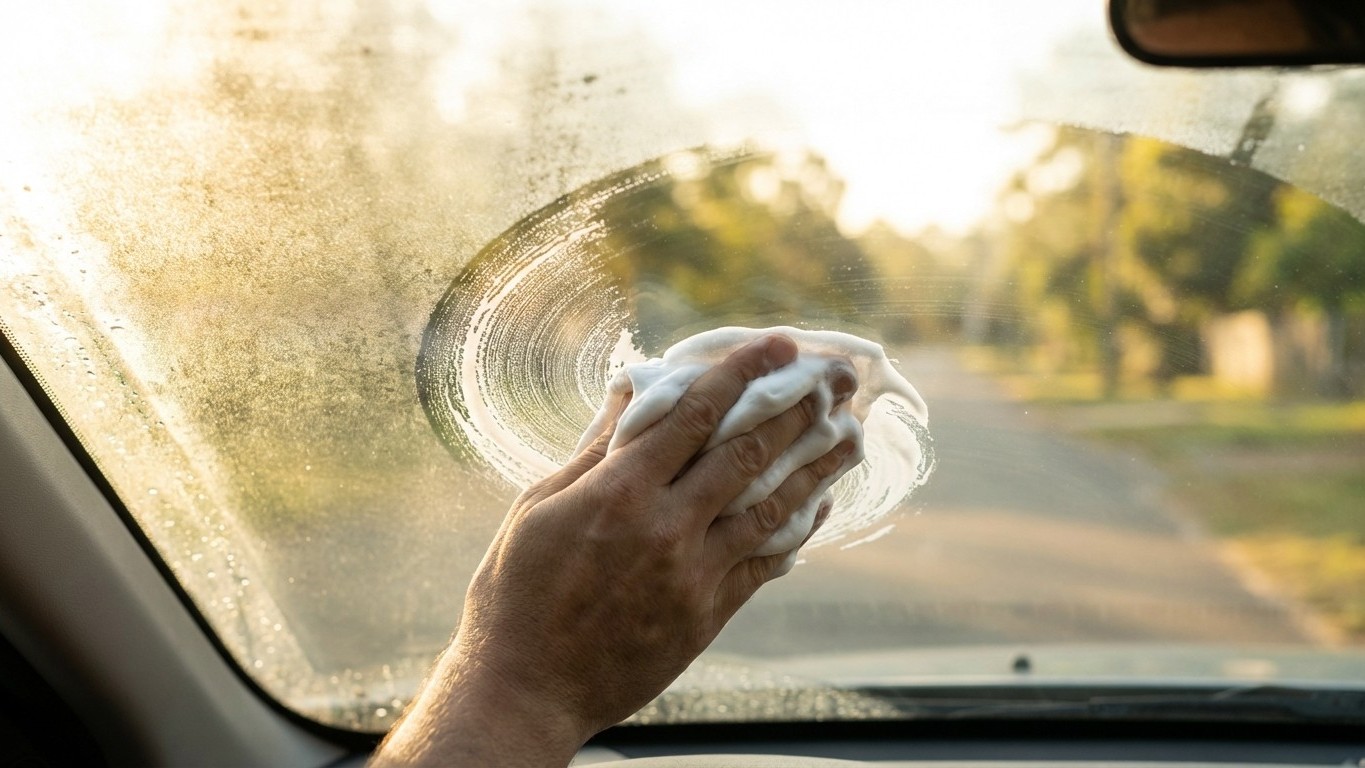
The technique itself is beautifully straightforward. Apply a small amount of shaving cream directly to the clean, dry glass surface. Using circular motions, spread it evenly across the entire area, Making-a-major-comeback-in-every-Outfit”>Making sure to cover every inch Without leaving thick patches. The key is working the cream into the glass until it becomes nearly invisible, then using a clean, dry cloth to buff away any remaining residue. The whole process takes less than two minutes per window, but the results last for weeks.
Beyond Car Windows: Where This Method Shines
While car windshields might be the most obvious application, this technique transforms every glass surface in your life. Bathroom mirrors that fog up during hot showers become a thing of the past when treated with this method. House windows that collect condensation during temperature Changes-everything-based-on-rose-type”>Changes-everything-when-lashes-become”>changes stay crystal clear, eliminating that constant cycle of wiping and re-wiping that never quite works.
Professional cleaners have been using variations of this approach for decades, particularly in commercial settings where foggy glass isn’t just inconvenient—it’s a safety hazard. Restaurant windows, retail storefronts, and office buildings benefit from this same principle, scaled up with commercial-grade products that work on the exact same surfactant science.
Professional Tips for Perfect Results
Timing matters when applying this treatment. The glass surface must be completely clean and dry before application, which means doing a thorough cleaning first with your regular glass cleaner. Any dirt, oils, or existing residue will prevent the shaving cream from bonding properly with the glass, reducing its effectiveness significantly.
Temperature plays a role too. Applying the treatment when glass is at room temperature works best, as extremely hot or cold surfaces can cause the cream to behave unpredictably. Early morning or Evening applications work particularly well for car windows, when the glass has had time to normalize to ambient temperature.
The type of shaving cream matters less than you might think. Basic foam varieties work just as well as premium brands, though creams with moisturizers or special additives might leave different residues. Stick with simple, unscented formulas for the most predictable results, and avoid gel-based products that don’t spread as evenly.
Re-application frequency depends on usage and environmental conditions. Car windows typically need retreatment every three to four weeks, while indoor mirrors and windows can go two months or Longer-wake-up-at-3-am-this-evening-food-stopped-my-cramps-in-one-week”>Longer between applications. You’ll know it’s time for a fresh treatment when you notice condensation starting to form again, though by then you’ll probably be so spoiled by crystal-clear visibility that even minor fogging feels unacceptable.
This Old-School approach proves that sometimes the best solutions aren’t the newest or most expensive ones. In a world of specialized products and complex chemical formulations, it’s refreshing to discover that a Simple technique using Everyday items can outperform modern alternatives. Your grandfather might not have Understood-this-ritual-what-your-dog-is-really-trying-to-do-before-bedtime”>Understood the science of surfactants, but he definitely knew what worked. Next time you’re facing foggy windows and reaching for that inevitably disappointing cloth, remember that the real solution Has Been sitting in Your medicine cabinet all along, waiting to transform your relationship with glass surfaces forever.