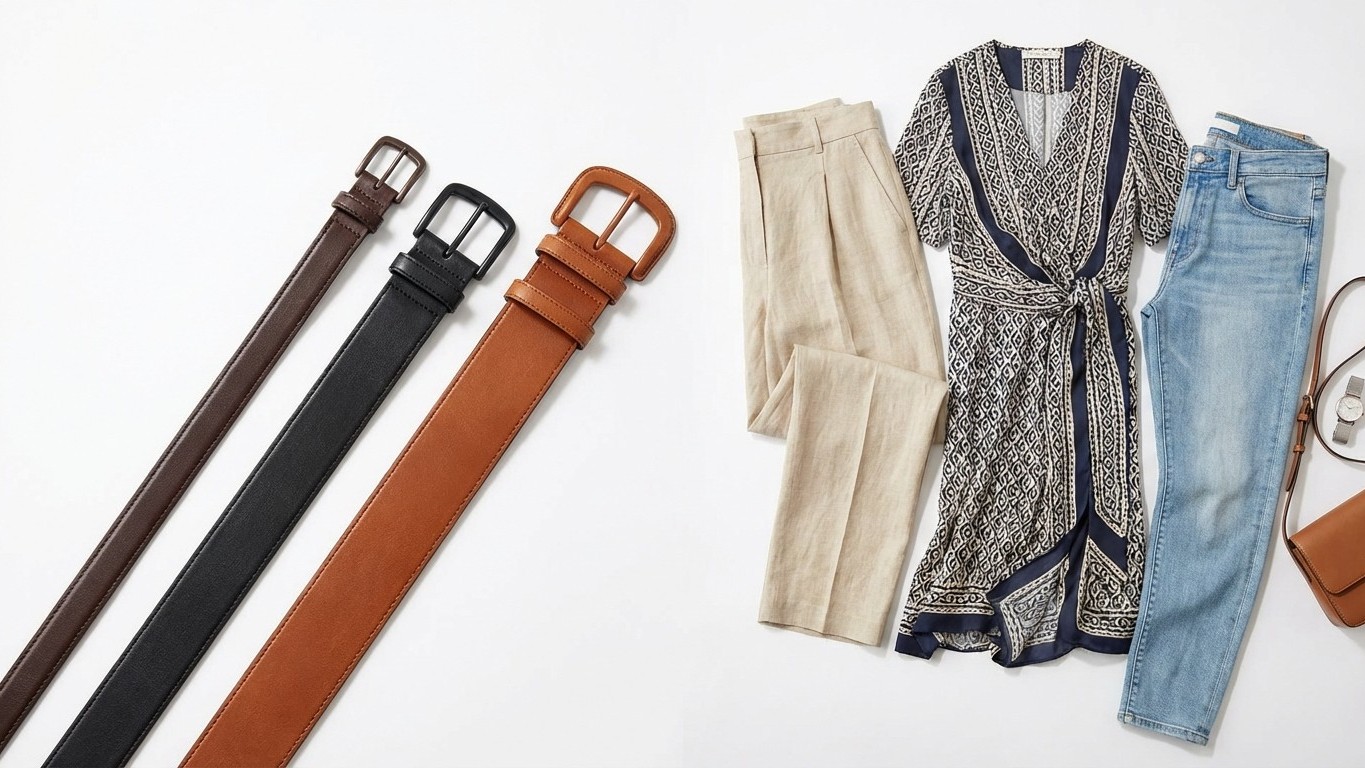
Walking into any accessories department, most of us gravitate toward belts the same way we always have: we check the size, admire the buckle, maybe feel the leather quality. But According to professional stylists, we’re completely missing the most crucial Detail that determines whether a belt will elevate our look or sabotage it entirely. This overlooked element has nothing to do with brand names or price points, yet it’s the difference between looking effortlessly polished and perpetually struggling with proportions.
The secret lies in understanding belt width in relation to your Body Type and the specific garments you’ll be pairing it with. While most shoppers focus on length and style, professional stylists know that width is the make-or-break factor that can either create stunning silhouettes or throw off Your Entire outfit’s balance. This isn’t about following rigid rules, but rather understanding how different widths interact with your natural proportions and clothing choices to create the most flattering result possible.
The Width-to-Waist Ratio Revolution
Professional image consultants consistently emphasize that belt width should complement, not compete with, your natural waist proportion. For those with longer torsos, wider belts create visual breaks that enhance the silhouette, while shorter torsos benefit from narrower widths that don’t overwhelm the midsection. The magic happens when you understand that a belt isn’t just holding up your pants or cinching your dress—it’s creating a horizontal line that can either enhance or disrupt Your Body‘s natural proportions.
Fashion stylists working with diverse body types have observed that many people choose belts based solely on what catches their eye in the store, Without considering how that width will interact with their specific measurements. A stunning wide statement belt might look incredible on the hanger, but if it covers too much of a shorter torso, it can actually make the wearer appear stockier rather than more defined. Conversely, a delicate thin belt on a longer torso might get lost entirely, failing to create the waist definition it was intended to provide.
Beyond Body Type: The Garment Connection
The relationship between belt width and clothing style represents another layer that separates amateur styling from professional expertise. Stylists automatically consider not just the wearer’s proportions, but how the belt width will interact with specific garment details. High-waisted trousers with wider leg openings often benefit from medium to wide belts that can hold their own against the substantial fabric volume, while slim-fit jeans typically look most balanced with narrower options that don’t create bulk at the waistline.
When working with dresses, the belt width consideration becomes even more nuanced. Flowing maxi dresses can handle substantial belt widths that create dramatic waist definition, while fitted bodycon styles often look best with thinner belts that enhance rather than compete with The Dress‘s natural silhouette. Professional stylists also consider the dress’s existing design elements—busy patterns or embellishments might call for simpler, narrower belts, while minimalist designs can accommodate more substantial statement pieces.
The fabric weight and drape of garments also influence optimal belt width choices. Heavier fabrics like wool coats or structured blazers can support wider belts without looking overwhelming, while delicate materials like silk blouses or lightweight knits often pair better with proportionally thinner options that don’t disrupt the fabric’s natural flow.
Professional Styling Secrets
Celebrity stylists and fashion consultants employ several quick assessment techniques when selecting belt widths for their clients. They consider the distance between the natural waist and bust line, the hip-to-waist ratio, and the overall vertical proportions of the torso. This isn’t about complex measurements, but rather developing an eye for what creates the most harmonious overall silhouette.
One particularly effective approach involves visualizing the belt as a frame element rather than just an accessory. Just as picture frames need to complement rather than overpower the artwork, belt width should enhance the wearer’s natural proportions without dominating the overall look. Professional stylists often recommend starting with classic medium widths—typically between one to two inches—as these tend to be the most universally flattering and versatile across different outfit combinations.
The color and finish of the belt also interact with width considerations in ways that many shoppers don’t realize. Darker, matte finishes tend to recede visually, Making wider belts appear less prominent, while lighter colors or shiny finishes draw more attention and can make even narrow belts more noticeable. Understanding these optical effects allows for more sophisticated belt selection that takes into account both width and visual weight.
Transforming Your Belt Game
Implementing this professional approach to belt selection doesn’t require a complete wardrobe overhaul. Start by honestly assessing your current belt collection with fresh eyes, considering width in relation to your most frequently worn garments. Many people discover they’ve been defaulting to one width across all situations, missing opportunities to enhance different outfit types more effectively.
Building a strategic belt wardrobe might mean investing in just two or three different widths rather than multiple versions of similar styles. A narrow belt for delicate fabrics and fitted silhouettes, a medium width for Everyday versatility, and perhaps a wider statement option for dramatic waist definition can cover most styling scenarios more effectively than a dozen similar belts.
The transformation that comes from understanding belt width goes beyond individual outfit improvements. Once you start seeing belts as proportion-enhancing tools rather than Simple-jar-trick”>Simple Accessories, your entire approach to styling becomes more intentional and effective. This professional mindset shift—focusing on how accessories interact with your unique proportions and specific garments—creates the foundation for consistently polished, well-balanced looks that seem effortlessly put together.