
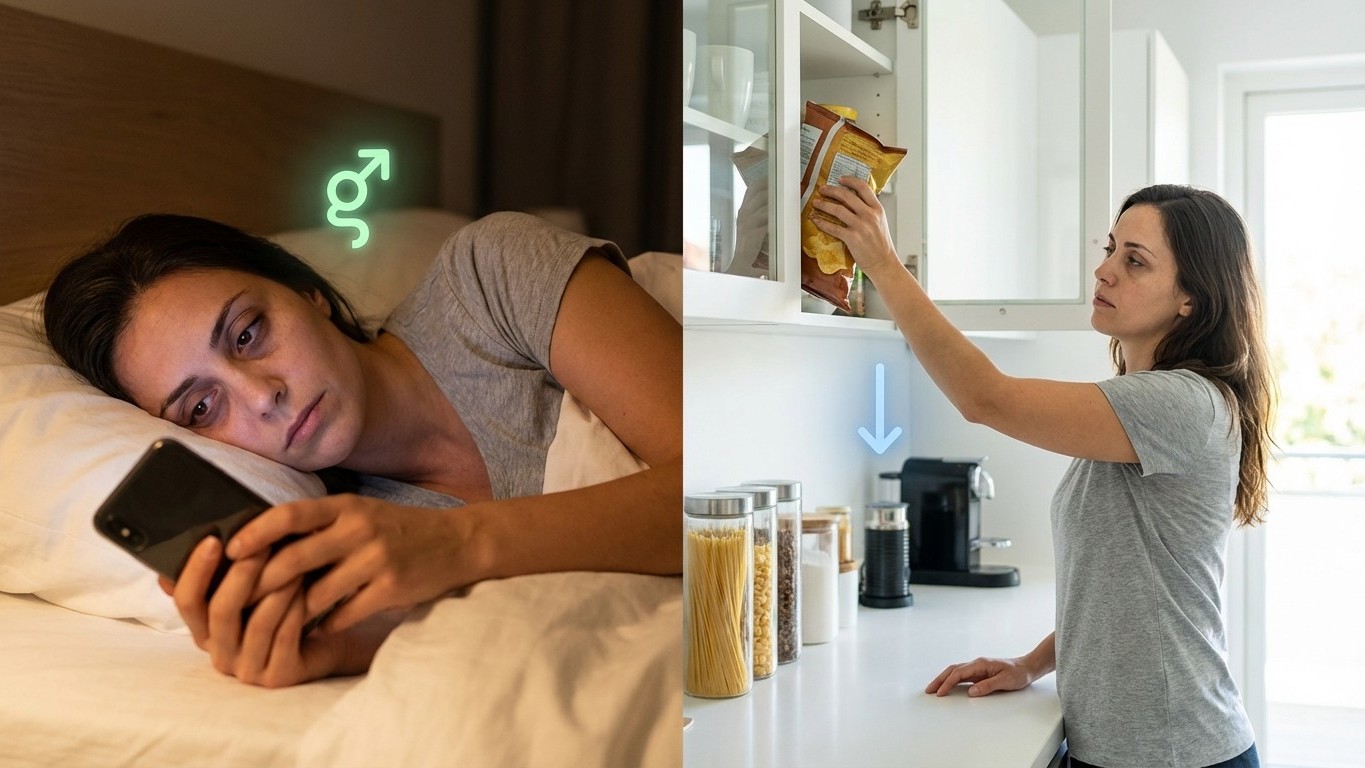
If you’ve found yourself standing in front of the refrigerator at 2 PM, mechanically reaching for snacks despite having just finished lunch, you’re experiencing one of sleep deprivation’s most frustrating side effects. That compulsive eating isn’t a lack of willpower—it’s your body’s desperate attempt to compensate for the energy it didn’t restore during sleep.
Recent research From the University of Chicago reveals that after just one night of shortened sleep (four hours instead of eight), participants consumed an average of 385 extra calories the following day, primarily from high-fat, high-carb snacks. What’s happening in your body during those drowsy hours is a complex hormonal cascade that essentially hijacks your appetite control system.
The Hormonal Chaos Behind Your Cravings
When sleep falls short, your body launches what scientists call a “metabolic rebellion.” Two key hormones—ghrelin and leptin—become completely dysregulated. Ghrelin, often dubbed the “hunger hormone,” spikes by up to 15% after poor sleep, while leptin, which signals fullness, drops by 18%. This creates a perfect storm where you feel ravenously hungry while simultaneously losing the ability to recognize when you’ve had enough.
Dr. Erin Hanlon from the University of Chicago’s Sleep, Metabolism and Health Center explains that sleep deprivation also elevates levels of 2-arachidonoylglycerol (2-AG), an endocannabinoid that intensifies the pleasure we get from eating—particularly from sweet and fatty foods. This biological mechanism Explains Why you’re not craving salad Minutes-since-i-do-this-simple-trick-under-the-covers-the-life-changing”>Minutes-since-i-do-this-simple-trick-under-the-covers-the-life-changing”>Minutes-since-i-do-this-simple-trick-under-the-covers-the-life-changing”>Minutes“>After a restless night; your brain is literally programmed to seek out the most calorie-dense options available.
The prefrontal cortex, responsible for decision-Making and impulse control, becomes significantly less active when we’re sleep-deprived. Brain imaging studies show that tired individuals have heightened activity in reward centers when viewing food images, while the areas responsible for rational decision-making remain notably quiet. You’re not weak for reaching for those cookies—you’re fighting against millions of years of evolutionary programming with a compromised brain.
The Vicious Cycle That Keeps You Trapped
What makes sleep-induced snacking particularly insidious is how it perpetuates itself. Those extra calories consumed during drowsy days often lead to elevated blood sugar levels that can disrupt sleep quality the following night. A 2023 study published in the Journal of Clinical Medicine found that participants who consumed high-glycemic snacks after poor sleep experienced 23% more sleep fragmentation the subsequent night.
This creates what researchers term a “sleep-food feedback loop.” Poor sleep leads to overeating, which leads to poorer sleep, which leads to more intense cravings. Breaking free requires understanding that this isn’t about willpower—it’s about recognizing a biological process that demands strategic intervention.
The timing of these cravings also follows a predictable pattern. Most people report the strongest urges between 2-4 PM and again around 8-10 PM, coinciding with natural dips in alertness. During these windows, your already compromised impulse control reaches its lowest point, making those mindless trips to the kitchen-gold”>Kitchen-gold”>Kitchen feel almost automatic.
Strategic Solutions That Actually-makes-you-look-younger”>Actually-makes-you-look-younger”>Actually-explains”>Actually Work
Combating sleep-deprivation snacking requires working with your biology, not against it. The most effective approach involves what sleep specialists call “preemptive planning.” When you know you’ve had insufficient sleep, prepare your environment before those peak craving hours hit. Remove easy-to-grab processed foods from your immediate vicinity and pre-portion protein-rich snacks that will help stabilize blood sugar.
Protein becomes your Secret weapon because it provides sustained energy without the blood sugar spikes that worsen the sleep-food cycle. Greek yogurt with berries, a small handful of nuts, or even a hard-boiled egg can satisfy that biological drive to eat while supporting better sleep later. Research from Purdue University shows that consuming 20-25 grams of protein during afternoon snacking can reduce Evening cravings by up to 60%.
Hydration plays a surprisingly crucial role as well. Sleep deprivation often masquerades as hunger when your body is actually seeking energy through any means necessary. Drinking-enough-water-yet-this-subtle-sign-on-my-lips-revealed-the-truth”>Drinking a large glass of water and waiting ten Minutes-daily-since-age-50-what-her-cardiologist-discovered-after-one-year”>Minutes before reaching for food can help distinguish between genuine hunger and fatigue-driven cravings.
Perhaps most importantly, practice what researchers call “sleep debt forgiveness.” Instead of berating yourself for those extra snacks, recognize them as biological responses to a physiological need. The goal isn’t perfect eating after poor sleep—it’s minimizing the damage while prioritizing better rest moving forward. Your body will naturally reset its appetite regulation once sleep debt is repaid, typically within 2-3 nights of adequate rest.
Understanding the science behind sleep-induced snacking transforms it from a personal failing into a manageable biological process. By working with your body’s natural responses rather than fighting them, you can break the cycle and reclaim control over both your sleep and Your relationship with food.