
Standing in my kitchen after yet another collapsed chocolate cake, flour dust covering my countertops like evidence of my culinary crimes, I finally-explain-why-they-never-throw-away-pasta-water-and-how-it-transforms-every-sauce”>Finally admitted defeat. Despite following recipes to the letter, measuring precisely, and crossing my fingers with each oven timer, my baked goods consistently disappointed. The revelation that changed everything“>everything“>everything-based-on-rose-type”>Everything wasn’t a secret technique or expensive equipment—it was understanding that not all flours are created equal.
The Great Flour Awakening
For years, I grabbed whatever flour looked familiar at the grocery store, assuming flour was simply flour. This misconception cost me countless hours, wasted ingredients, and bruised confidence. The breakthrough came when a pastry chef friend casually mentioned protein content while watching me struggle with yet another dense, chewy cake that should have been light and fluffy.
Flour protein content determines gluten development, which directly impacts texture. Low-protein flours create tender, delicate crumbs perfect for cakes and pastries. High-protein flours develop strong gluten networks ideal for bread and pizza dough. Single–Mistake-explains-why-it-always-hardens”>This Single piece of knowledge transformed my understanding of baking from mysterious alchemy to logical science.
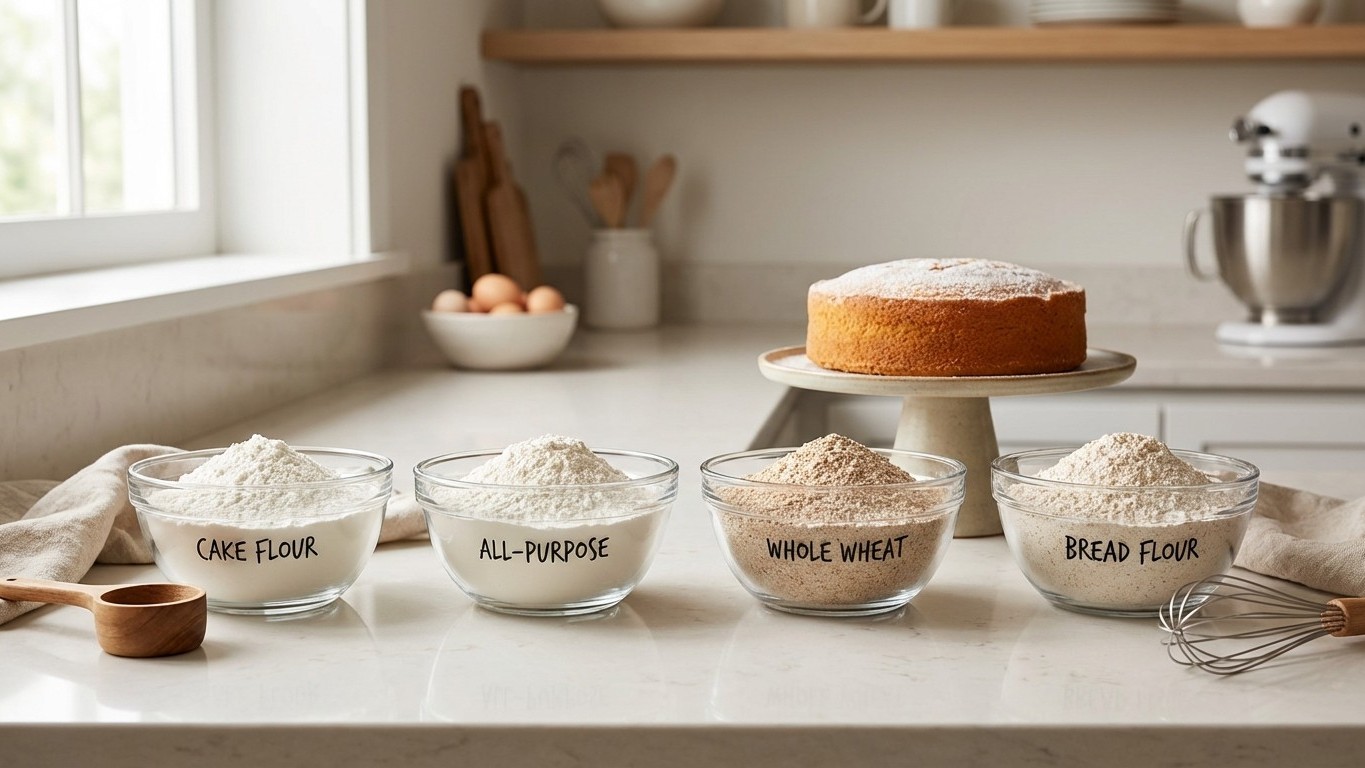
All-purpose flour, my former go-to for everything, sits in the middle with moderate protein content. While versatile, it’s often not the optimal choice for specific baking goals. Cake flour, with its lower protein content and finer grind, produces the tender, fine-crumb texture that makes professional cakes so irresistible. Bread flour’s higher protein content creates the chewy, structured crumb that makes homemade bread Actually-works”>actually worth the effort.
Decoding Your Flour Options
Understanding protein percentages revolutionized my baking results. Cake flour typically contains 6-8% protein, creating minimal gluten development and maximum tenderness. This makes it perfect for layer cakes, cupcakes, and delicate pastries where you want that melt-in-your-mouth quality that distinguishes bakery treats from home attempts.
All-purpose flour ranges from 9-12% protein, making it the Swiss Army knife of flours. It works adequately for most applications but excels at none. This explains why my cookies sometimes spread Too Much and my cakes occasionally turned out dense—I was using a compromise flour for tasks requiring specialization.
Bread flour pushes protein content to 12-14%, developing strong gluten networks that create structure and chewiness. Using bread flour for cakes results in tough, rubbery disasters, while using cake flour for bread produces flat, structureless loaves. the wrong flour choice explains countless baking failures that had nothing to do with technique or timing.
Pastry flour, often overlooked in home kitchens, offers 8-9% protein—the sweet spot for pie crusts, biscuits, and pastries requiring tenderness with slight structure. This middle ground between cake and all-purpose flour produces flaky, tender results that make the difference between homemade pastries that impress and those that merely satisfy.
The Substitution Game Changer
For bread flour substitutes, adding vital wheat gluten to all-purpose flour boosts protein content. One tablespoon per cup of all-purpose flour creates a reasonable bread flour alternative, though the texture won’t perfectly match commercial bread flour’s consistency.
Self-rising flour, essentially all-purpose flour with baking powder and salt added, works well for quick breads and biscuits but requires recipe adjustments to account for pre-added leavening. Understanding these relationships prevents the confusion that once led me to create inedible chemistry experiments instead of baked goods.
Beyond Basic White Flour
Whole wheat flour introduces entirely different considerations. Its bran and germ create denser textures and nutty flavors while reducing gluten development. Substituting whole wheat flour cup-for-cup rarely produces identical results to recipes developed for white flour. Starting with partial substitutions—replacing 25-50% of white flour with whole wheat—allows gradual adaptation while maintaining acceptable texture.
Alternative flours like almond, coconut, and oat flour require completely different approaches since they lack gluten entirely. These flours create unique textures and flavors but demand recipe modifications, additional binding agents, and adjusted expectations. Understanding that gluten-free baking follows different rules prevents the frustration of expecting identical results from fundamentally different ingredients.
The flour revelation that transformed my baking wasn’t complex—it simply required understanding that ingredients have specific purposes beyond generic categories. Just as you wouldn’t use olive Oil for everything requiring fat, different flours serve different functions. This knowledge turns baking from hit-or-miss experimentation into predictable success, where ingredient choices align with desired outcomes rather than depending on luck and hope.
Now my kitchen produces consistently impressive results because I choose flours intentionally rather than defaultively. The collapsed cakes, tough cookies, and dense breads became distant memories once I started treating flour selection as seriously as any other Crucial baking decision.