
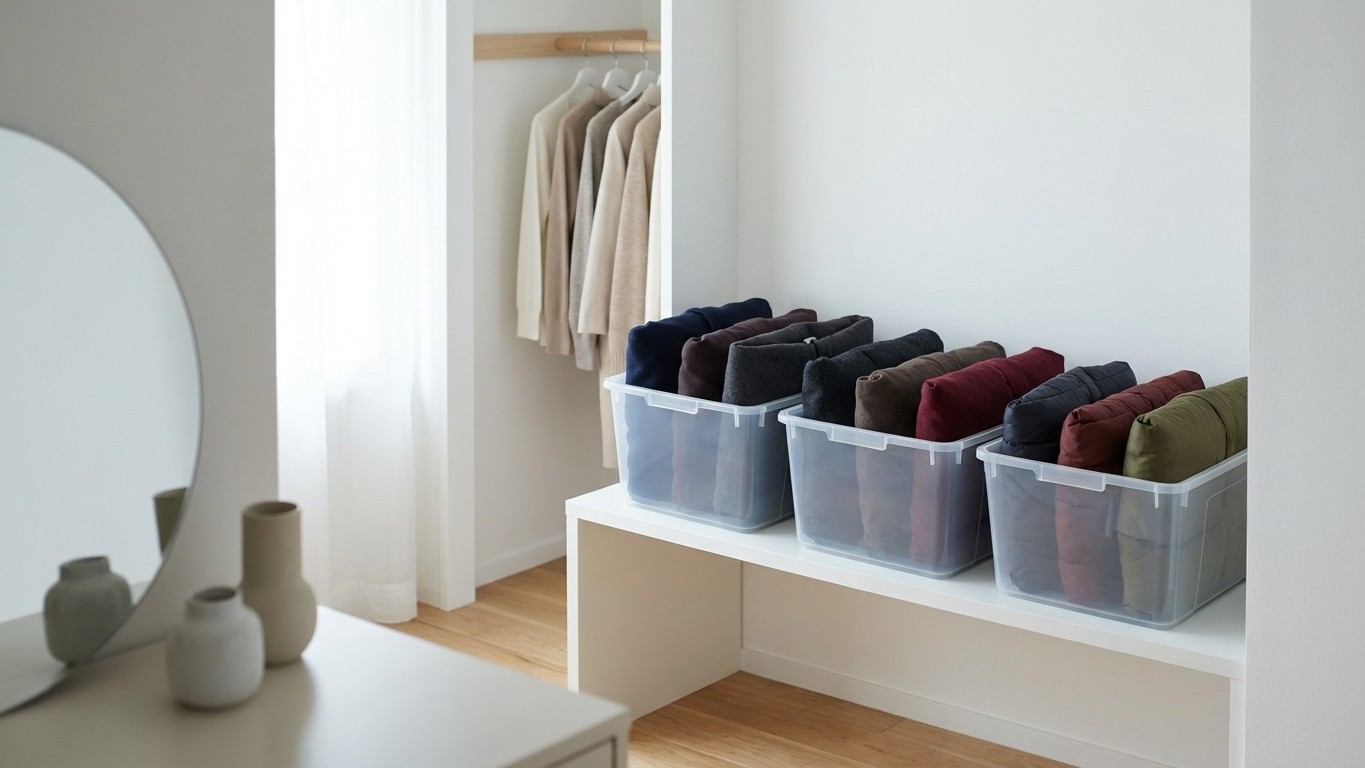
For years, I hung my winter coats in the closet like everyone else—taking up precious hanging space, creating shoulder bumps from wire hangers, and watching my wardrobe area become increasingly cramped as seasons changed. Then I discovered the KonMari method for folding winter coats, and everything changed. This Japanese Technique transforms bulky outerwear into neat, compact rectangles that stand upright on their own, freeing up closet space Without requiring a single hanger.
The revelation came when I realized that folding Stopped-guessing-my-eyebrow-shape-since-i-learned-this-simple-pinch-technique”>stopped-rolling-my-sleeves-the-usual-way-after-discovering-this-stylist-trick”>stopped-buying-thrift-clothes-until-a-seamstress-showed-me-this-hidden-seam-trick”>clothes neatly and standing them up vertically—rather than stacking them or worse, piling them in a chair—prevents wrinkles, saves space and expresses gratitude for every item. What seems counterintuitive at first—folding a structured winter coat—actually-works”>actually works better than traditional hanging methods for many types of outerwear.
Why Traditional Coat Storage Falls Short
Most of us default to hanging winter coats because That’s simply what we’ve always done. But this approach creates several problems that we’ve learned to accept as inevitable. Heavy coats stretch and lose their shape when hung for extended periods, especially on inadequate hangers. Traditional Storage advice warns against folding or creasing winter coats, insisting we hang them on sturdy hangers to maintain their shape, but this guidance doesn’t account for space limitations or the reality of seasonal storage.
The space issue becomes particularly acute in smaller homes or apartments where closet real estate is at a premium. When closet space is limited, we’re forced to consider other options like top shelves, under the bed, or in a trunk—areas that can provide ample storage without taking up valuable closet space. This is where The Japanese folding approach becomes revolutionary.
The KonMari Method recommends that you don’t store winter clothes out of sight in a garage or basement. Instead, as the seasons change, move out-of-season items to higher shelves or into the back of your closet, storing all clothing together in main closets and drawers regardless of seasonality. This philosophy challenges our compartmentalized thinking about seasonal storage.
The Science Behind the KonMari Coat Fold
The magic of this folding method lies in its systematic approach to creating structure within the garment itself. The process begins by laying your winter jacket flat in front of you, face up, then folding the arms down and towards the center, folding the jacket in half lengthwise, and Finally-stopped-buying-recycled-fabric-clothes-here-s-what-changed-my-mind-after-years-of-advocating-for-them”>Finally-flatters-my-face”>finally folding in half or thirds starting from the bottom upward until it can stand upright.
An essential element of KonMari folding is te-ate—the Japanese word for healing, which literally means to “apply hands.” This practice of smoothing your hands over each item as you fold transmits your energy into it and gives you a chance to express gratitude. It removes excess air from the material, eliminating wrinkles and making your items easier to fold, while the warmth of your palm causes the fibers to stand up and pulls the clothes taut.
The technique works particularly well with different types of winter outerwear. Folding saves space by allowing you to store jackets in drawers, bins, or suitcases, prevents stretching that can happen when hung for too long, and helps reduce creases. When you fold your jacket, you can store it in small spaces while careful folding stops the jacket’s weight from pulling on the seams and fabric.
Step-by-Step Mastery of the Technique
The transformation begins with proper preparation. Before storing, wash or dry clean coats and sweaters, replace lost buttons and repair tears. This expresses gratitude for the items that kept you warm and prevents smelly clothes from attracting bugs while keeping stains and odors from setting in—just make sure they are fully dried before storing to prevent mildew.
The actual folding process requires patience and precision initially, but becomes second nature with practice. Start by laying the coat flat, smoothing out any wrinkles, folding the sleeves in, then folding the coat in half and again if needed. This tidy, compact fold protects your coat and frees up packing space. The key is creating that distinctive rectangular shape that characterizes all KonMari folds.
Your job is to create a long rectangle with your item of clothing, and then fold it as many times as is necessary so that it’s sturdy enough to stand upright on its own. This principle applies whether you’re dealing with a lightweight windbreaker or a heavy wool coat. The number of folds will vary based on the coat’s thickness and length, but the end result should always be a stable, self-standing rectangle.
For storage, use breathable fabric cubes or bags on top shelves, as clothing needs to breathe and breathable storage decreases wrinkles. Press down or deflate bulky knits to store them in a more compact space, and if using storage bags, press down to eliminate air to make them even smaller before sliding your bins onto those top shelves.
Beyond Space Saving: The Unexpected Benefits
What initially appears to be simply a space-saving technique Reveals itself as something much more transformative. File folding clothes—also known as the KonMari Method of folding—helps keep drawers organized and uncluttered so you can always find the clothing items you need without searching through stacks. This visibility factor becomes Crucial during seasonal transitions when you need to quickly assess What You have.
This means no more items getting buried and Forgotten at the bottom of a pile. Instead, you can see everything you have at a glance and your storage remains neat and tidy. The psychological impact of this visibility cannot be overstated—It Transforms the relationship you have with your seasonal wardrobe.
The method also proves remarkably effective for different storage solutions. Vacuum storage bags effectively compress bulky items and save space, while plastic containers keep winter clothing compact and protected. However, feather- and down-filled winter wear could get damaged in vacuum-sealed bags, so it’s better to pack them directly into plastic bins, but not so tightly that they’re excessively squished.
This folding method shows that laundry doesn’t have to be a chore—it can be uplifting and contribute to a very neat and organized space. Following these suggestions teaches how folding clothes can be a peaceful practice that helps you appreciate, take care of and easily sort the clothes you have.
The Japanese approach to winter coat storage represents more than just a practical solution—it’s a complete reimagining of how we interact with our seasonal wardrobes. The experts recommend creating a process that sparks joy, suggesting you light some incense before starting, thank your clothing for keeping you warm through another winter and welcome a new season with lighter clothing in reach. This mindful approach transforms storage from a mundane task into a meaningful ritual that honors both your belongings and the changing seasons.