
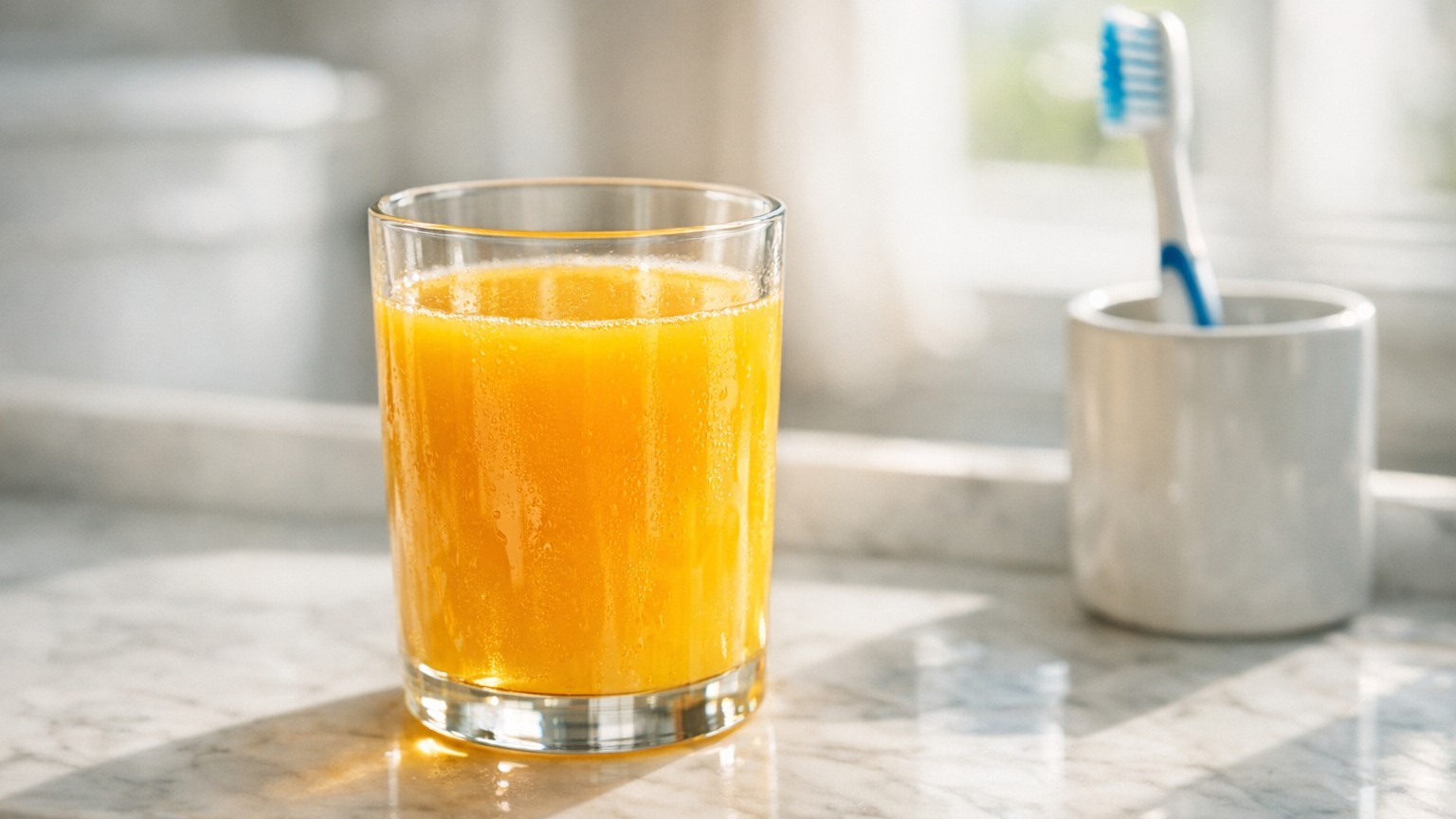
A glass of orange juice sitting on the breakfast counter, followed immediately by a vigorous two-minute brush. Logical, even virtuous. Clean juice, clean teeth, the whole routine wrapped up in under five minutes. The problem is that this sequence, repeated daily, is one of the quieter acts of self-sabotage in modern dental hygiene. By the time most people hear this from their dentist, the damage is already done.
Key takeaways
- A common breakfast habit is accelerating permanent tooth enamel loss without any warning signs
- The science behind why acidic juice softens enamel right before you brush it away
- A simple timing adjustment costs nothing but could save you from crowns and root canals
What Actually Happens the Moment You Drink That Glass
Oranges have a pH level between 3.7 and 4.3, making them quite acidic compared to many other foods. To put that in perspective, the mouth needs to stay above a pH of around 5.5 to protect enamel. When the mouth’s pH drops below that threshold, the hydroxyapatite crystals that form the enamel begin to lose calcium and phosphate ions, the acid attack softens the enamel surface, making it vulnerable to physical wear.
This is the part nobody tells you at breakfast. The process that occurs immediately after consuming acidic foods or drinks is called demineralization. The acid from the juice creates a chemical reaction that pulls calcium and phosphate minerals out of the tooth enamel. This leaves the surface of your teeth temporarily weakened, and if you rush to brush while the enamel is in this softened state, you are essentially engaging in mechanical erosion.
Your toothbrush bristles, usually helpful tools for removing plaque, become abrasive agents. Instead of polishing your teeth, you are scrubbing away microscopic layers of that softened enamel. Every morning. For years. The result? Invisible at first, then irreversible.
The Silent Timeline of Enamel Loss
Enamel erosion can happen gradually, sometimes silently, and may not show obvious symptoms until significant damage has occurred. That’s what makes it so insidious. There is no pain in the early stages, no visible crack, no alarm. Signs to watch for include increased tooth sensitivity, pain or discomfort when consuming hot, cold, sweet, or sour foods — visible changes in tooth surface (teeth may appear smooth or shiny), and yellowing of teeth, as the underlying dentin layer becomes exposed.
Tooth enamel is the hardest substance in the human body. It covers the outer layer of your teeth and acts as a protective shield against decay, temperature changes, and physical wear. Unlike skin or bone, enamel doesn’t regenerate. Once it’s worn down, it’s gone for good. This is the counter-intuitive part most people resist: the habit that feels clean, brushing right after juice, is actually accelerating permanent loss.
Foods and beverages high in acids wear away the enamel that protects your teeth, a process known as tooth erosion. This changes the appearance of your teeth and opens the door for bacteria that can cause cavities or infection. Tooth erosion is permanent. If your enamel has started to wear away, you may feel pain or sensitivity when consuming hot, cold, or sweet drinks, and once erosion occurs, you may need fillings, crowns, a root canal or even tooth removal. That escalation, from a morning glass of OJ to potential crown work, is not an exaggeration.
The 30-to-60-Minute Rule (And Why It Actually Works)
Here’s the fix, and it costs absolutely nothing. The body has a natural defense system: saliva. Saliva neutralizes acid and gradually restores lost minerals through a process called remineralization. This recovery doesn’t happen instantly, it takes time for saliva to rebalance the oral environment and strengthen the enamel surface again. Brushing before this process completes increases the risk of permanent damage.
The general recommendation from dental Professionals, including the American Dental Association, is to wait at least 30 minutes after consuming acidic foods or drinks before brushing your teeth. This gives your saliva time to restore the pH balance and harden your enamel back to its normal state. Saliva contains essential minerals such as calcium and phosphate, which aid in the remineralization process, helping to restore strength to the enamel.
The practical workaround, for those who cannot imagine restructuring their entire morning? Brush before breakfast. Before breakfast is actually best if you plan on drinking juice or coffee. Brushing before breakfast removes plaque and bacteria that build up overnight, this prevents mixing food particles with bacteria, which can create more acids in your mouth. And if you do brush after eating, rinsing with water rather than brushing teeth immediately after consuming acidic beverages is precisely what the American Dental Association recommends as a first step.
Practical Habits That Protect Enamel Without Giving Up Your Morning Juice
After acidic meals or beverages, rinse your mouth with water, drink milk, or enjoy a snack of cheese right afterward, dairy and other calcium-rich foods can help neutralize acids. Chewing sugar-free gum after drinking helps stimulate saliva production, which naturally neutralizes acid and remineralizes enamel. Small interventions, real impact.
Using a straw directs the liquid toward the back of the mouth, minimizing contact with the front teeth. Drinking the juice quickly, rather than sipping it over a long period, also helps, prolonging the exposure time keeps the mouth’s pH low, extending the period of demineralization. Counterintuitive again: the casual lingering sip is harder on your enamel than drinking the glass all at once.
Fluoride strengthens enamel and can help repair early stages of erosion. Using fluoride toothpaste twice a day, and considering a fluoride mouth rinse for added protection, is especially worthwhile if you consume acidic foods regularly. Some newer toothpastes formulated with nano-hydroxyapatite are also gaining attention: research suggests that nano-hydroxyapatite repairs microscopic damage and provides long-term protection against acid erosion.
One last thing worth knowing: fruit juices, orange juice, lemonade, apple juice, grape juice, are all highly acidic. Even though they’re “natural,” their pH can be just as low as soda. The health halo around fresh juice is real in terms of vitamins, but it doesn’t extend to your enamel. Eating whole oranges is less harmful than drinking orange juice, since the fruit’s natural fiber reduces how long the acid stays on your teeth. The form in which you consume the fruit matters more than most people realize, and that detail alone might be the most useful thing your dentist never quite got around to telling you.
Sources : medicaldaily.com | mitzimorrisdmd.com