
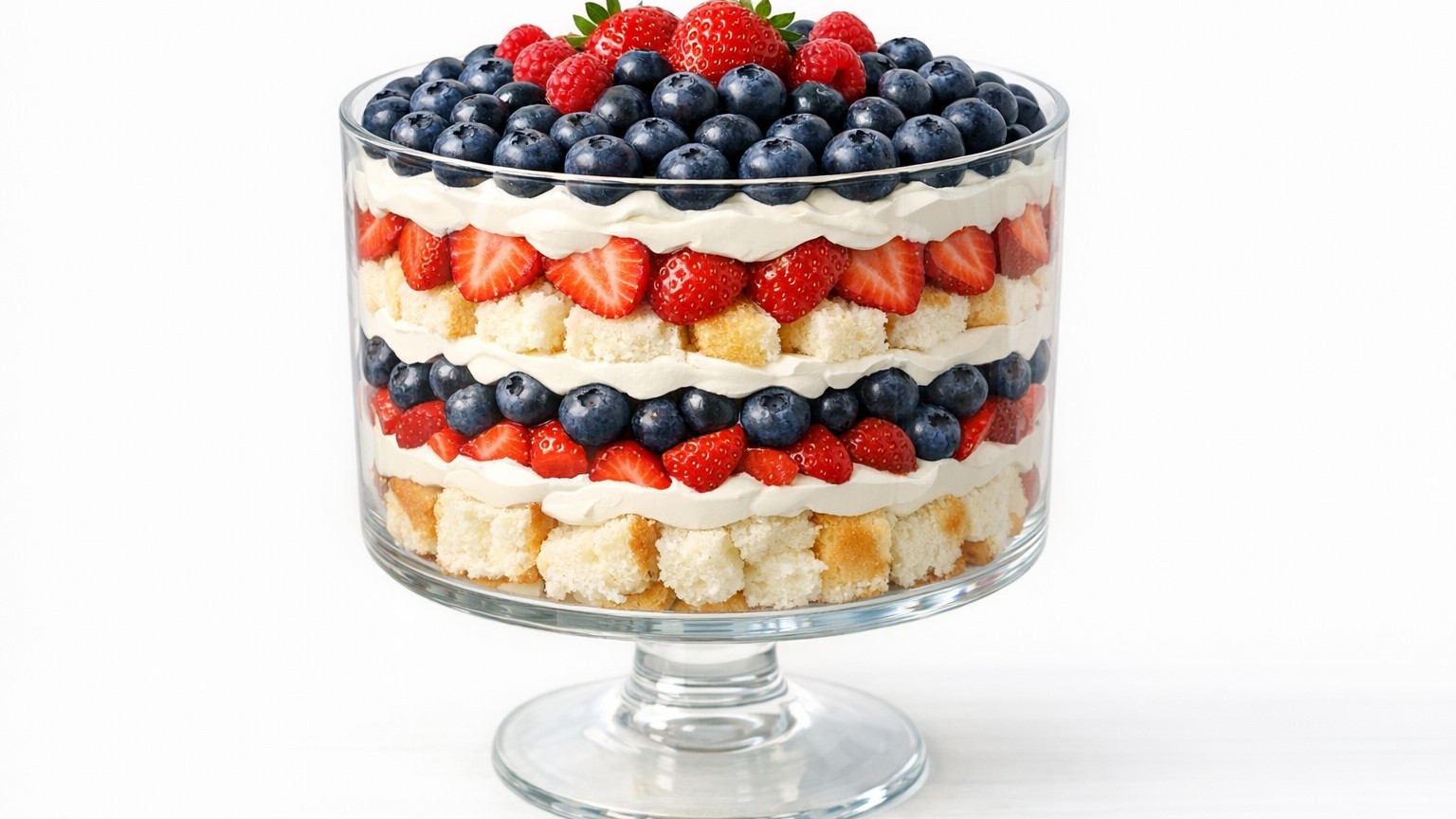
The trifle hits the table and the conversation stops. That layered tower of cream, cake, and berries, red strawberries, white whipped filling, deep violet blueberries — lands like a centerpiece that actually gets eaten. Every single July 4th, this is the dessert people ask about before they even ask about the grill situation.
There’s a reason this particular recipe keeps getting passed down, printed out, texted across family group chats. A red, white, and blueberry trifle is one of those rare party desserts that looks like it took serious effort while actually being assembled in about 30 minutes. No oven required on the hottest day of the year. No piping bags, no candy thermometers, no anxiety. Just beautiful layers that hold their structure long enough to make an impression.
Key takeaways
- A simple three-layer formula repeated twice creates that dramatic, Instagram-worthy tower everyone asks about before the grill is even fired up
- One small addition to standard whipped cream prevents the entire dessert from turning soupy in July heat—and can be made the night before
- The timing secret that keeps your carefully constructed layers from blurring together by the time dessert is served
What Makes a Trifle Worth Making Twice
A trifle, for those who haven’t grown up with one, is a British dessert that’s been cheerfully adopted by American potluck culture. The concept is layered: soaked cake or biscuit at the base, some form of cream or custard in the middle, fruit on top and threaded throughout. The genius of the format is that it’s almost infinitely adaptable, and the July 4th color palette fits it perfectly without any food dye involved.
The structure that works best for a crowd uses three alternating layers, repeated twice for a tall, dramatic presentation. Cube-cut pound cake or angel food cake at the base (angel food stays lighter in the heat), a thick swoosh of sweetened whipped cream mixed with a touch of cream cheese for stability, then strawberries sliced thin enough to fan out against the glass, followed by a generous handful of blueberries. Repeat. Finish with a crown of whole berries arranged by color. The clear glass trifle bowl isn’t optional, the whole point is seeing those stripes.
One detail that separates a good trifle from a great one: brush the cake cubes lightly with something flavored before layering. A tablespoon of orange liqueur, a simple syrup infused with lemon zest, even a splash of vanilla-spiked milk, it prevents the cake from going dry and gives the whole dessert a more cohesive flavor instead of tasting like separate components piled together.
The Cream Layer Deserves More Attention Than It Gets
Most recipes treat the cream as an afterthought. They shouldn’t. Standard whipped cream deflates within an hour in July heat, which means your pristine layers turn soupy before anyone gets a second serving. The fix is a small addition of softened cream cheese, beaten into the whipped cream with powdered sugar and vanilla. The result holds for hours, stays firm enough to scoop cleanly, and has a subtle tang that keeps the whole dessert from being cloying.
A ratio that works consistently: for a full trifle bowl serving 12 to 14 people, use two cups of heavy cream whipped to soft peaks, then beat in four ounces of softened cream cheese and three tablespoons of powdered sugar. Fold gently to keep the air in. This cream can be made the night before and refrigerated, which is a genuine gift when you’re coordinating a holiday spread.
Some families swap the cream cheese mixture for a vanilla pastry cream or a lemon curd layer, which adds tartness and complexity. That version tends to appeal more to adults and holds up better if the trifle needs to sit for several hours. Worth knowing if your gathering involves a long afternoon before dessert gets served.
Berry Selection and the Timing Question
Strawberries and blueberries are both at peak season in late June and early July across most of the United States, which is part of why this dessert works so well for the holiday. Farmers market berries make a visible difference here, the strawberries are deeper red, more fragrant, and they hold their shape after slicing rather than weeping instantly into the cream. Blueberries should be plump and taut; any that look shriveled will turn the cream layer faintly gray where they touch.
A quick maceration step on the strawberries pays off: toss the sliced berries with a teaspoon of sugar and let them sit for 15 minutes before layering. They release just enough juice to be glossy and deeply flavored without going mushy. Skip this step on the blueberries, they’re better kept dry to maintain visual contrast.
On timing: assemble the trifle no more than four hours before serving, and keep it refrigerated until 20 minutes before it goes out. If you assemble the night before, the cake soaks through completely and the layers blur. Some people call that version a “tipsy trifle” and consider it a feature. Frankly, for a July 4th table where presentation matters, same-day assembly is the better call.
Scaling, Transporting, and the One Substitution That Works
Trifles travel surprisingly well if you use a bowl with a lid or stretch plastic wrap directly onto the surface of the cream layer to prevent a skin forming. A rubber band around the lid and a bag of ice underneath in the cooler handles the rest. The dessert has survived more than a few backyard trips intact.
For a smaller gathering, say, six to eight people, individual trifles built in mason jars or clear plastic cups are genuinely more practical and more charming. Each guest gets a perfect cross-section of layers, and there’s no serving spoon moment where the structure collapses. The mason jar version has been circulating at July 4th gatherings for at least a decade now, and it hasn’t gotten old.
The one substitution worth endorsing: if angel food cake isn’t available or you want more texture, a buttery shortbread or even broken-up vanilla wafers work beautifully in the base layer. They add a gentle crunch that contrasts with the cream and softened fruit. What they bring to the texture balance is something a standard sponge actually can’t replicate, proof that the best version of a recipe sometimes comes from working around a missing ingredient.