
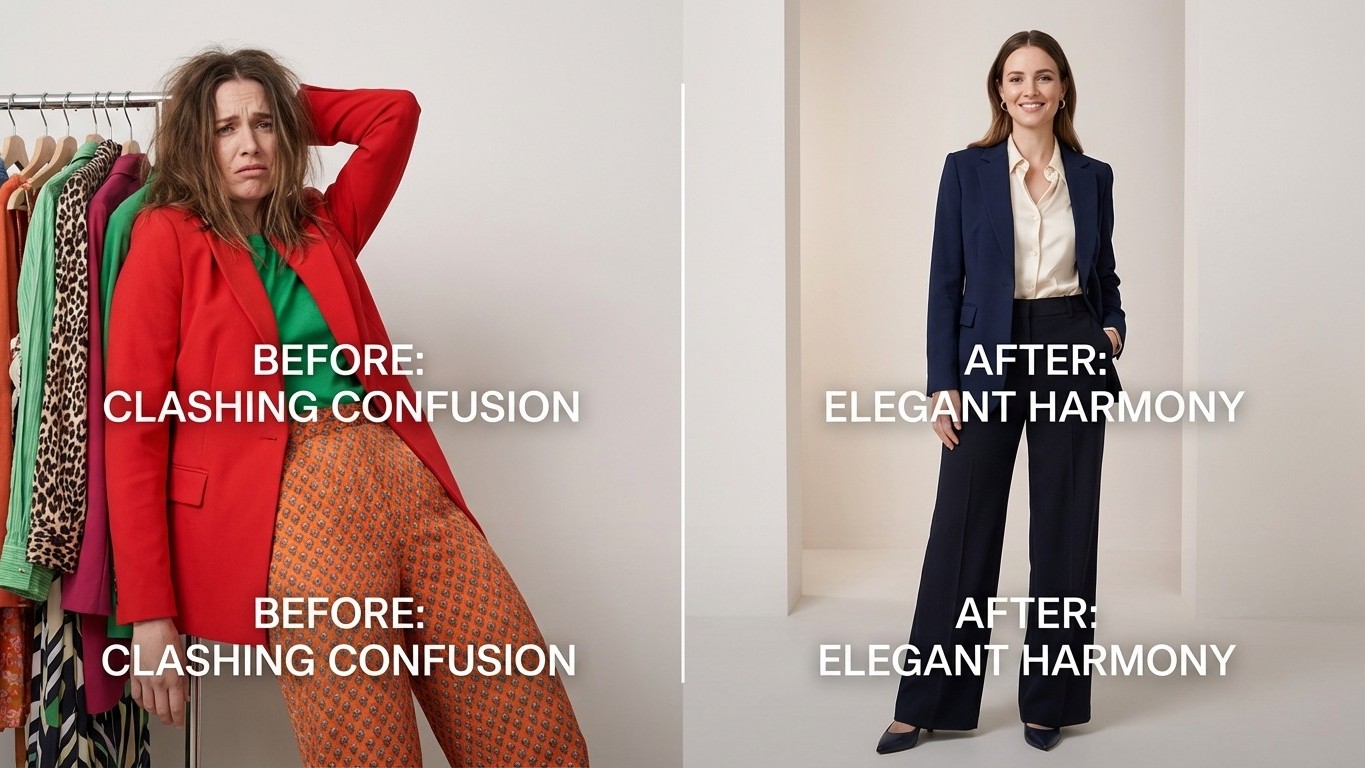
The words stung more than she expected. After confidently strutting into her office meeting Wearing what she Making-my-bed-was-healthy-until-allergists-revealed-this-Morning-mistake”>Thought-it-was-so-outdated-these-three-90s-Stylists-say-they-re-worth-a-fortune”>accessories-are-making-a-major-comeback-in-every-outfit”>Thought was a chic ensemble, a colleague’s offhand comment about looking “cheap” sent her spiraling. The culprit? A color combination that seemed perfectly reasonable in her morning mirror but apparently screamed bargain bin to Everyone else. This scenario plays out more often than you’d think, because certain color pairings have an uncanny ability to diminish even the most expensive pieces in your wardrobe.
The psychology of color perception runs deeper than Simple-trick-under-the-covers-the-life-changing”>Simple-trick-under-the-covers-the-life-changing”>Simple-trick-under-the-covers-the-life-changing”>Simple-trick-under-the-covers-the-life-changing”>Simple-scarf”>Simple preference. When colors clash in specific ways, they create visual discord that our brains interpret as unrefined or poorly thought out. Professional stylists have identified patterns in these problematic combinations, noting how they can instantly age an outfit, make quality fabrics appear synthetic, or suggest a lack of fashion awareness. The key lies in understanding why certain pairings fail and how to redirect that color instinct toward more sophisticated alternatives.
The Hall of Fame for Fashion Faux Pas
Red and green, when worn together outside of deliberate holiday Styling, creates what stylists call the “Christmas tree effect.” This combination forces the eye to work overtime, creating visual fatigue that reads as amateur hour. The same principle applies to orange and purple, which despite being complementary on the color wheel, often appear garish when worn simultaneously on the body. The high contrast creates a carnival atmosphere that’s difficult to pull off Without looking costume-like.
Pink and orange present another notorious pairing that consistently appears on stylists’ avoid lists. While these warm tones might seem harmonious in theory, they tend to compete for attention in ways that create visual chaos. The combination often appears particularly unflattering against most skin tones, washing out complexions or creating an overwhelming warmth that reads as unsophisticated.
Perhaps most surprising to many is the brown and black combination, which has sparked debate in fashion circles for decades. Traditional styling wisdom declared this pairing a definitive no, though modern fashion has begun to embrace it in specific contexts. However, when executed poorly, brown and black can appear muddy and unintentional, suggesting clothes were grabbed From the Closet without thought rather than carefully curated.
The Science Behind Color Chemistry
Understanding why certain combinations fail requires delving into color theory and human perception. Colors have inherent temperatures, intensities, and undertones that interact in complex ways. When warm and cool tones clash at high intensities, they create visual tension that translates to an uncomfortable viewing experience. This discomfort gets interpreted as poor taste or cheap aesthetics, even when individual pieces are well-made and expensive.
Saturation levels play a crucial role in successful color pairing. Highly saturated colors—think electric blue paired with hot pink—create what designers call “color shouting,” where each hue fights for dominance. This battle creates visual noise that sophisticated styling aims to avoid. Professional stylists instead recommend varying saturation levels, pairing a bright color with a muted version of its complement, or choosing colors within the same saturation family.
Undertones add another layer of complexity. A red with orange undertones paired with a red containing blue undertones will appear discordant, even though both colors are technically “red.” This subtle mismatch creates an unsettling effect that viewers may not be able to articulate but will instinctively perceive as “off.”
Elegant Alternatives That Always Work
The solution isn’t to retreat into monochromatic safety but to understand how to create sophisticated color relationships. Navy and cream exemplify timeless elegance, offering contrast without conflict. This combination works because navy’s deepness provides grounding while cream adds lightness without competing for attention. The pairing suggests refinement and intentionality, qualities that elevated styling aims to achieve.
For those drawn to bolder choices, jewel tones paired with neutrals offer a perfect compromise. Emerald green with charcoal gray, sapphire blue with ivory, or deep burgundy with taupe create rich, luxurious looks that feel both interesting and polished. These combinations allow color lovers to make statements while maintaining sophistication.
Monochromatic schemes in varying shades and textures represent another foolproof approach. Different shades of blue, from powder to navy, create depth and interest without risk of clashing. Adding textural variety through different fabrics—silk, wool, cotton—within the same color family creates visual complexity that reads as intentional and refined.
Building Your Color Confidence
Developing an eye for successful color combinations takes practice and observation. Start by studying well-dressed individuals whose style you admire, noting how they combine colors And the effects they create. Pay attention to fashion photography in quality publications, where professional stylists have carefully curated each color relationship for maximum impact.
Consider investing in a basic color wheel and familiarizing yourself with terms like analogous, complementary, and triadic color schemes. This foundational knowledge provides a framework for making confident color decisions while avoiding combinations that might undermine your overall appearance.
Remember that confidence plays a crucial role in carrying any outfit successfully. When you understand the principles behind effective color pairing and make intentional choices based on that knowledge, you’ll naturally project the kind of polished assurance that elevates any ensemble. The goal isn’t to eliminate all risk but to make informed decisions that support rather than Sabotage Your personal style narrative.