
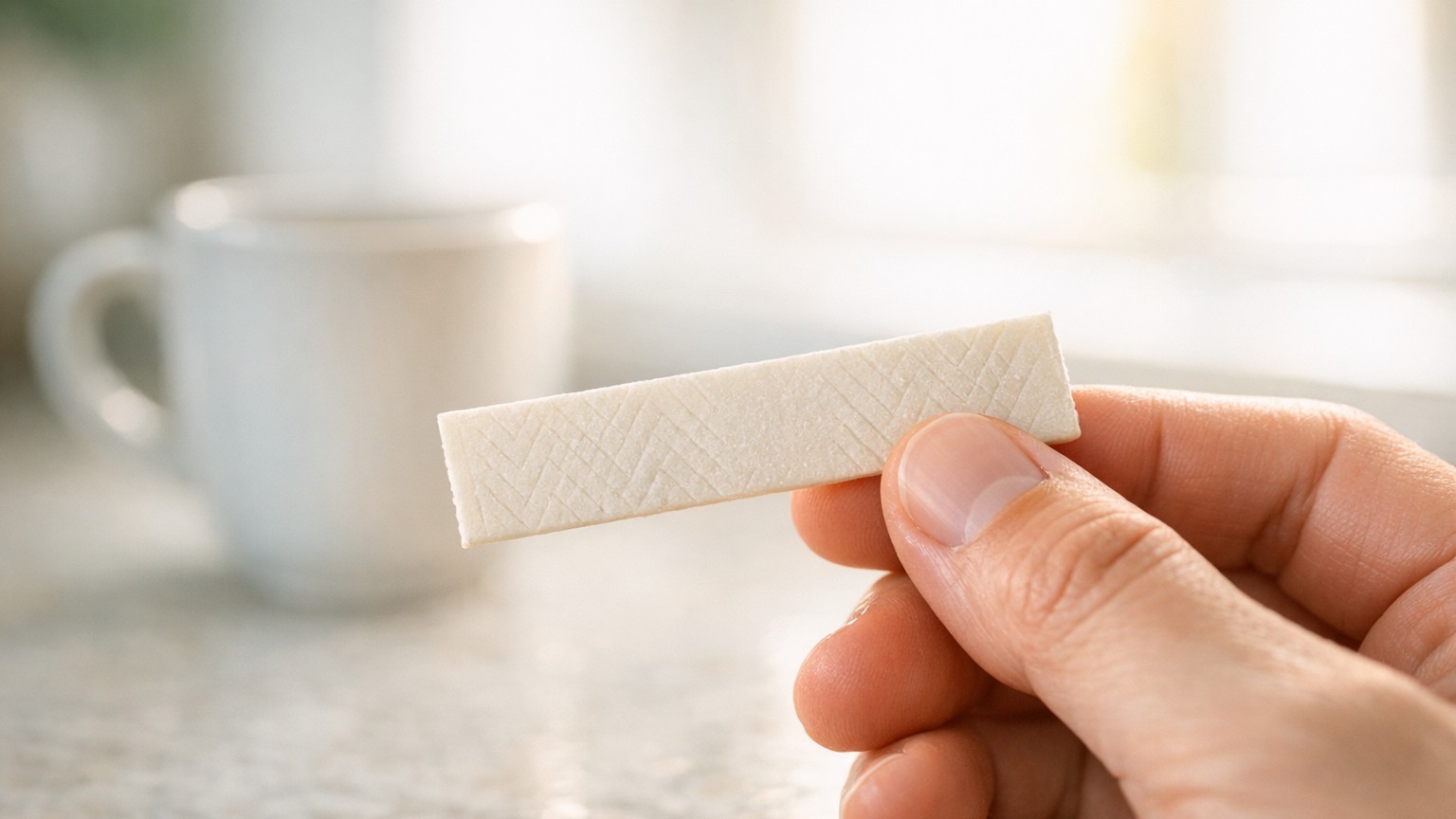
The habit starts innocuously enough. A stick of minty gum, unwrapped in the kitchen before the coffee even brews. It feels productive somehow, fresh breath, curbed appetite, a small ritual that signals the morning has begun. For years, millions of Americans do exactly this without a second thought. The problem is what the stomach is quietly doing while you chew.
Key takeaways
- Your stomach can’t tell the difference between gum and food—it starts producing dangerous levels of gastric acid anyway
- Sugar-free gum’s hidden ingredient causes bloating, gas, and digestive distress that doctors often misdiagnose
- The timing paradox: gum after meals heals, but gum before breakfast damages
Your Stomach Doesn’t Know It’s Being Tricked
Here is the core mechanic that most people miss: the moment you start chewing, your body assumes food is coming. It has no reason to believe otherwise. Your body can’t tell the difference between chewing gum and chewing food, as far as your gut is concerned, something is on its way down, so it starts moving things along. The medical world has a name for this phenomenon: the cephalic phase of digestion. Literature reports the “sham feeding” effect as an increase in chewing and saliva which enhances gastric emptying and overall motility of the gut as a cephalic phase of digestion.
The result of all this prep work, on an empty stomach, is a flood of gastric acid with nowhere to go. When you chew gum without eating afterward, your body prepares itself for digestion by producing more gastric acid than usual, the anticipation of food leads to increased secretion of hydrochloric acid from gastric parietal cells. Research published decades ago in the Scandinavian Journal of Gastroenterology confirmed this directly: when the neutralization of gastric acid with salivary bicarbonate was taken into account, a significant increase in acid secretion was found during chewing. One PubMed study went further, finding that acid output stimulated by chewing gum was 36% of pentagastrin maximum acid output — nearly identical to actually chewing a cheeseburger.
Chewing stimulates both saliva and stomach acid production. Before eating, the increased acid secretion has no food to work on and no buffering effect, which can actually increase the gastric acid environment heading into your meal. And if you’re prone to acid reflux, if there’s no food present to neutralize this acid, it could potentially backflow into the esophagus, causing discomfort. The counter-intuitive twist? Gum chewed after a meal tells a completely different story. Participants who chewed sugar-free gum for half an hour after eating fatty foods had significantly lower acid levels in the two hours following their meal. Timing, it turns out, is everything.
The Sugar-Free Loophole That Isn’t
Switching to sugar-free gum feels like the responsible move. Fewer calories, no tooth decay, what’s not to like? Quite a bit, actually, once you look at the ingredient list.
Perhaps the most common culprits in sugar-free gum are sugar alcohols such as sorbitol, xylitol, and mannitol. While they offer a sweet taste with fewer calories and are generally better for dental health than traditional sugar, their impact on the digestive system can be anything but sweet. These compounds are poorly absorbed in the small intestine, instead, they travel largely intact to the large intestine, where they become a feast for gut bacteria, and the fermentation process that ensues can produce a significant amount of gas, leading to bloating and flatulence.
Johns Hopkins Medicine is unambiguous on this point: many sugar-free gums are made with artificial sweeteners such as sorbitol and xylitol, which have been shown to cause diarrhea, and in addition, chewing gum leads to more swallowed air and gassiness. The U.S. FDA mandates that products containing significant amounts of sorbitol carry a label warning about potential laxative effects — a warning most people glance past at the checkout line. People with conditions like IBS are more vulnerable to the digestive side effects of sugar alcohols due to their sensitivity to FODMAPs. For those with a sensitive gut, even a single morning stick of gum can set off a cascade of cramps and discomfort well before noon.
The NIH published a striking case study: one patient chewing 20 sticks of sugar-free gum daily reported seven to ten watery stools per day, a case initially misdiagnosed as infectious colitis. Extreme, yes. But a revealing window into what chronic overexposure to these sweeteners can do.
The Jaw Tax Nobody Talks About
Beyond the stomach, there is a second casualty of the morning gum habit that rarely makes it into the conversation: the temporomandibular joint, better known as the TMJ. When you chew gum, you are putting this joint through thousands of extra repetitions, and while the human jaw is designed for mastication, it isn’t necessarily designed for the marathon sessions that gum chewers put it through.
Studies have shown that excessive gum chewing may increase muscle fatigue and jaw pain in people with chronic jaw conditions. Prolonged chewing keeps the jaw muscles engaged without adequate rest, which can contribute to inflammation, soreness, and added joint stress, and over time, this strain may worsen symptoms such as clicking, popping, or difficulty opening the mouth comfortably. Chewing gum can also increase muscle tension in your face and neck, which can lead to headaches. For anyone who already wakes up with a sore jaw or unexplained morning headaches, the daily pre-breakfast gum ritual deserves serious scrutiny.
When Gum Actually Works, and When to Stop
The increased production of saliva that takes place while chewing gum can help relieve the discomfort of acid reflux. Chewing gum has also been shown to help reduce nausea, boost memory, and even combat fatigue. None of that is fiction. The research is real. But context matters enormously, and the morning-before-breakfast window is almost the worst possible timing for reaping any of those benefits.
Save gum for the post-meal period, where the evidence consistently shows benefit. And if you are a mint-gum loyalist, there is one more thing to reconsider: mint-flavored gum can actually worsen reflux even as the chewing motion and saliva production are working in the opposite direction, the relaxation of the lower esophageal sphincter by menthol outweighs the pH benefit in many people. Fruit or cinnamon varieties sidestep this problem entirely.
If you experience bloating, gas, cramps, or diarrhea after chewing gum, it’s a clear signal to cut back or stop altogether. For most people, a small piece of gum after lunch is not a medical emergency. But consistent or excessive chewing can introduce several subtle stressors that accumulate over time, potentially leading to discomfort and disrupting the delicate balance of your gut. The habit that feels like nothing, two minutes, zero calories, fresh breath, turns out to have a running tab. The stomach has been keeping it quietly, every single morning.
What’s worth noting is the surgical world’s relationship with gum: hospitals actually use it as a recovery tool after abdominal surgery. A Cochrane review of 81 studies with over 9,000 participants found that patients who chewed gum after surgery had their first bowel movement about 12.7 hours sooner than those who didn’t, and after colorectal surgery specifically, the difference was even larger, at 18 hours sooner. The same mechanism that wreaks mild havoc on an empty morning stomach becomes therapeutic in a controlled post-operative context. That is the real lesson here: gum itself is not the enemy. The clock is.
Sources : pmc.ncbi.nlm.nih.gov | ncbi.nlm.nih.gov