
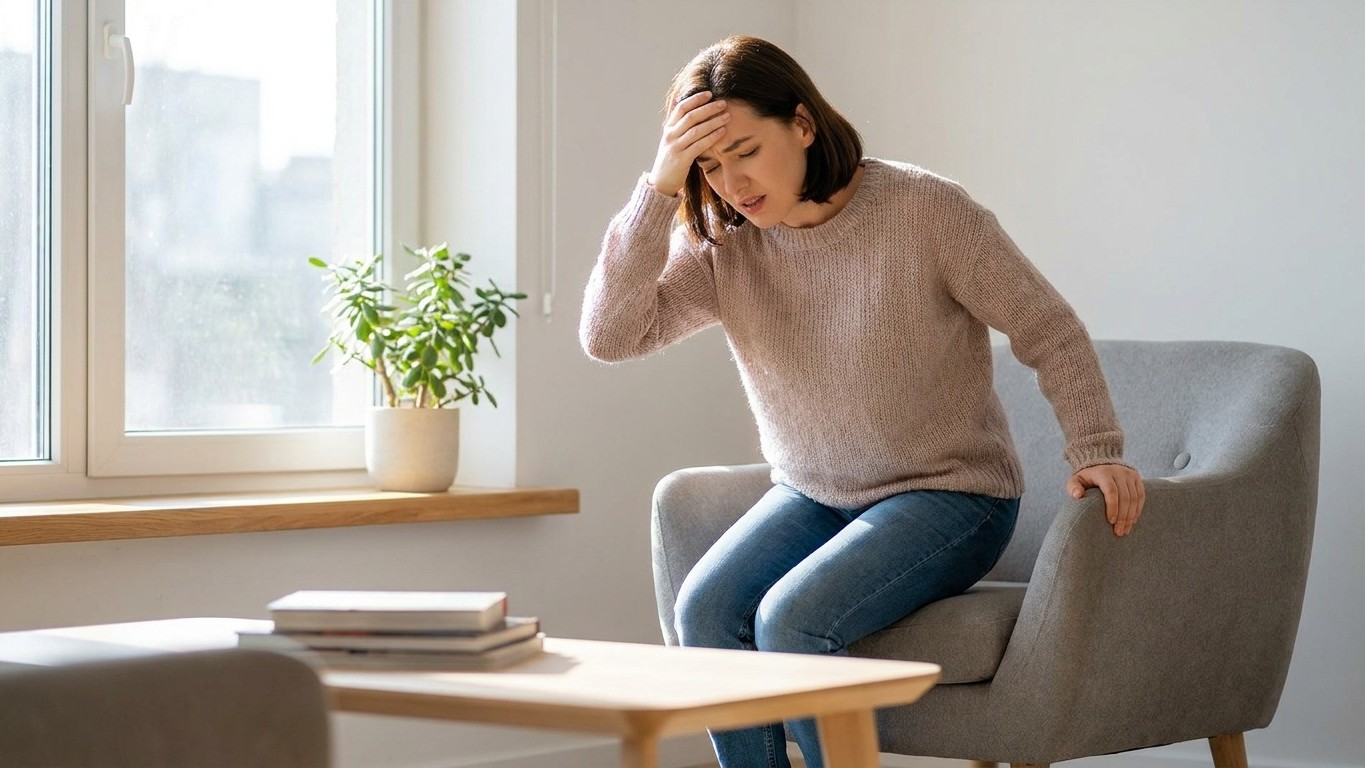
The room didn’t spin. It just went dark for a half-second, a brief, unsettling absence of the world, then Everything snapped back. Standing up from a chair, fast, the way millions of people do dozens of times a day without a second thought. That moment of near-blackout has a name, a mechanism, and a set of consequences that most people have never considered. It’s called orthostatic hypotension, and it’s far more common, and more loaded with meaning, than a simple “head rush.”
Key takeaways
- That half-second blackout has a clinical name and a precise definition—but most people ignore it
- Chronic episodes are linked to dementia, heart disease, and stroke risk in ways most doctors don’t emphasize
- Simple fixes like gradual position changes and hydration work for most people, but some symptoms demand medical evaluation
What Actually Happens Inside Your Body When You Stand Up Too Fast
When you stand up from sitting or lying down, your blood vessels respond to gravity by narrowing to prevent your blood pressure from falling, this ensures a steady supply of oxygenated blood to the brain. That’s the system working perfectly. But orthostatic hypotension is a form of low blood pressure that happens when the blood vessels do not constrict as you stand up. The result is a brief but real drop in perfusion to the brain, and that’s what produces the momentary gray-out — the visual static, the slight wobble, the instinct to grab the nearest surface.
The physics are blunt. Gravity dramatically affects blood flow whenever you stand up from sitting or lying down, on average, about 800ml of blood temporarily pools in the blood vessels of the legs. That’s nearly a full liter of blood suddenly redirected south. Orthostatic hypotension happens when gravity causes blood to pool in the lower extremities, which compromises venous return, resulting in decreased cardiac output — changing from a lying position to standing loses about 700 ml of blood from the thorax, with a decrease in systolic and diastolic blood pressures.
Clinically, the threshold is precise. One definition calls for a systolic blood pressure decrease of at least 20 mm Hg or a diastolic blood pressure decrease of at least 10 mm Hg within 3 minutes of standing. Miss that number and it’s a normal reflex. Hit it regularly, and you’re dealing with a condition that deserves attention.
Everyone is likely to experience a mild form of postural hypotension at some time, it’s the lightheaded feeling you may get if you leap out of bed very quickly. The difference between a one-off episode and a pattern worth investigating is frequency and context. Postural hypotension happens more frequently, and with more severe symptoms, in the morning — because blood pressure is normally at its lowest when you wake up.
Who Gets It, and Why the Triggers Are Hiding in Plain Sight
The list of culprits is both broad and surprisingly mundane. Fever, vomiting, not drinking enough fluids, severe diarrhea, and strenuous exercise with heavy sweating can all lead to dehydration, which decreases blood volume, and mild dehydration can cause symptoms of orthostatic hypotension, such as weakness, dizziness, and fatigue. This is the version most people experience: three cups of coffee, no real water all morning, then jumping up from a desk chair. The floor seems to tilt briefly. Completely avoidable. Rarely avoided.
Beyond dehydration, the causes go deeper. Some heart conditions can lead to low blood pressure, including extremely low heart rate, heart valve problems, heart attack, and heart failure, all of which prevent the body from quickly pumping more blood when standing up. Endocrine problems, thyroid conditions, adrenal insufficiency, low blood sugar, can also cause orthostatic hypotension, as can diabetes, which can damage the nerves that help send signals controlling blood pressure.
Then there’s the medication angle, which tends to surprise people. Medicines that treat Parkinson’s and erectile dysfunction, some antidepressants and antipsychotics, and muscle relaxants can all lower blood pressure, and taking more than one of these drugs or drinking alcohol while using them can raise the chance of dizziness. A prescription that’s been working fine for years can start interacting differently as the body ages or as another medication is added to the mix.
Digestion is another underestimated trigger, when you eat and digest food, increased blood supply is sent to your intestines, and orthostatic hypotension is more likely to occur 15 to 45 minutes after eating a meal (known as post-prandial hypotension). Big lunch, soft sofa, sudden stand: textbook scenario. Hot temperatures, from weather, a fever, or even a hot tub or shower, can also make symptoms worse.
The Part Nobody Talks About: What Chronic Episodes Signal
Here is where the counter-intuition enters. Most people think of that brief blackout as trivial, a minor inconvenience of biology, nothing more. But long-lasting orthostatic hypotension can signal more serious problems. The research connecting it to downstream health outcomes has grown considerably over the past few years, and the findings are worth sitting with (carefully, before standing).
Research has suggested a link between orthostatic hypotension and dementia, and a study published in the American Heart Association journal Hypertension refined that connection, concluding that the blood pressure drop in the first minute after standing is most strongly associated with developing dementia. The mechanism is plausible: repeated brief drops in blood supply to the brain, over years, leave a cumulative mark on cerebrovascular health. In a large population-based study, orthostatic hypotension was present in nearly one in five participants and was associated with a 15% increase in long-term risk of dementia.
Individuals with orthostatic hypotension showed higher levels of cardiac injury and stress biomarkers, as well as a higher burden of cerebral small vessel disease, and OH was associated with increased risk of cardiovascular diseases including ischemic heart disease, atrial fibrillation, heart failure, and stroke. Long-lasting orthostatic hypotension can signal more serious problems, and it’s important to see a health care provider if you frequently feel lightheaded when standing up. Not every dip is an alarm. But recurring episodes, especially in someone under 60, warrant proper evaluation — not a quick Google search and a glass of water.
What You Can Actually Do About It
The good news is that non-pharmacological interventions form the cornerstone of treatment, with strategies tailored to each patient’s triggers and lifestyle, a combination approach often proving the most effective. The adjustments are accessible, and many of them work quickly.
Hydration is the most immediate lever. People with orthostatic hypotension should drink six to eight eight-ounce glasses of water each day, and adding salt to meals helps the body retain fluids, which is useful to avoid a drop in blood pressure. That said, increasing salt in the diet must be done carefully and only after discussing it with a health care provider, as too much salt can cause blood pressure to increase beyond a healthy level. Self-prescribing a salt fix without medical context is not the move.
Gradually changing position in phases, from lying to sitting to standing, rather than abruptly, is one of the most consistently recommended strategies. Sounds almost insultingly simple. The reality is that this single adjustment eliminates symptoms for a significant number of people. Sleeping with the head of the bed elevated, crossing the legs while standing, and tensing the muscles in the legs and hips after standing are also practical tools that work by counteracting blood pooling in the lower body before it becomes a problem.
For people with more persistent symptoms, compression stockings, waist-high elastic garments similar to tights, can reduce the diameter of the veins and increase blood flow in the legs, helping reduce dizziness, lightheadedness, and fainting. Eating small meals also helps, if blood pressure drops after eating, having small, low-carbohydrate meals can make a real difference.
Up to 20% of people over 65 experience some degree of orthostatic hypotension, making it one of the more quietly prevalent cardiovascular conditions in the country. The brief blackout when you jumped off the couch was not nothing. It was your body sending a message in the clearest language it has: slow down, pay attention, and maybe drink some water before you stand.
Sources : heart.org | journals.plos.org