
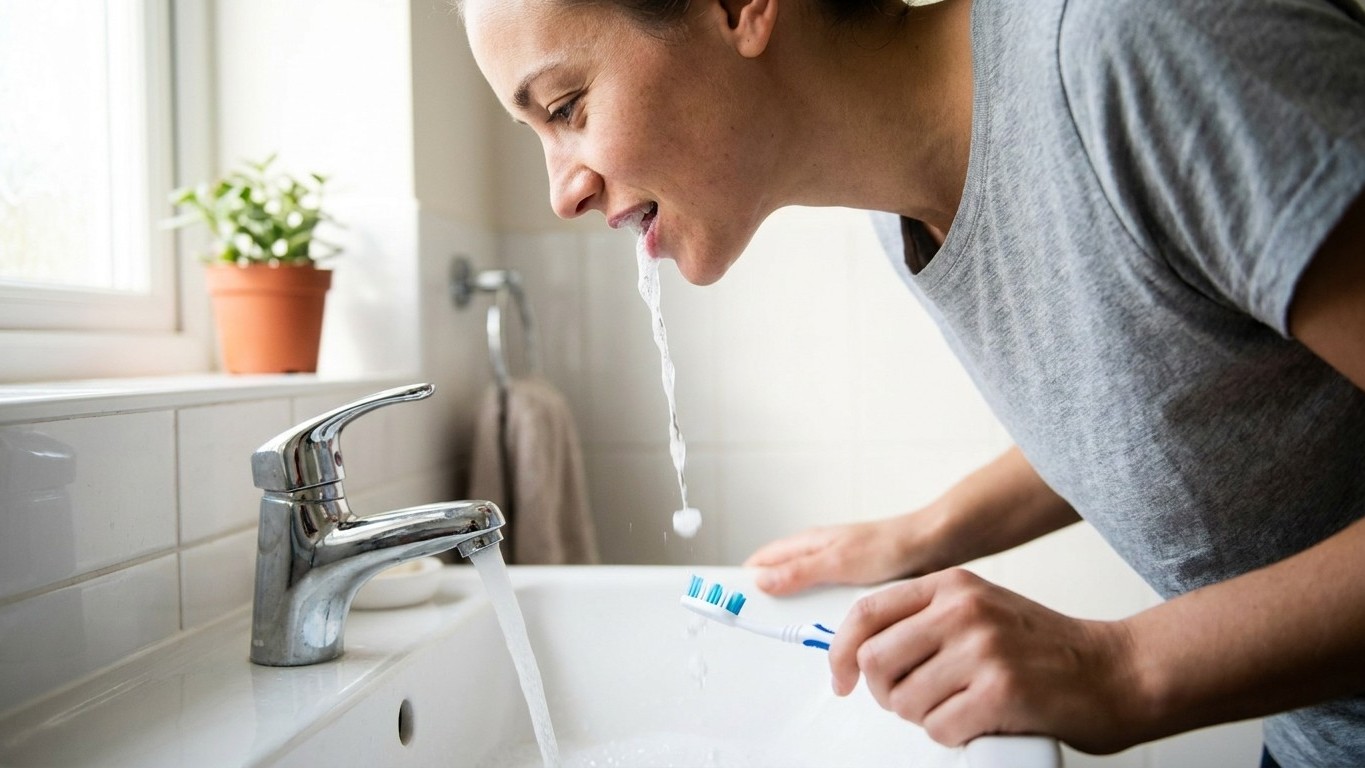
Every morning, millions of Americans follow the same ritual without questioning it: brush, rinse, spit, done. The rinse feels like a natural endpoint, a clean punctuation mark on the whole routine. The problem is, that splash of water (or worse, that swish of mouthwash) is quietly washing away the one thing your toothpaste spent two minutes building: a protective fluoride layer on your enamel. A small habit. A significant consequence.
Key takeaways
- Your post-brushing rinse is erasing the one thing protecting your teeth from decay
- Fluoride needs 15-30 minutes of uninterrupted contact with enamel to work effectively
- A simple habit change—spitting instead of rinsing—can reduce cavities by up to 25%
What Fluoride Is Actually Doing When You Brush
Fluoride absorbed by tooth enamel forms fluorapatite, which strengthens enamel and reduces its susceptibility to acid erosion. This is the cornerstone of why fluoride toothpaste works at all. It works by incorporating itself into the crystal structure of your enamel, creating a mineral called fluorapatite that’s more resistant to acid than regular hydroxyapatite. Think of it less like a cleaning agent and more like a repair varnish, one that needs time to cure.
This transformation effectively reduces the critical pH for demineralization from approximately 5.5 to about 4.5, making enamel more resistant to caries development. Even low concentrations of fluoride in saliva and dental plaque fluid can facilitate remineralization by stabilizing calcium and phosphate ions near the tooth surface. Your teeth are in a constant tug-of-war between acid attacks (from food, sugar, bacteria) and remineralization. Fluoride is your most reliable ally in that battle, but only if you let it stay.
When you rinse immediately after brushing, you’re erasing a lot of the benefit of applying fluoride to your teeth. That feels almost too simple to be true. But the chemistry is unambiguous. The longer fluoride remains in contact with enamel, the more effectively it can do its job.
The Rinse Habit: Where It Comes From (And Why It Won’t Die)
The strategy of rinsing your mouth out after brushing became common practice as a way to prevent a significant amount of fluoride ingestion. There’s also the very real desire to want to replace the strong, minty taste of toothpaste in your mouth with something neutral, like water. Rinsing the taste out of your mouth after brushing is sometimes just fulfilling your body’s urge to get rid of the taste. Frankly, this is how generations of well-intentioned parents passed down a genuinely counterproductive habit.
In many Western countries, rinsing after brushing has been passed down through generations, often reinforced by advertisements showing people swishing water after cleaning their teeth. There’s also a deeply ingrained association between “freshness” and rinsing. Marketing shaped our bathroom behavior more than dentistry did. The “clean slate” feeling of a water rinse is psychologically satisfying, and physiologically unnecessary.
Here’s the counter-intuitive reality: most of the benefit from brushing comes from toothpaste. The key ingredient is fluoride, which evidence shows prevents tooth decay. Fluoride replaces lost minerals in teeth and also makes them stronger. The brushing itself, the mechanical scrubbing, matters for removing plaque. But the chemical protection comes entirely from what’s left behind. Rinse it away and you’ve done half the job.
What the Science and Dentists Actually Recommend
Some experts, including the U.K.’s Oral Health Foundation, now recommend spitting out any excess saliva or toothpaste after you’re done brushing as opposed to rinsing your teeth. Leave the fluoride on your teeth as you go about your day, and try to avoid eating or drinking for 10 minutes or more after brushing is done. Some dental Professionals push that window even further: some experts recommend waiting 30 minutes to eat or drink anything after brushing to give the fluoride enough time to remineralize the protective outer layer of your teeth.
The numbers are striking. This can be a difficult habit to break, but can reduce tooth decay by up to 25%. A 25% reduction in cavities, for the price of just not reaching for the faucet after you spit. The simplicity is almost suspicious.
The mouthwash question is where things get more nuanced. Mouthwashes typically contain lower concentrations of fluoride than toothpaste; therefore, rinsing just after brushing could reduce the amount of fluoride on the teeth. Even fluoride-containing rinses can’t compensate for what they wash away from your toothpaste. If you do use mouthwash, it’s better to use it at a different time than when you brush your teeth so that you can get the maximum benefits of fluoride from your toothpaste. After meals might be a better time, for example. Mid-afternoon mouthwash use, rather than back-to-back with brushing, is an easy swap that costs nothing.
Because fluoride strengthens tooth enamel, leaving it on the teeth for at least 15 minutes after brushing can help make the enamel more resistant to cavity-inducing acids. The American Dental Association applies the same logic to professional treatments: professional fluoride treatments at the dentist office are applied for several minutes, and then you may be asked not to rinse, eat, or drink for at least 30 minutes afterward. That is so the fluoride can stay on your teeth. Your home routine deserves the same respect.
How to Actually Fix Your Routine
The adjustment is minimal. Brush, spit (thoroughly), and walk away. No water, no rinse. Virtually all additional ingredients in toothpaste are more effective given more time in contact with your teeth and/or gums. Therefore, to get the most out of your toothpaste, dentists recommend spitting out your toothpaste after brushing but not rinsing immediately after. This will maximize the time those ingredients like fluoride, sensitivity treatment, or teeth whitening have to act in your mouth.
There’s one more sequencing detail worth considering. Flossing followed by brushing is preferred to brushing then flossing in order to reduce interdental plaque and increase fluoride concentration in interdental plaque. If you don’t remove the plaque by flossing first, the fluoride in your toothpaste may not be able to coat your teeth. This is important because fluoride creates an enamel on your teeth that makes them more resistant to decay. So the sequence that dental research actually supports is: floss first, then brush, then spit, and let it sit.
For those who genuinely can’t resist rinsing, the taste is overpowering, the habit is ironclad, if you’re set on rinsing after brushing, try to wait five to ten minutes first. This will allow your teeth to benefit from the fluoride before it is washed away. Some protection is better than none.
One thing that often gets overlooked in this conversation: the nighttime brush matters most of all. At night, you produce less saliva than during the day. Because of this, your teeth have less protection from saliva and are more vulnerable to acid attacks. Less saliva means less natural remineralization, which is precisely why leaving fluoride on at bedtime, undisturbed for hours, offers the greatest protective return of any moment in your entire dental routine.
Sources : healthline.com | washingtonpost.com