
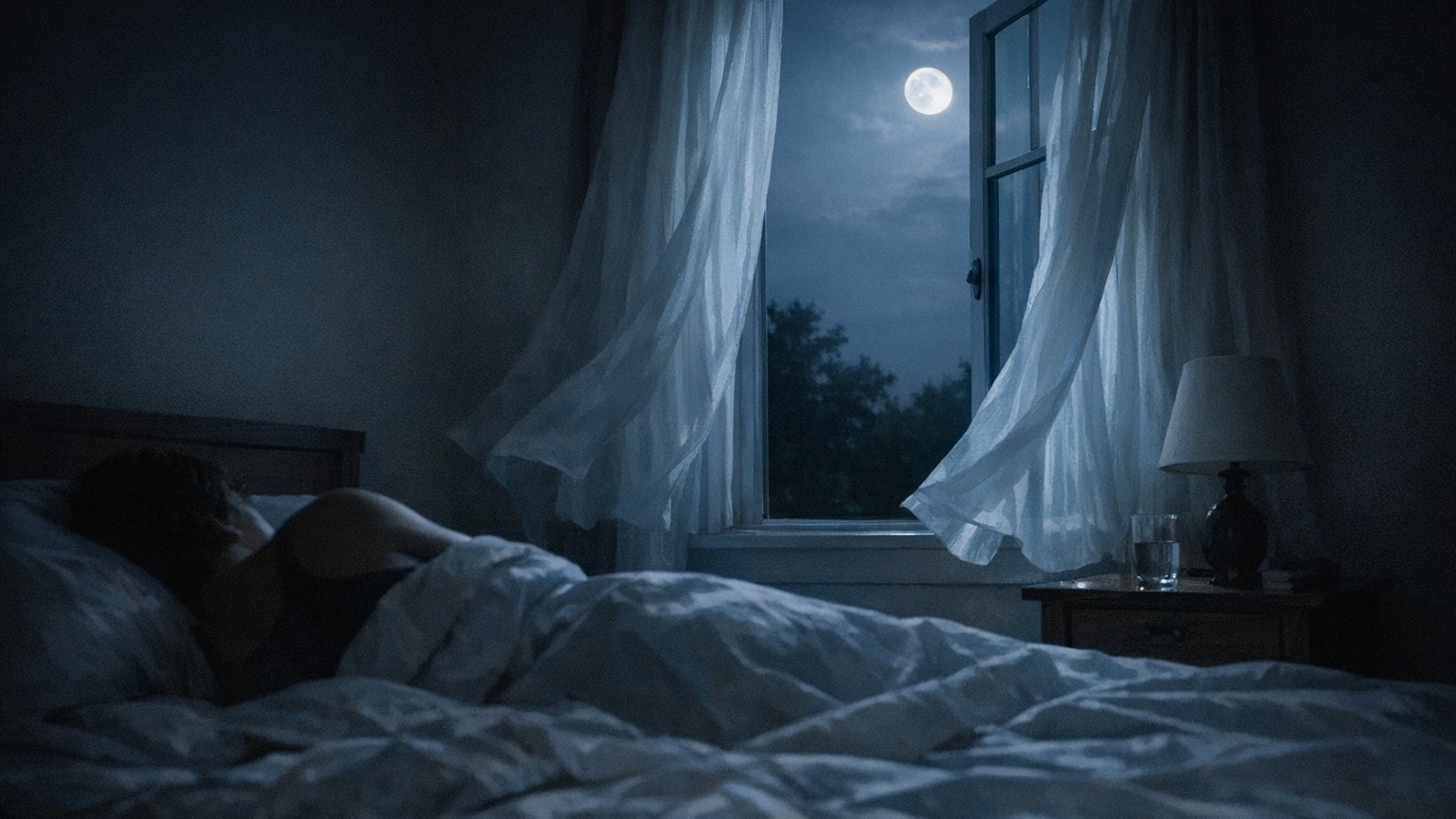
The windows are wide open. A soft fan hums in the corner. Sweat has already soaked through the sheets by midnight. Three nights into a brutal summer heatwave, the bedroom feels less like a sanctuary and more like a slow oven, and the wide-open windows seem to be doing absolutely nothing. It took a brief conversation with a building scientist to understand why. The answer involves physics, walls, and a counterintuitive truth about nighttime air.
Key takeaways
- One open window creates a ‘dead end’ for air—your fresh air barely makes it past the sill before stagnating
- Your walls have been absorbing heat all day and continue releasing it into your bedroom well after midnight
- Opening windows during the day when it’s hotter outside actually makes your room hotter, not cooler
The One Opening Problem: Why Your Single Window Defeats Itself
Here’s the part nobody tells you when they say “just open a window.” Single-sided ventilation, when there is only one opening in the room, whether a door or a window — has a far lower air-exchange rate than cross ventilation. The physics are blunt: air needs somewhere to go. Cross ventilation relies on airflow between openings on opposite sides of a space, air enters from one opening in the windward wall and travels across the space to leave through another opening on the opposite side.
Open only one window, and you’ve created a dead end. Single-sided ventilation is popular because openings are located on only one face of an enclosed space, but its disadvantages include no defined exit route for air, potentially small net driving forces resulting in poor ventilation, and a depth of penetration restricted to approximately 2.5 times the ceiling height. Translation: the fresh air barely makes it past the windowsill before it stagnates. The rest of the room bakes, undisturbed.
The fix is less glamorous than buying a second fan. Creating a draft by opening windows at opposite ends of the house ensures faster cooling of the interior and improves thermal comfort for the night. A bedroom door left open to a hallway with a window on the other side of the apartment? That qualifies. A decent and effective cross ventilation will remove heat from the interior and keep indoor air temperatures approximately 1.5°C (2.7°F) below the outdoor air temperatures, ensuring a steady inflow and outflow of fresh air. Not dramatic, but at 11 p.m. during a heatwave, every degree is negotiable.
Your Walls Are Heaters. Seriously.
This is the part that actually explains the mystery of the room that never cools. It’s not the window strategy, it’s the walls themselves. On a warm summer day, thermal mass, the dense materials in your walls, floors, and ceiling, absorbs heat at the surface, storing it until it is exposed to cooler air later as night approaches, with the thermal mass responding naturally to changing temperatures and allowing the building to maintain a more stable indoor environment. The problem is that “stable” is a euphemism. Your walls have been absorbing radiant heat since 10 a.m. By bedtime, they are slow-releasing that stored energy directly into your room.
Thermal mass can radiate heat to you all night as you attempt to sleep during a summer heatwave. Concrete, brick, tile, these materials require a lot of heat energy to alter their stored temperature. Correct use of thermal mass can delay heat flow through the building envelope by as much as 10 to 12 hours, which means the midday sun that baked the exterior of your building is still paying you back well after midnight. Opening the window doesn’t touch this problem. You’re ventilating a room that is actively generating heat from within.
Nighttime ventilation removes the heat that has been absorbed during the day, replacing it with cool fresh air, but only if the airflow is strong enough and sustained long enough to actually flush the walls. A cracked window with no throughflow barely grazes the surface.
The Timing Question: When Opening Actually Works
Many people believe that opening windows during heatwaves always brings relief from high temperatures. In reality, when the temperature outside is higher than inside, opening windows can worsen the situation by bringing hot air into the interior. This is the central irony of the wide-open-window strategy during the daytime hours: you’re importing the problem.
One of the times when opening windows is truly beneficial is at night, when the temperature outside usually drops, allowing cooler air to enter the house. To maximize this effect, it is worth opening windows in the evening and closing them in the morning before the temperature rises again. The timing is everything. But there’s a catch for city dwellers specifically. Studies estimate that heat islands increase daytime temperatures in urban areas in the United States by about 1°F to 7°F and nighttime temperatures by 2°F to 5°F. If you live in a dense neighborhood, the “cool night air” you’re inviting in may still be warmer than you expect, because pavement and concrete absorb heat from the sun and later release it at night, making urban temperatures remain hot into the night.
The practical rule: before opening up at night, check whether the outdoor temperature has actually dropped below your indoor temperature. As one expert puts it, once the sun goes in, you can open your windows so cooler air can circulate around your home, although, during an extreme heatwave, the temperature outside may still be warmer than inside, so it’s best to check first. A simple outdoor thermometer, or even a weather app with hourly data, changes everything.
What to Do Instead (and Why Curtains Matter More Than You Think)
The counterintuitive move is the one that actually works: keep the windows shut during the day. We often assume opening a window will help a room cool down by allowing fresh air in, but during a heat wave, the air flooding through an open window is hot, causing the overall indoor temperature to rise. The strategy is to treat your home like a cooler, not a sieve.
Keep rooms cool by using shades or reflective material outside the windows. If this isn’t possible, use light-colored curtains and keep them closed, metallic blinds and dark curtains can actually make the room hotter. The distinction between curtain types is not trivial. Dark fabric absorbs radiant heat from the sun-warmed glass and re-emits it inward. Light-colored, tightly-woven curtains reflect it back out.
At night, the full protocol looks like this: keep windows shaded and closed when outside temperatures are hotter during the daytime to reduce heat entering the home, and open them at night or when it is cooler outside to aid cooling. Combine that with cross-ventilation, door open, window open on the opposite side of the home, and add a fan placed to pull air through rather than just circulate the existing hot air. Pairing nighttime natural ventilation with thermal mass allows the building to cool down with the help of cooler outdoor air, which flushes the stored heat during the night, after which the cycle starts again.
The sleep stakes here are real. The best room temperature for sleep is approximately 65°F (18.3°C), and most doctors recommend keeping the thermostat between 65 to 68 degrees Fahrenheit for the most comfortable sleep. Thermoregulation during sleep is a key factor in sleep quality, your body’s temperature naturally drops as you sleep, so a cooler room makes it easier to fall and stay asleep. A bedroom that never drops below 75°F isn’t just uncomfortable. It’s actively interfering with deep, restorative sleep cycles. The window was never the villain. The strategy around it was.
Sources : quora.com | luxuriousmagazine.com