
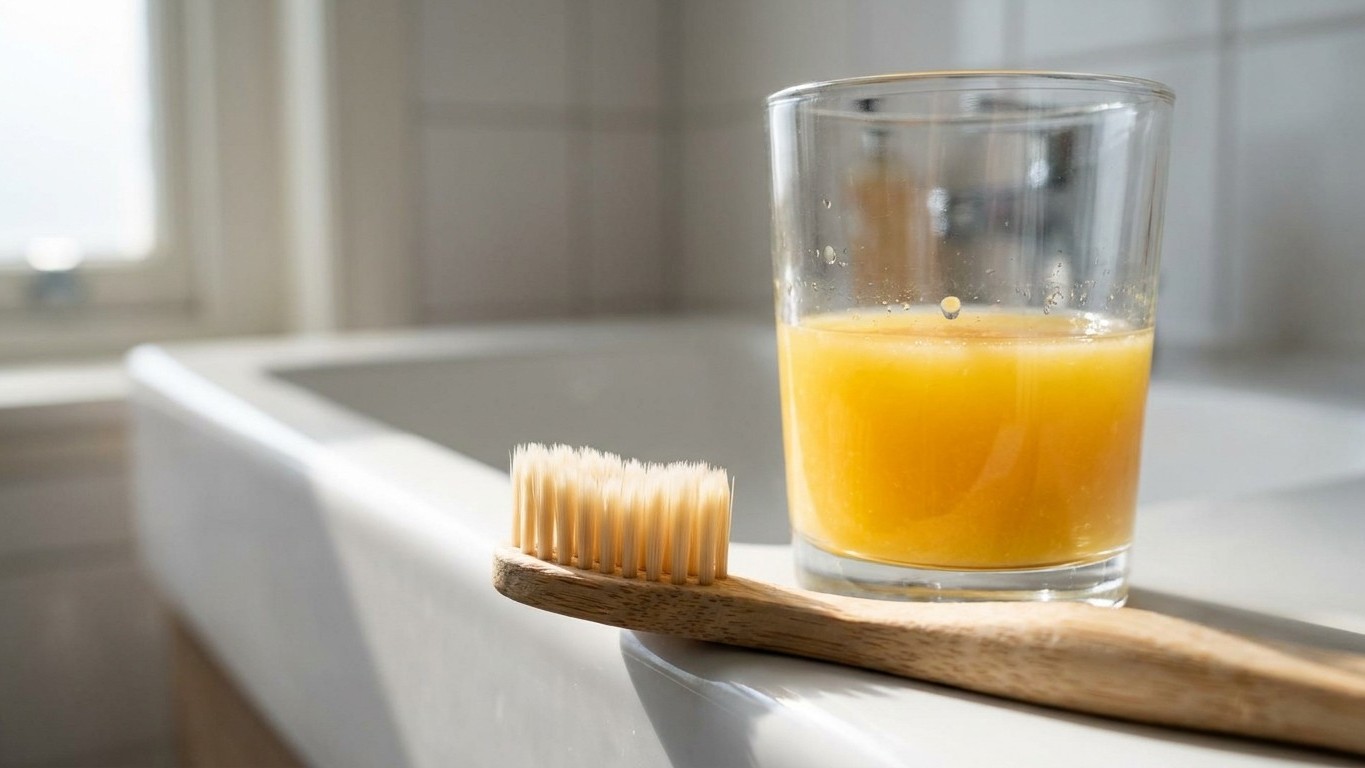
Every morning, the glass of orange juice goes down before the toothbrush comes out. It feels like the responsible, hygienic thing to do: drink, brush, start the day clean. The problem is that this sequence, completely normal, practiced by millions of Americans without a second thought — is quietly destroying your enamel and turning your teeth yellow. And the culprit isn’t the juice itself. It’s the timing.
My father is not a dentist. He’s a retired chemistry teacher. When he grabbed my wrist that morning, mid-reach toward the bathroom, he didn’t have to explain much. He pointed at the bristles, still damp from my previous session, and said: “You’re basically sanding your teeth right now.” That image stuck. Because he was right.
Key takeaways
- Orange juice reduces enamel hardness by up to 84%, turning soft bristles into abrasive agents
- Yellowing teeth aren’t stained—they’re thinning, exposing darker dentin underneath
- Saliva is your mouth’s secret weapon during the waiting period after acidic drinks
What’s Actually Happening Inside Your Mouth After That Glass
Every time you eat or drink, especially something acidic, your mouth goes through what’s known as an acid attack. The pH in your mouth drops, and the acidic environment starts to weaken or soften the outer enamel that protects your teeth. Orange juice is a particularly aggressive offender. Oranges have a pH level between 3.7 and 4.3, making them quite acidic compared to many other foods. And here’s the part nobody tells you at the breakfast table: orange juice can reduce the hardness of your tooth enamel by up to 84%.
Eighty-four percent. Temporarily, yes, but the window matters.
If you rush to the bathroom to brush while the enamel is in this softened state, your toothbrush bristles, which are usually helpful tools for removing plaque, become abrasive agents. Instead of polishing your teeth, you are scrubbing away microscopic layers of that softened enamel. Once enamel is gone, it does not grow back. That’s the part that should make you set the toothbrush down.
The yellowing piece of this puzzle is particularly counterintuitive. Most people assume that yellowing comes from staining, coffee, wine, dark berries. But yellowing of the teeth can occur because the darker dentin layer underneath shows through when enamel erodes. When your enamel wears down, it exposes the softer, more vulnerable dentin layer underneath, which increases the risk of cavities. Your teeth don’t stain — they thin. And the darkness below starts to bleed through.
The Brushing Mistake That Almost Every Dentist Has to Correct
“We definitely recommend holding off on brushing after consuming anything acidic, whether it’s fruit, soda, juice, or sour candy,” says Dr. Ezzard Rolle, assistant professor of dental medicine at Columbia University’s College of Dental Medicine. “Acids weaken the outer layer of the tooth called the enamel.” Brushing while acids are still in the mouth can damage that layer.
This isn’t fringe advice. The general recommendation from dental Professionals, including the American Dental Association, is to wait at least 30 minutes after consuming acidic foods or drinks before brushing your teeth. Some sources push that window to a full hour. The American Dental Association recommends waiting one hour before brushing after eating or drinking acidic things, giving your saliva a chance to naturally wash away erosive substances and re-harden the enamel on your teeth.
The counter-argument, and yes, there is one, is that leaving sugar and acid on your teeth for an hour without doing anything sounds wrong too. It isn’t. Saliva is one of your body’s best natural defenses against tooth decay. It washes away food particles, neutralizes acids, and replenishes essential minerals in your teeth. By giving your saliva time to work its magic after meals, you can enhance your dental hygiene without over-relying on brushing. Your mouth is not helpless during that window, it’s actively repairing itself.
There’s also a less-discussed issue with brushing before OJ. Brushing opens up the pores in your enamel, and consuming acidic drinks immediately afterward can cause erosion. So the common solution, “fine, I’ll brush first, then drink my juice”, also comes with its own risk if the juice follows immediately. The ADA-backed advice: brush before breakfast, or wait at least 30 to 60 minutes after.
What to Do in the Meantime (And the One Habit That Outperforms Everything)
The morning routine doesn’t have to fall apart over this. There are simple, effective alternatives for the gap between your OJ and your toothbrush. Swishing plain water around your mouth helps flush away residual sugar and citric acid, diluting the acidity without any abrasive scrubbing. It’s not glamorous, but it works. Using a straw when drinking orange juice can help limit the juice’s contact with your teeth, reducing the risk of erosion and making it a practical way to protect dental health.
Chewing sugar-free gum stimulates saliva flow. Since saliva is your mouth’s natural acid-neutralizer, popping a piece after breakfast can speed up the recovery of your pH balance. This is not a dental industry trick, it’s basic biochemistry, and it genuinely helps.
When you do finally pick up that toothbrush, technique matters as much as timing. Always use a soft-bristled toothbrush. Medium or hard bristles are too abrasive for the average person and can contribute to gum recession and enamel wear, especially on enamel that has already been stressed by citric acid earlier in the day.
One upgrade worth knowing: some dentists now recommend toothpaste with nano-hydroxyapatite, a natural mineral that helps rebuild and strengthen enamel. Research suggests it repairs microscopic damage and provides long-term protection against acid erosion, a relevant option if your enamel has already taken a beating from years of post-juice brushing.
The Bigger Picture : And One More Thing Most People Get Wrong
Here’s where it gets interesting. Whole fruit has a lower concentration of sugar content than fruit juice. Natural fruit contains fibers that counteract some sugar absorption, whereas citrus juice drinks typically reduce fiber content and add sugar. Eating whole oranges is a better choice for oral health, as they provide fiber that helps reduce direct acid contact with teeth, and the chewing process also stimulates saliva production, which naturally helps neutralize acids. The juice form of citrus concentrates the acid hit without the built-in buffering system.
Avoid drinking acidic drinks like orange juice over a long period of time. The more you “sip,” the longer the acid has time to break down your tooth enamel. Draining the glass in one go is actually better for your teeth than nursing it across 20 minutes of emails, which most of us, honestly, do every single morning without thinking twice about it.
Sources : fittosmile.com | mcgill.ca