
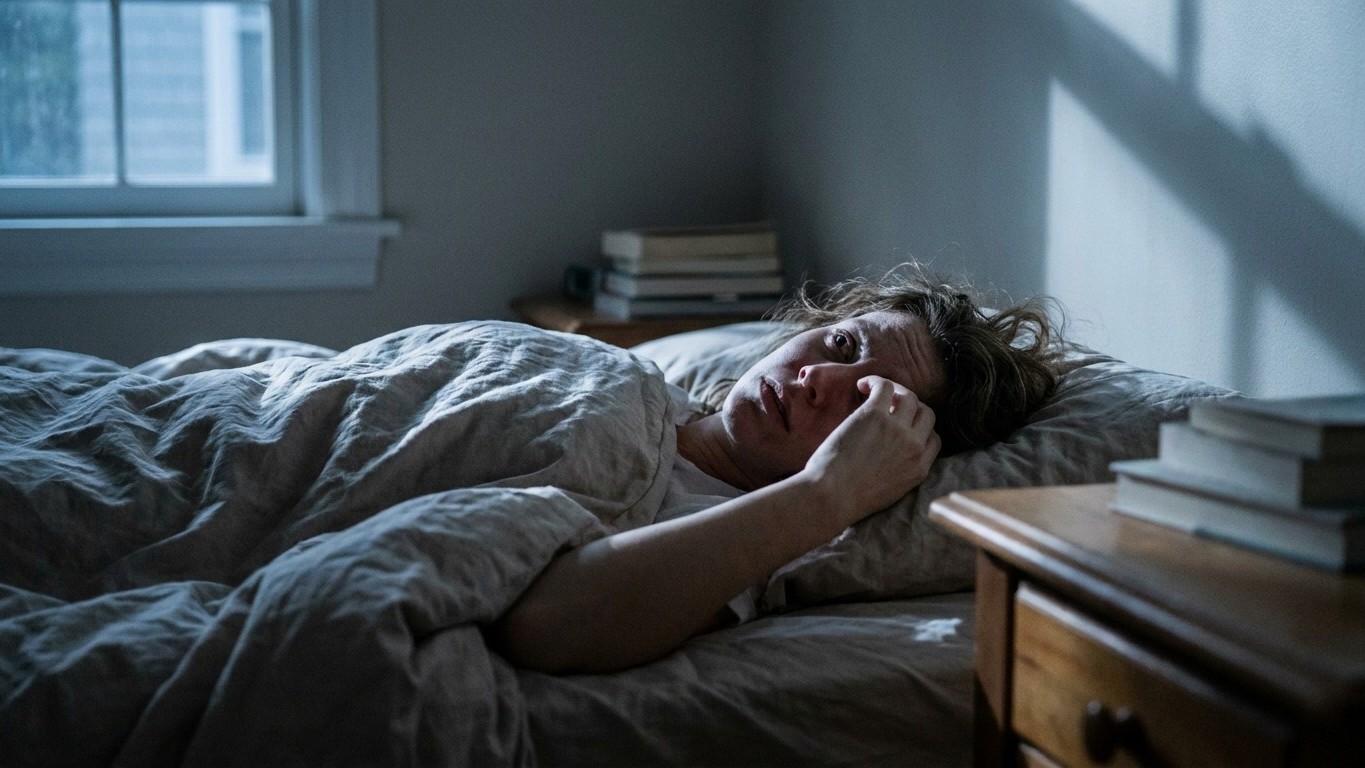
The 3:30 p.m. slump hits like a wall. Eyes glazing over the screen, a gravitational pull toward the couch, the quiet negotiation with yourself: just twenty minutes, that’s all. For a long time, the daily nap felt like a reasonable fix. A badge of self-awareness, even. Then came the other side of the equation: lying awake at midnight, ceiling unchanged, mind running laps. Sleep tracking revealed the brutal logic connecting both ends of that loop.
Key takeaways
- The 3 p.m. crash is purely biological—not about lunch—and happens regardless of what you’ve eaten
- A single afternoon nap can drain your sleep pressure and delay bedtime by over an hour, creating a vicious cycle
- Sleep tracking exposes the cause-and-effect patterns your intuition has missed for years
The 3 P.M. Crash Is Not About Lunch
Here’s the counter-intuitive part: research published in the journal Sleep confirmed that the afternoon energy dip happens even when people skip lunch entirely, even when they don’t know what time it is, and even when they haven’t changed anything about their day. Blame the sandwich all you want. The sandwich is innocent.
The 3 p.m. energy crash is primarily a circadian rhythm phenomenon. Your body runs on an internal 24-hour clock called your circadian rhythm, a biological metronome that controls the release of hormones like cortisol, which keeps you alert, and melatonin, which makes you sleepy. Around mid-afternoon, that alerting signal temporarily dips. During these windows, your homeostatic sleep drive, how long you’ve been awake, temporarily overpowers your circadian alerting signal. Your brain’s suprachiasmatic nucleus essentially hits the pause button on keeping you alert.
Clinical research shows this timing relates to your chronotype, whether you’re naturally a morning person or night owl, and your individual circadian phase. People with earlier chronotypes might feel their dip closer to 2 p.m., while later chronotypes might not hit their wall until 4 p.m. So that very specific 3:30 p.m. appointment with exhaustion? Entirely biological. And entirely predictable, once you know where to look.
The real problem starts when sleep debt amplifies what should be a manageable dip. Sleep debt significantly amplifies the dip, turning a mild alertness drop into a full cognitive shutdown. When you consistently get less sleep than your body needs, you accumulate sleep debt that manifests as increased daytime sleepiness, reduced cognitive performance, and amplified circadian dips in alertness. The afternoon slump, which is already a natural circadian phenomenon, becomes dramatically more pronounced when you’re operating on insufficient sleep.
Why Napping at 3:30 P.M. Is Quietly Sabotaging Midnight
This is where the tracking data becomes genuinely revealing. The nap felt like the solution. The data showed it was also the problem.
The homeostatic sleep drive is the body’s natural system for building sleep pressure throughout the day, primarily through the accumulation of the chemical adenosine. Think of adenosine as an internal debt counter. The longer you’re awake, the more adenosine you accumulate, the more sleep pressure you acquire, and the more likely you are able to fall asleep at bedtime. Falling asleep at 11 p.m. requires a full day’s worth of that pressure. A nap drains the tank mid-afternoon.
Napping partially discharges sleep pressure mid-day. A 20-minute nap blunts the afternoon adenosine peak; a 90-minute nap substantially reduces evening sleep pressure and may delay sleep onset. That’s the exact mechanism behind staring at the ceiling until midnight. The nap wasn’t recharging, it was spending tomorrow’s sleep currency early. A quick 10-minute nap at around noon might not have too significant an impact on nighttime sleep. However, a 2-hour nap at 5 p.m. will likely clear a significant amount of adenosine, and due to the nap occurring later in the day, nighttime sleep will very likely be impacted. Sleep drive will have decreased, and the body may not be able to recoup that drive for a few hours.
Timing, duration, both matter. Short naps can be restorative, but long or late-afternoon naps can dissipate sleep pressure, making it harder to fall asleep at night. A nap at 3:30 p.m. sits precisely in the danger zone, late enough to erode nighttime sleep pressure, long enough (when sleep debt is high) to slide past the 20-minute threshold almost accidentally.
What Sleep Tracking Actually Shows You
Wearable devices have quietly changed the conversation around sleep. Wearable devices continuously monitor physiological parameters such as movement, heart rate, skin temperature, and light exposure, allowing researchers to analyze circadian rhythms in real-world settings. By collecting data on circadian phase shifts, amplitude, and stability, these devices offer valuable insights into the relationship between circadian rhythms and health outcomes.
For everyday users, the value isn’t clinical precision, it’s pattern recognition. Advances in wearable technology and sleep tracking tools have enabled more precise measurement of daily sleep variability, providing new opportunities to evaluate its health implications. Sleep regularity, defined as the consistency of sleep and wake times across days, is increasingly recognized as a critical component of overall sleep health. A week of data makes visible what years of gut feeling couldn’t: the Tuesday late bedtime cascading into Wednesday’s brutal 2:30 p.m. wall, the weekend sleep-in that quietly pushes Sunday night’s sleep onset to 1 a.m., the nap logged at 3:47 p.m. preceding a 73-minute sleep onset delay. Cause and effect, rendered in graph form.
Consistent, moderate-certainty evidence links greater sleep-timing irregularity to higher depressive and anxiety symptoms, elevated body mass index, insulin resistance, hypertension, and incident cardiovascular events. The stakes, go well beyond feeling foggy at work. Because sleep regularity is modifiable and objectively trackable with wearables, schedule stabilization merits elevation to a core public-health recommendation.
One honest caveat: wearable devices may miscalculate sleep duration or inaccurately detect REM and deep sleep stages. For studies requiring precise sleep stage detection, it is essential to use a device that has been validated against polysomnography to ensure accuracy and reliability. Consumer trackers are imperfect instruments. But for spotting behavioral patterns, the nap, the irregular bedtime, the slow drift toward later and later nights — they’re genuinely useful, and frankly more honest than memory.
Breaking the Loop Without Suffering Through It
Cutting the afternoon nap cold turkey, while running on accumulated sleep debt, is a grim proposition. A smarter approach works with the biology rather than against it.
The first move is shortening and advancing the nap, not eliminating it. A brief, 10 to 20 minute nap may help you feel more refreshed during the day. A mid-afternoon nap can increase working memory, learning, and mental acuity for a few hours. Cap it at 20 minutes, set it before 2 p.m. if possible, and the adenosine drain stays manageable. The second move is supporting the circadian alerting system during the dip rather than surrendering to it. Natural sunlight is an ideal antidote to the afternoon slog. Sunlight exposure can help inhibit your body’s production of the sleep hormone melatonin. A 10-minute walk outside around 2 p.m. often accomplishes more than an hourlong nap at 3:30.
Caffeine timing deserves a close look, too. Late caffeine can improve energy short-term but worsen sleep and create a worse next-day crash. Many people unknowingly engineer their own insomnia by reaching for coffee at 3 p.m. to manage the dip, then wondering why they’re wired at 11. Caffeine blocks adenosine receptors without reducing adenosine. The homeostatic process continues building behind the pharmacological mask. When caffeine clears, the queued adenosine hits simultaneously. The rebound exhaustion the next afternoon is, in a very literal sense, yesterday’s debt arriving with interest.
The deeper fix is rebuilding sleep regularity over time. Research shows those with a consistent sleep schedule have more energy than those on an irregular schedule. That consistency isn’t about rigid bedtimes enforced with military discipline, it’s about giving the two systems that govern sleep, the circadian clock and the homeostatic drive, a stable framework to synchronize within. Maintaining a consistent sleep-wake schedule, even on weekends, helps to keep the homeostatic sleep drive and the circadian rhythm synchronized. Once that alignment holds, the 3:30 p.m. dip doesn’t disappear — it simply shrinks back to the mild, passing wave it’s biologically meant to be. Something you notice, briefly, then move through.
What tracking ultimately reveals isn’t a sleep problem. It’s a timing problem, and those are solvable, one data point at a time. The more interesting question is what other patterns in your day are quietly rewriting your nights without your knowledge.
Sources : sciencedirect.com | chronobiologyinmedicine.org