
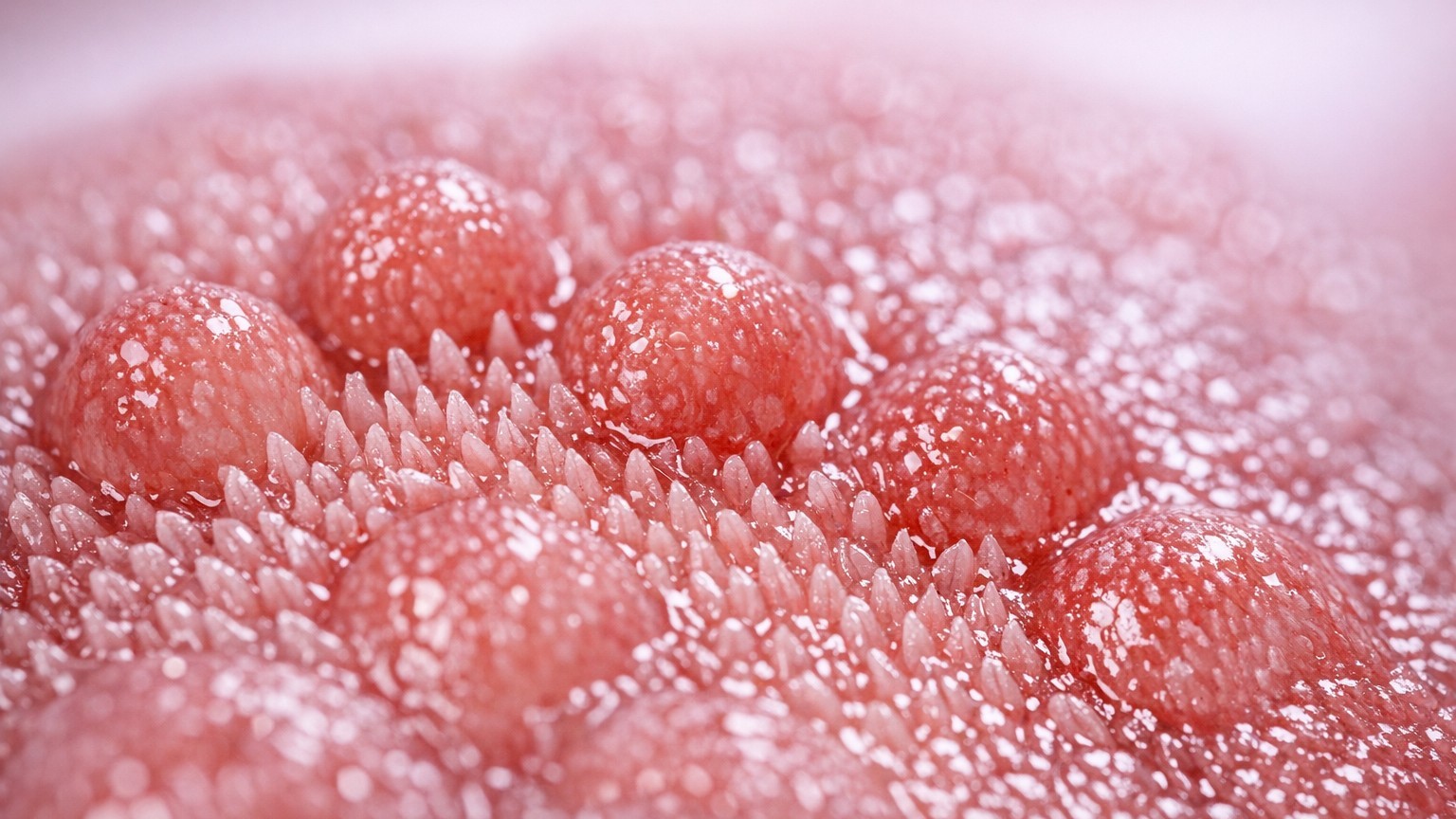
A close-up photograph of a tongue taken through a dental macro lens is not easy to forget. The papillae, those tiny finger-like projections covering the surface, look, under magnification, exactly like a dense field of carpet fibers. On a microscope, these projections resemble blades of grass or the fibers of a carpet. And lodged deep within that carpet: bacteria, dead cells, and food debris that no toothbrush, however diligently wielded, fully reaches. The image is humbling. It’s the kind of visual that makes you reconsider a habit you thought you had under control.
Key takeaways
- Your tongue hosts two-thirds of your mouth’s bacteria, creating an entire microbial ecosystem most people ignore
- Brushing your tongue barely scratches the surface—literally—while the bacteria at the back third thrives untouched
- That persistent bad breath and muted taste buds? Your tongue coating may be the culprit behind both
What’s Actually Living Between Your Papillae
The tongue harbors about two-thirds of the microorganisms present in the mouth, with its stable bacterial population consisting mainly of aerobic and facultative anaerobic streptococci. Two thirds. That figure alone reframes the whole conversation around oral hygiene, which has historically been obsessed with teeth and gums while the tongue sits there, largely ignored, quietly hosting an entire microbial city.
The coating visible on the tongue’s surface is composed of dead epithelial cells shed from the tongue, bacteria, and occasionally food debris trapped among the papillae. The problem is structural. The warm, moist environment of the mouth is ideal for bacterial growth, and the tongue’s surface provides both shelter and nutrients, dead cells from the tongue itself serve as food for certain bacteria, while the deep crevices between papillae offer protection from toothbrush bristles and even from saliva’s natural cleaning action. This is not a hygiene failure. It’s anatomy.
The counter-intuitive truth here is that brushing your tongue every morning, a habit most people consider thorough, may actually be doing less than you think. The tongue’s textured surface traps bacteria that brushing alone does not address. You’re skimming the surface of a three-dimensional problem.
The Cascade You Never Connected to Your Tongue
Poor tongue hygiene leads to halitosis, dry mouth, cavities, and altered taste perception, and the food particles and bacteria trapped in the papillae can contribute to streptococcal infections, tonsilloliths, and bad breath. That persistent morning breath that survives brushing? The connection between tongue coating and bad breath is one of the most well-established relationships in oral health, the bacteria living on the tongue surface produce volatile sulfur compounds as metabolic byproducts, and these compounds are responsible for the unpleasant odor associated with halitosis.
The stakes climb higher than fresh breath, though. Bacteria can migrate from the tongue to the saliva and bloodstream through inflamed oral tissues, potentially exacerbating the onset of various degenerative conditions such as chronic periodontitis, atherosclerosis, heart disease, rheumatoid arthritis, Alzheimer’s disease, and colorectal cancer. A 2025 review published in ScienceDirect went further, examining the relationship between bacterial shifts in the tongue microbiome and the pathogenesis of diseases such as rheumatoid arthritis, diabetes, and inflammatory bowel disease.
When food debris and dead cells accumulate on the taste buds, the buildup can dull taste perception. This one lands differently. A coated tongue may not just be a hygiene issue, it may be quietly muting your sensory experience of food, blunting the very pleasures you sit down to enjoy.
Brushing vs. Scraping: The Tool Actually Matters
Here’s where the “I already do that” crowd runs into trouble. Reaching for your toothbrush and giving your tongue a few swipes is not the same as dedicated tongue cleaning, and the science backs that up with some precision. The tongue cleaner or tongue scraper demonstrated a statistically significant difference in reducing levels of volatile sulfur compounds when compared with the toothbrush.
Researchers compiled all the randomized controlled trials comparing different methods of tongue cleaning to reduce mouth odor, and tongue scraping was found to be slightly more effective than tongue brushing, perhaps because the width of a toothbrush is smaller than the width of a regular tongue scraper, making it less effective at removing loosened debris. The geometry of the tool matters. A scraper covers the full width of the tongue in a single stroke; a brush spreads debris around as much as it collects it.
Scraping is more effective than brushing alone, especially for cleaning the back of the tongue, which is often harder to reach with a toothbrush. The back third of the tongue is the densest reservoir of odor-causing bacteria, and it’s also the zone most people instinctively avoid due to the gag reflex. A small, rounded scraper, placed gently and pulled forward with light pressure, handles this territory far more efficiently than bristles.
One caveat worth taking seriously: studies have shown that scraping the tongue too aggressively could decrease oral microbiomes, which can eliminate a source of nitric oxide, thus increasing the risk of hypertension. The goal is balance, not sterilization. The mouth is not meant to be a clean room.
Reading Your Tongue Like a Dashboard
Build-up can occur if you stop brushing or scraping your tongue even for a few days. The speed of recolonization is sobering, but it also means the feedback loop is fast. A healthy tongue responds quickly to consistent care.
The various colors and thicknesses of tongue coatings have long been used in traditional Chinese medicine as indicators of the health status of an individual and to assist in the prediction or diagnosis of diseases such as gastritis, esophagitis, pancreatic organ dysfunction, or even early-stage breast cancer. Western science is catching up. The alteration of the tongue microbial community has been associated with several diseases, mainly cancer, and the tongue microbiome may serve as a promising diagnostic tool or long-term monitor in precancerous or cancer cases.
A thick yellow coating is different from a thin white film. You should consult a dentist about a white tongue if it’s painful, the coating lasts for longer than three weeks, or you’re concerned about changes to your tongue associated with the coating. Smoking or consuming a lot of strongly colored food and drink, such as tea, coffee, or dishes with turmeric, can cause a furry appearance known as a black hairy tongue, which is not actually hair but an overgrowth of bacteria that may indicate poor oral hygiene.
The practical takeaway is straightforward: swap the toothbrush for a proper scraper, work from back to front in gentle strokes, rinse, and spend no more than fifteen seconds doing it. Regular tongue cleaning reduces bad breath, improves oral microbiome balance, and provides clues about underlying oral health. What the tongue reveals under proper attention, its color, texture, coating pattern, turns out to be one of the most accessible windows into systemic health that most people walk past every single morning without a second glance.
Sources : ncbi.nlm.nih.gov | brusho.com