
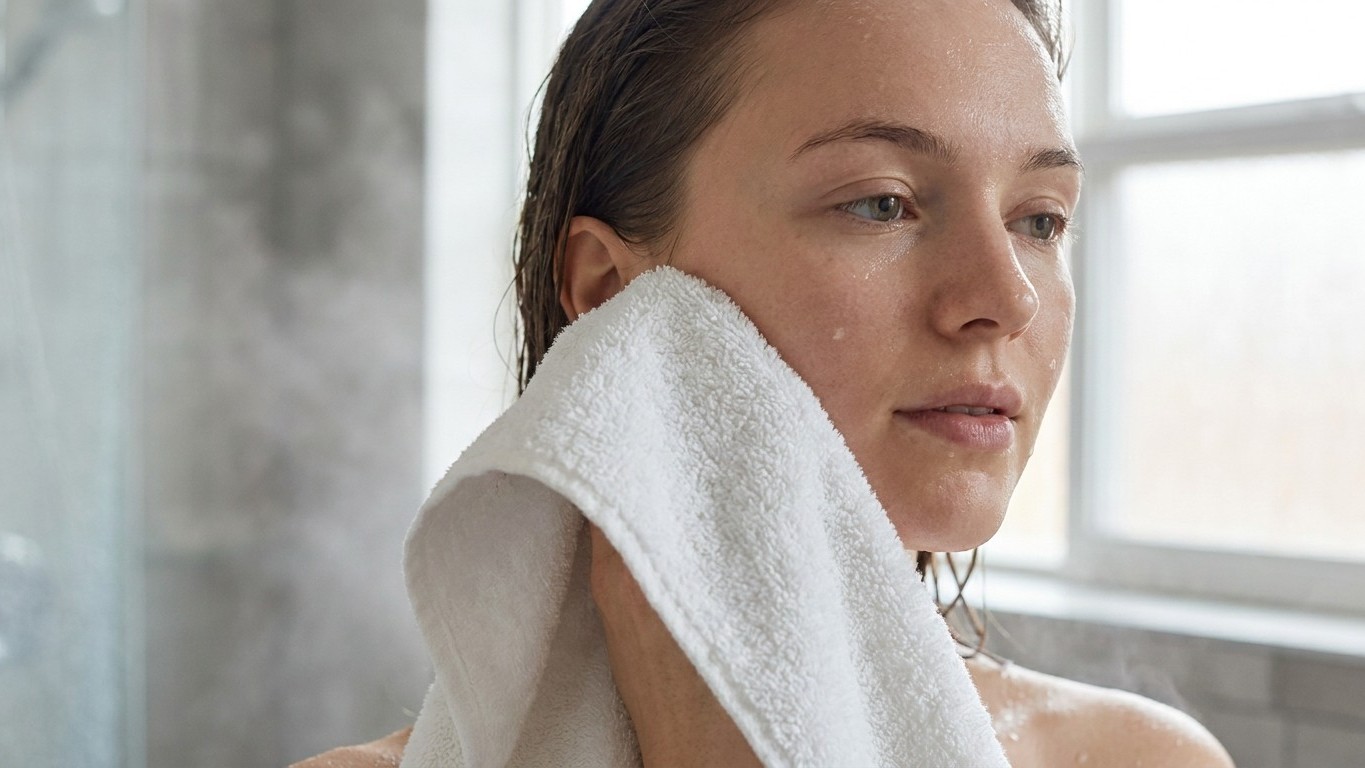
For years, the routine felt perfectly logical: step out of the shower, grab the towel, dry the body, pat the face. One cloth. Done. Efficient. The kind of habit so automatic it never gets questioned. Then a nurse friend mentioned, in the middle of casual dinner conversation, exactly what kind of bacteria can hitch a ride from your groin area to your cheekbones via that one fluffy rectangle hanging on your bathroom hook. The room went quiet.
She wasn’t being dramatic. Dermatologists have been raising this exact alarm for years, and the science behind it is, frankly, hard to un-hear.
Key takeaways
- One towel can harbor millions of bacteria like E. coli and Pseudomonas aeruginosa that survive for up to 21 days on fabric
- Bacteria transferred to your face after a shower can cause inflammatory, scar-inducing lesions that look nothing like regular breakouts
- Your towel’s ‘clean’ smell might be deceiving—product buildup actually makes it more hospitable to germs and fungal infections
Your Body Towel Is Not One Towel : It’s a Microbial Roadmap
Using the same towel for your face and body is one of the most common hygiene mistakes. The body naturally carries more bacteria than the face, especially in areas that sweat. When the same towel touches the feet, underarms, and groin and is then used on the face, bacteria are easily transferred, worsening acne, causing breakouts, and irritating sensitive facial skin. That’s the baseline. But the details get worse.
As dermatologist Dr. Jocelyn Lieb explains: “The groin area, for instance, might harbor E. coli bacteria, and if E. coli gets on the face, it could lead to what looks like pimples, but these can be much more inflammatory and difficult to treat, sometimes even causing scarring.” Not a garden-variety breakout. Inflammatory, scar-inducing lesions, from a towel that smells perfectly clean.
Every time you press that seemingly clean towel against your face, you’re potentially introducing Pseudomonas aeruginosa and Staphylococcus aureus, two bacteria strains that thrive in the warm, moist environment of reused fabric. Research shows these microbes can survive on cotton towels for up to 21 days, multiplying silently. And here’s the counter-intuitive part: your skin won’t necessarily tell you right away. The transfer mechanism works through what scientists call the “pummeling effect” — the gentle pressure and friction of towel-to-skin contact dislodges accumulated bacteria and deposits them directly into your pores. This process creates subclinical disruption of your skin’s natural microbiome that builds over time.
Those “mystery breakouts” that show up despite a solid skincare routine? The towel is a very plausible suspect.
The Warm, Damp Problem Nobody Thinks About
Towels offer a perfect environment for bacteria and other microorganisms to grow because they’re often damp, warm, and absorbent, and they hang in dark bathrooms. This is the structural flaw in our bathroom setups that rarely gets addressed. Most people hang up their towel after use, assuming it will dry completely before the next use. But standard bathroom setups often prevent towels from drying thoroughly between uses. Folded or bunched areas stay damp longer, and bathrooms without good ventilation keep humidity levels high enough to support bacterial growth.
A bathroom towel can become a breeding ground for millions of bacteria after just one day of use, according to Dr. Efrat Solomon-Cohen, a dermatologist at Clalit Healthcare. Fungal infections are also part of the picture: some fungi thrive in heat and moisture, accumulating in towels that don’t dry completely, which can lead to ringworm, athlete’s foot, or fungal infections in the groin. Pull all of this together and the image of a “clean towel” starts to dissolve quickly.
The problem isn’t just the number of bacteria present, it’s what happens when you reintroduce these growing colonies to your freshly cleaned skin. After a shower, your skin pores are open and more receptive to whatever comes in contact with them. Using a bacteria-laden towel at this moment is like inviting those microorganisms to move right in.
There’s also the issue of body products. Many people apply body lotions, oils, and other products to these areas, which can easily get trapped in your towel. Using that same towel to dry your face transfers sweat, oil, and product residues to your more delicate facial skin, increasing the likelihood of clogged pores and irritation. Fragrances and thick body moisturizers on facial skin? A reliable recipe for congestion and contact dermatitis.
How Often Should You Really Change Your Face Towel?
The gap between what people do and what dermatologists recommend is fairly stunning. You should aim to wash your bath towels every two to three uses at a minimum, and that’s just the body towel. The face towel requires a stricter approach. It’s best to have a separate face towel, as opposed to using your body towel to dry your face. As one dermatologist puts it: “You wouldn’t pat your face with your underwear.” Switch out your face towel after every use.
That sounds extreme until you do the math. If you cleanse twice daily and reuse the same towel, that’s 6 to 10 facial contacts before washing over several days. For resilient skin in a dry environment, this may not cause noticeable issues. For acne-prone or reactive skin, the repetition often matters more than we expect.
How you dry your towels makes a difference, too. Hang them on a bar rather than a hook so they can better air out. “If it’s on a hook, parts of it will be open to the air, but parts are still going to be all wet and jammed together,” which means more chances for bacteria and fungi to grow. Wash your towels in hot water at 170°F or higher to help kill germs and bacteria.
One more thing worth knowing: if you’re using a stain remover, fabric softener, and scent beads, you might be doing more harm than good. The residue from all those products builds up on your towel, which actually makes it more hospitable to germs. The more “fresh” your towel smells from added products, the grimier it may actually be functioning.
The Simple Fix (and the Better Alternatives)
The solution isn’t complicated, but it does require separating two habits that have been merged for most people’s entire adult lives. Dermatologists say it’s wise to use separate towels for your face and body, and you can also use reusable cotton pads and microfiber cloths as more sustainable options.
Microfiber towels are extremely soft, lightweight, and quick-drying, making them popular for skincare and makeup removal. Because microfiber absorbs and wipes away makeup without harsh rubbing, they are widely used in salons, spas, and beauty routines. The fast-drying property is particularly relevant here: less moisture retained means fewer conditions for bacterial growth between uses.
Bamboo towels are gaining ground due to their eco-friendly nature. They are known for being soft, antibacterial, and highly absorbent, which makes them ideal for skincare-focused routines. For those who’d rather eliminate the reuse question entirely, the disposable face cloth category has expanded significantly, plant-based and disposable options are designed to provide a germ-free dry-off for your face post-wash, so your products can perform their best on an actually clean canvas.
The color-coding trick is underrated: keep separate towels for your face, body, and hands to prevent cross-contamination, and consider using a different colored towel for each purpose to avoid mix-ups. Low-tech, zero cost, and the kind of system that prevents you from ever grabbing the wrong one at 6am half-asleep.
What’s striking is how much effort most women put into their skincare routine, serums, actives, SPF, double cleansing, while the last step, the drying, goes completely unexamined. The nurse wasn’t wrong to be alarmed. The real question is whether your breakouts, your recurring irritation, or that inexplicable dullness might trace back to something hanging on a hook six inches from your shower.
Sources : journee-mondiale.com | huffpost.com