
A sore throat every morning. A stuffy nose that clears by noon. Waking up coughing at 3 a.m., chalking it up to seasonal allergies or a slight cold. For millions of Americans who sleep with a fan running all night, these symptoms are so familiar they’ve stopped registering as symptoms at all. The real culprit, sitting quietly on the nightstand or ceiling mount, never gets suspected.
The science here is less dramatic than the headlines suggest, sleeping with a fan on typically doesn’t cause serious health problems, and the real risks have less to do with fans themselves and more with the quality of the air they circulate. But “not serious” doesn’t mean “harmless,” especially if you have allergies, asthma, or simply haven’t cleaned those blades since you bought the thing.
Key takeaways
- Your bedroom fan is silently dismantling your body’s first line of respiratory defense every single night
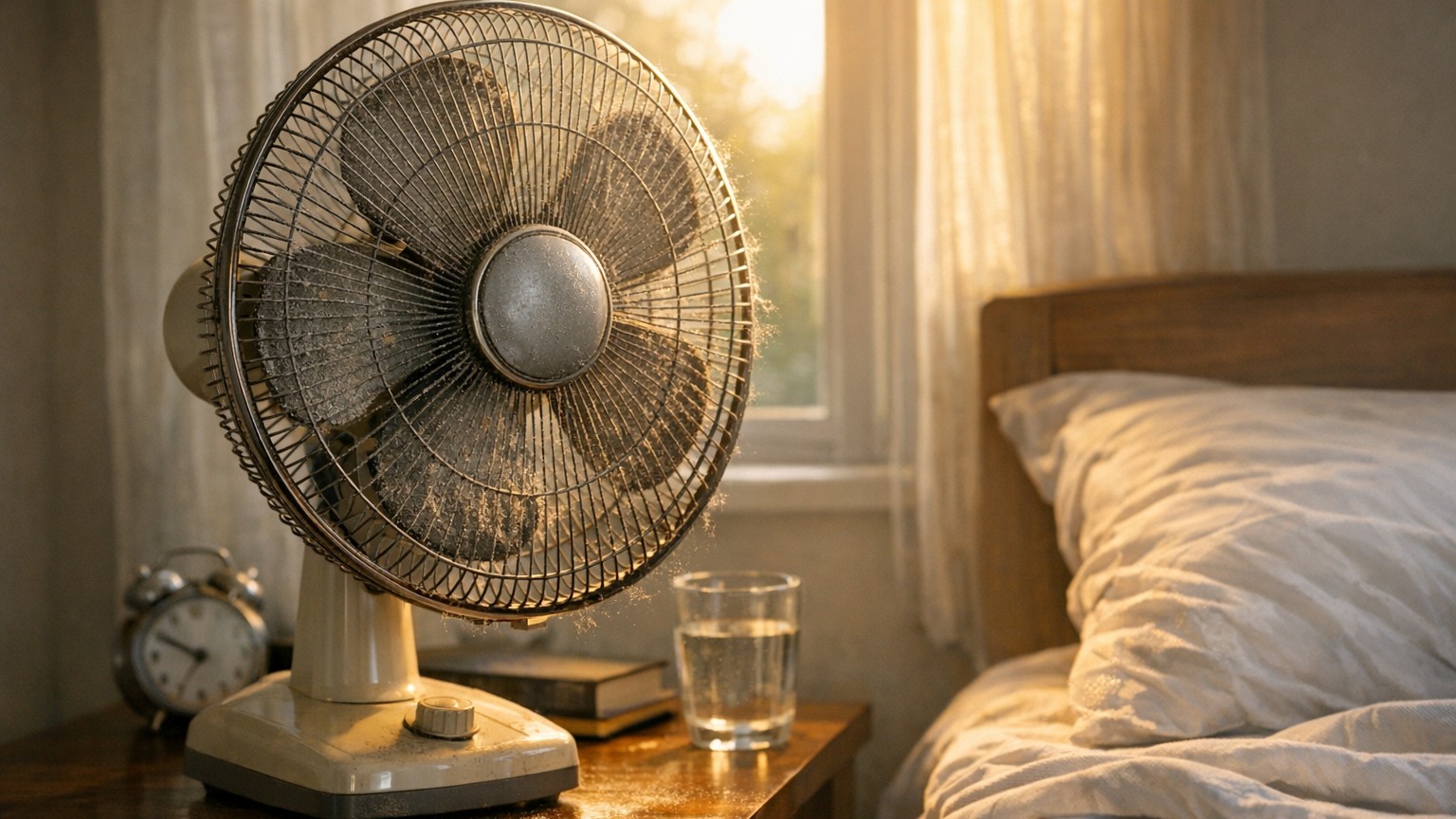
- The dusty fan blades you haven’t cleaned since summer started are literally redistributing allergens into your breathing zone
- That morning sore throat isn’t seasonal allergies—it’s the cost of seven hours of uninterrupted airflow drying your airways
What Actually Happens to Your Airways Overnight
Constant airflow can dry out mucous membranes in the nose, throat, and eyes over 7 to 8 hours of exposure. That’s one full night of sleep, every night, for the entire summer. The continuous air movement dries out the mucous membranes that normally trap bacteria and other harmful particles before they enter your lungs. Morning sore throats become common complaints among regular fan users, often dismissed as minor inconveniences rather than symptoms of overnight respiratory stress. The dried mucous membranes lose their protective capabilities, making you more susceptible to infections and respiratory irritants.
Think of your nasal mucosa as the bouncer at the door of your lungs. Dry nasal passages become more susceptible to irritation and infection. When the protective mucus membranes in your nose and throat dry out, they can’t effectively filter out bacteria, viruses, and allergens. The fan doesn’t just cool you down, it systematically dismantles your first line of respiratory defense, quietly, while you sleep.
Sleeping with a fan on can also cause sinus headaches. Dry air dries up nasal passages, leading to mucus overproduction. This excess mucus flows into the sinuses, blocking them and causing headaches. The body’s attempt to rehydrate the airways backfires, flooding the sinuses instead. A vicious, entirely avoidable cycle.
The Dust Problem Nobody Talks About
Here’s the part that tends to surprise people: the fan itself becomes a threat. Fans circulate dust and pollen in the air, which may trigger allergies in some people. The fan blades themselves are another unwelcome source of dust. If you inhale these allergens, you could experience symptoms such as runny nose, itchy throat, sneezing, watery eyes, or breathing difficulties.
When an electric fan is on, it circulates the air around the room, but what many people aren’t aware of is that it also circulates dust mites, spores, pollen, and other allergens. Many of those allergens, including dust mites, peak during summer, as they thrive in humid temperatures. So the very season you’re most likely to run a fan all night is the season your bedroom air is most loaded with biological irritants.
Lung experts warn that using electric fans overnight can circulate dust and pollen and worsen asthma symptoms. The Children’s Hospital of Philadelphia has noted that electric fans and open windows can increase the pollen count in a room, which could lead to more asthma problems at night. If you run fans all night long, allergens that cause symptoms get swirled around in the air before you eventually breathe them in, which makes inflammation worse.
People with asthma may experience increased airway irritation from circulating dust and allergens. The constant air movement can trigger bronchospasm in sensitive individuals, particularly when fans haven’t been cleaned regularly or when bedroom dust levels are elevated. And when was the last time you actually cleaned your fan blades? Ceiling fan blades, especially, are notorious for collecting a layer of dust, dust that gets redistributed directly into your breathing zone the second the fan turns on.
The Counterintuitive Truth About White Noise
Before declaring a full ban on bedroom fans, it’s worth acknowledging why people run them in the first place, and it’s not always about temperature. White noise from fan motors can mask disruptive sounds and promote deeper sleep cycles. This acoustic benefit often outweighs minor airflow concerns for many sleepers, creating a consistent sound environment that prevents sudden wake-ups from household noises or street sounds.
The irony is that people often use fans to improve sleep quality, but the resulting respiratory issues can actually decrease sleep quality over time. A fan that helps you fall asleep may be the same reason you wake up exhausted, congested, and reaching for the Sudafed. The net benefit erodes, gradually, season after season.
For households without central air conditioning, the calculus is even messier. Research shows that cooler sleeping environments (around 64–72°F) help regulate core body temperature and improve sleep quality, which means the goal, temperature regulation, is entirely valid. The method, however, is worth reconsidering.
What Doctors Actually Recommend Instead
The answer isn’t to suffer through hot, stagnant nights. Several practical adjustments can preserve the benefits of air circulation without seven hours of direct airflow on your face and throat.
If your fan has a timer, try setting it for one to two hours after you go to bed. That way, you can keep the room cool while you fall asleep but stop dry air from flowing all night. This simple step could also lower the risk of drying out your skin, eyes, and sinuses. Point the fan at the wall or ceiling instead of directly at your body, you can lessen your chances of developing muscle aches by pointing the fan away so the air doesn’t blow directly on you.
A high-efficiency particulate air (HEPA) filter for the bedroom is another option doctors recommend. Experts suggest HEPA filters to limit the spread of dust mites, pet dander, and other irritants that trigger allergies. One randomized, controlled trial found that people who slept with an air purifier in the room for two weeks got 12 more minutes of sleep each night on average than those who didn’t, a small but telling detail about the compound effect of cleaner air on rest.
A humidifier is another tool worth considering. Dry air, whether from the fan, air conditioner, or heater, can trigger coughs. A humidifier adds moisture to the air. Moist air also prevents the circulation of dust mites and other indoor air allergens that irritate the nasal passage and throat. Maintaining the humidity in the home at levels between 30 and 50 percent relative humidity is ideal. Below 30%, air is too dry, and mucus membranes may dry out more easily.
One fix that costs nothing: clean the fan. Experts say you should clean fan blades often to prevent adding more fuel to the allergy fire. A quick wipe-down every two weeks during summer can meaningfully reduce what gets launched into your airspace each night. The fan isn’t the enemy. Neglect is.
Worth noting for parents: the equation shifts for infants. Approximately 2,500 infants die of SIDS every year in the United States, making SIDS the third leading cause of infant mortality. High temperatures and increased carbon dioxide levels in a room increase the risk. According to some studies, keeping the fan on may help prevent SIDS. Circulation of air lowers room temperature and decreases the concentration of carbon dioxide, so in nurseries, a fan placed safely out of direct reach of the crib may be exactly the right call.
Sources : ncbi.nlm.nih.gov | rollingout.com