
Sweat drips before you’ve even finished your morning coffee. Summer heat doesn’t negotiate, and neither does your body’s demand for water. But the real story of summer hydration isn’t just about drinking more. Electrolytes, the mineral salts that regulate Everything/”>Everything from muscle contractions to nerve signals, are leaving your body every time you perspire. Replacing water without replacing those minerals? That’s where most people quietly go wrong.
Key takeaways
- You can lose 1-2 liters of sweat per hour in summer heat, taking essential minerals with it—and thirst arrives too late to prevent performance decline
- Most sports drinks are sugar-heavy imposters; whole foods and clean electrolyte sources outperform the neon bottles lining store shelves
- Strategic infused water combinations (cucumber-mint-lemon, watermelon-basil-salt) deliver measurable electrolytes and bioactive compounds when steeped properly
The electrolyte equation most people ignore
Here’s a number worth sitting with: you can lose between 1 and 2 liters of sweat per hour during intense summer activity, according to data from the American College of Sports Medicine. Each liter carries sodium, potassium, magnesium, and chloride out of your system. Plain water replenishes volume but dilutes the minerals still in your blood, a condition called hyponatremia that’s more common than most realize, and can cause headaches, fatigue, and in serious cases, dangerous confusion.
Sodium is the lead actor in this story. It holds water in your cells and sends signals across your nervous system. Potassium, often overshadowed by its more famous counterpart, keeps your heart rhythm steady and prevents the kind of leg cramps that wake you up at 3 a.m. in mid-July. Magnesium handles over 300 biochemical reactions, including the ones controlling your sleep. Lose too much of it through sweat and you’ll notice: irritability, muscle twitches, brain fog that feels like jet lag without the flight.
The counter-intuitive part? Thirst is a lagging indicator. By the time you feel thirsty, you’re already 1-2% dehydrated, and cognitive performance starts slipping at that point, before any physical symptoms register. The 2012 study from the University of Connecticut found that even mild dehydration impaired mood, concentration, and perceived task difficulty in women. A 2% fluid deficit sounds modest. It isn’t.
What actually works: electrolytes without the neon packaging
Sports drinks are the obvious answer the industry wants you to reach for. Frankly, most of them are dessert in a bottle, sugar-forward formulas with enough dye to stain a white shirt, and electrolyte concentrations too low to matter after a real workout in the heat. The market has shifted, though. Electrolyte powders and tablets with minimal sugar and clean ingredient lists have taken real shelf space over the past two years, and many registered dietitians now recommend these over traditional sports drinks for most adults.
Food, however, remains the most elegant delivery system. Watermelon (92% water, plus potassium and lycopene), cucumber, celery, and coconut water are all legitimate electrolyte sources. A small pinch of good sea salt in your water bottle isn’t a wellness-influencer affectation, it’s a functional trace amount of sodium that helps your body actually retain what you’re drinking. Whole foods first is still the right framework.
Coconut water deserves its own mention: a cup contains roughly 600mg of potassium, more than a banana, with naturally occurring sodium and magnesium. The calories are modest. The taste is divisive, some people love it, others find it faintly medicinal, but the mineral profile is legitimate and well-documented.
Infused water that does more than look pretty on a countertop
Infused water became an aesthetic before it became a strategy, which is a shame, because the right combinations genuinely support hydration beyond plain water. The key is choosing ingredients that contribute electrolytes or bioactive compounds, rather than just floating a few strawberries for Instagram appeal.
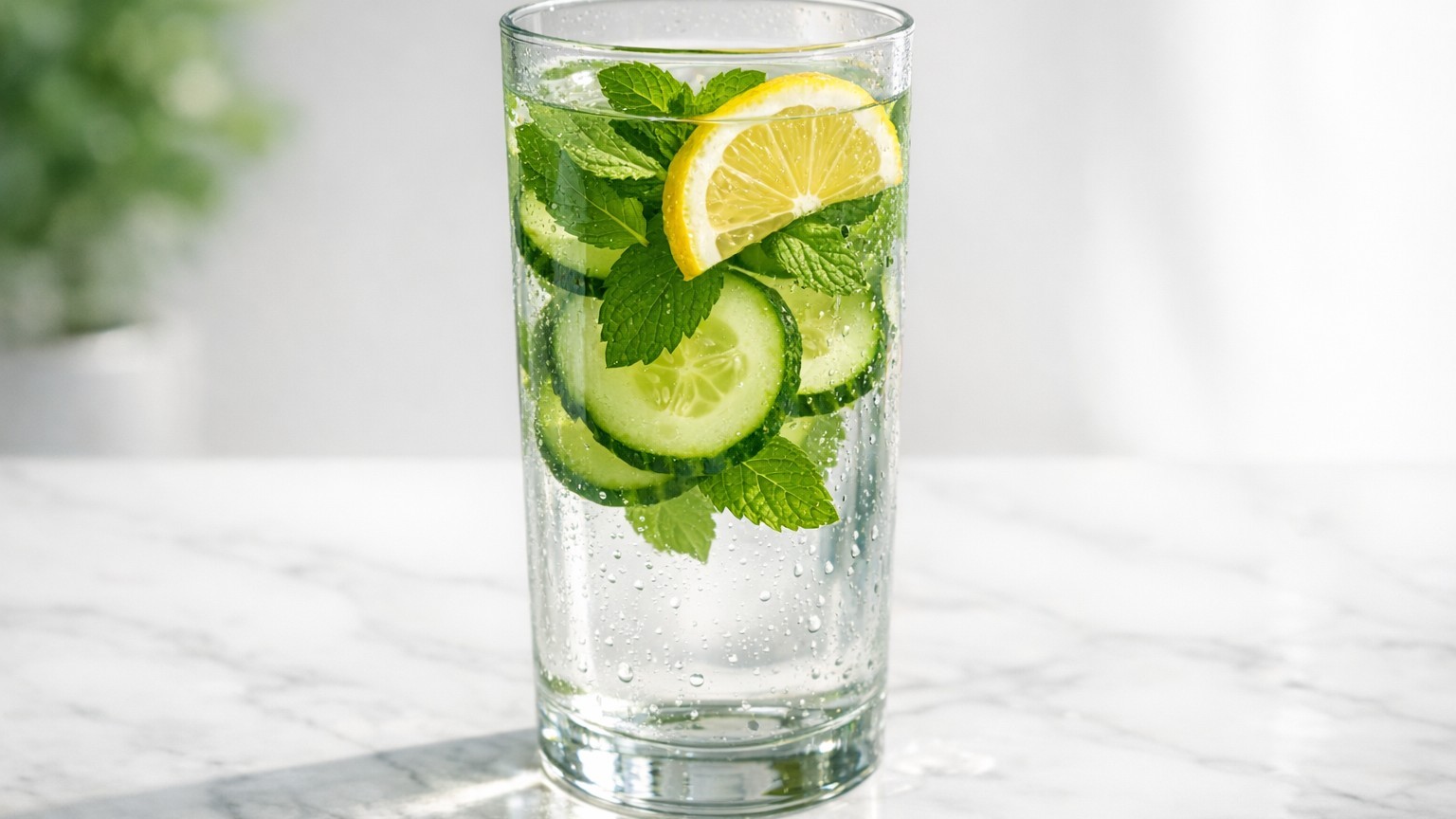
A cucumber-mint-lemon combination, for instance, adds potassium from the cucumber, vitamin C and a small acid hit that slows gastric emptying (meaning the fluid is absorbed more gradually), and the menthol in mint has a mild cooling effect on the mucous membranes, pleasant when the temperature sits above 90°F. Citrus peels, left on rather than squeezed out, release hesperidin, a flavonoid with documented anti-inflammatory properties that the juice alone doesn’t deliver.
A few combinations worth making this summer:
- Watermelon, basil, and a pinch of sea salt, potassium, magnesium, sodium in one glass
- Cucumber, ginger, and lime, hydration plus digestive support (useful when heat suppresses appetite)
- Pineapple, turmeric, and coconut water, electrolytes with a mild anti-inflammatory bonus from curcumin
- Strawberry, rosemary, and lemon, vitamin C and manganese, with rosemary’s antioxidant compounds
Steeping time matters more than people expect. A minimum of two hours in the refrigerator allows the plant compounds to actually diffuse into the water. Overnight is better. Glass pitchers outperform plastic for this, the mild acidity of citrus can leach trace plasticizers from cheaper containers over extended steeping periods, which is the kind of detail that doesn’t make it onto recipe blogs but is worth knowing.
Building a real summer hydration rhythm
Habits beat willpower, especially when the heat is making you sluggish. Anchoring hydration to existing rituals, a glass of water with sea salt before coffee, an infused water pitcher prepped on Sunday for the week, coconut water after any outdoor activity over 30 minutes — creates consistency without requiring daily decision-making.
Morning hydration matters disproportionately. You’ve been fasting and breathing (losing water vapor) for seven or eight hours. A 16oz glass of water before anything else, with a small mineral source if possible, sets your cells up for the heat ahead rather than playing catch-up by noon.
One overlooked detail: alcohol and caffeine aren’t the dehydrators they’re often portrayed as at moderate consumption, the research on this has been substantially revised since the early 2000s. The real culprits in summer dehydration are inadequate intake, skipping meals (food contributes roughly 20% of daily water intake), and air conditioning, which dramatically lowers indoor humidity and speeds up passive water loss through respiration without you noticing. Your body is evaporating water into that dry, chilled air all day long, quietly, without triggering thirst at all.