
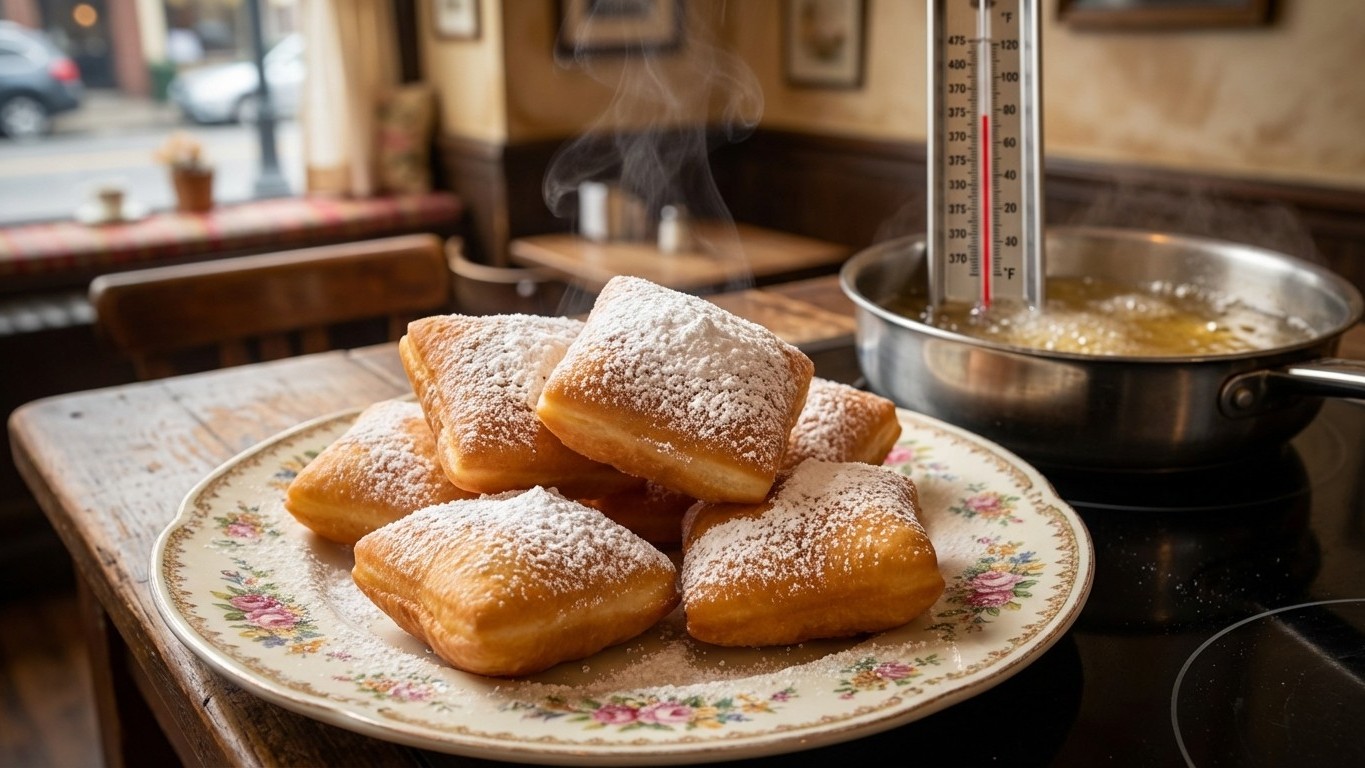
The carnival magic of Mardi Gras brings many treasures, but perhaps none more beloved than the pillowy clouds of fried dough known as beignets. Yet for every perfect, powdered-sugar-dusted square emerging from Café du Monde, countless home cooks have watched their beignets transform into greasy disappointments that soak through napkins and leave fingers slick with oil. The difference lies not in mystical New Orleans magic, but in understanding the precise science of temperature—and One Crucial Stopped-guessing-my-eyebrow-shape-since-i-learned-this-simple-pinch-Technique“>stopped-rolling-my-sleeves-the-usual-way-after-discovering-this-stylist-trick”>stopped-wearing-my-coat-open-until-a-stylist-showed-me-this-belt-trick”>stopped-blind-baking-my-pie-crust-until-i-learned-this-one-trick-that-changes-everything”>trick that changes everything.
The Science Behind Oil Absorption
When beignets absorb excessive oil, the result is greasy, sticky, and a hot, sweet mess of soggy dough. This frustrating outcome stems from a fundamental principle of frying: when dough hits oil at the wrong temperature, it behaves like a sponge instead of forming the protective barrier that creates that coveted crispy exterior and airy interior.
The key to achieving the perfect beignet lies in precise temperature control during frying, which creates an instant barrier preventing oil absorption while keeping the inside tender. When oil reaches the optimal temperature range of 350°F to 375°F (175°C to 190°C), something magical happens: as the dough hits the hot oil, water rapidly evaporates, creating steam that puffs up the pastry and gives it its characteristic airy texture.
The temperature window is surprisingly narrow yet absolutely critical. If the oil is too cool, the beignets will be greasy. If it’s too hot, they’ll brown too quickly on the outside while remaining undercooked inside. This explains why so many home attempts fail—even a 25-degree difference can mean the distinction between ethereal perfection and oily disaster.
The Temperature Trick That Changes Everything
Professional bakers know that Cafe du Monde apparently uses ultra-hot oil at 380°F, though most recommend staying at 350-360°F (175-182°C) using a thermometer for accuracy. The secret isn’t just hitting this temperature—it’s maintaining it throughout the cooking process and understanding why it works.
When properly heated oil meets beignet dough, it creates a barrier around the food almost Instantly. This barrier helps seal in moisture, keeping your fillet tender and juicy on the inside while forming a crisp crust outside. The rapid steam formation from moisture in the dough essentially pushes against oil penetration, creating the signature hollow pockets that make beignets so delightfully light.
Temperature consistency matters just as much as the initial heat. Overcrowding lowers the oil temperature, which can make your beignets greasy. Fry in small batches to maintain the right temperature and ensure each beignet has room to puff up. Professional kitchens typically fry 4-5 beignets at a time to ensure the oil temperature stays consistent and that each beignet has room to puff up and cook evenly.
The Game-Changing Ingredient Few Know About
Beyond temperature control, food scientists have discovered an almost magical ingredient that can dramatically reduce oil absorption: carboxymethylcellulose (CMC). At the level of 0.35%, CMC can reduce oil absorption and improve the texture of fried products, creating what professionals call “greaseless beignets.”
This water-soluble cellulose derivative works by helping beignets maintain their shape during frying, preventing excessive oil absorption. When incorporated into batter or dough at minimal levels, CMC improves the color and crisp of recipes while creating an invisible shield that keeps oil where it belongs—in the fryer, not in your food.
The beauty of CMC lies in its simplicity: for oil-fried instant noodles, oil content can be effectively reduced after adding CMC because CMC has characteristics of hydrophilic and hydrophobic oil, controlling the oil content at 18% or so. For home bakers, this translates to beignets that achieve the perfect balance of crispy exterior and pillowy interior without the greasy aftermath.