
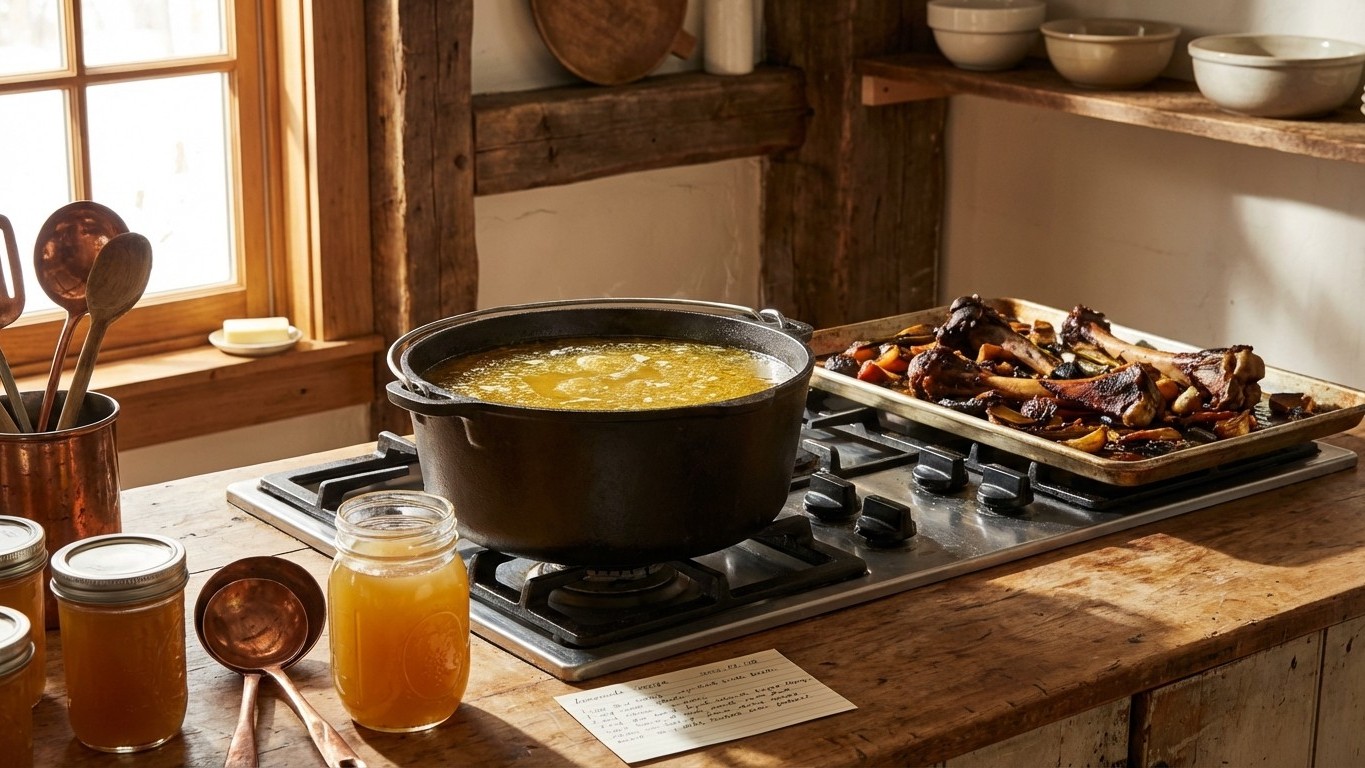
The moment I discovered This Ancient secret hiding in my grandmother’s recipe box, everything changed. What was once destined for the trash—those leftover chicken bones, beef bones, even fish skeletons—suddenly became my most precious Winter-coats-wrong-for-years-this-Japanese-folding-method-frees-up-closet-space-a”>Winter-skin-and-it-costs-almost-nothing”>kitchen treasure. This wasn’t just about reducing waste; this was about unlocking a culinary goldmine that had been sitting right under my nose.
The revelation came during a quiet afternoon spent sorting through family recipes. There, written in my grandmother’s careful handwriting, was a technique so Simple yet so transformative that I couldn’t believe I’d been throwing away liquid gold all these years. The secret wasn’t just in Making-my-bed-was-healthy-until-allergists-revealed-this-Morning-mistake”>Making bone broth—It Was in creating that beautiful, restaurant-quality golden color and rich, gelatinous texture that makes your mouth water just thinking about it.
The hidden-body-signs-almost-no-one-links-to-dehydration”>Hidden Chemistry Behind the Golden Glow
What My grandmother Understood intuitively, science has now confirmed: the magic happens when you roast your bones first. But here’s where her secret technique diverges Actually-works”>actually-do-with-it”>actually-approve”>From the standard advice. She didn’t just throw bones in the oven. She created what she called a “bone bouquet” by combining different types of bones in specific proportions, then roasted them with a surprising ingredient that most people would never think to use.
The game-changer was adding a tablespoon of tomato paste to the bones during the last fifteen minutes of roasting. This Simple addition doesn’t make the broth taste like tomatoes—instead, it creates complex Maillard reactions that deepen the color to that coveted golden amber and adds layers of umami that make your broth taste like it simmered in a five-star restaurant kitchen.
The science is fascinating: the natural sugars in the tomato paste caramelize with the proteins in the bones, creating hundreds of new flavor compounds. Meanwhile, the acidity helps break down the collagen more efficiently, resulting in that silky, gel-like consistency when your broth cools—the hallmark of a truly nourishing bone broth.
The Grandmother’s Method That changes everything
Armed with this knowledge, I began experimenting with my grandmother’s technique. The process starts with collecting bones throughout the week in a freezer bag—chicken carcasses from Sunday dinner, beef bones from the butcher, even the bones from that expensive piece of fish you splurged on. Nothing goes to waste when you understand their potential.
The roasting process itself becomes almost meditative. Spread the bones on a heavy-duty sheet pan, drizzle with a touch of olive oil, and into a 425°F oven they go. After about forty-five minutes, when they’re deeply browned and filling your kitchen with the most incredible aroma, you add that crucial tablespoon of tomato paste, stirring it around the bones like you’re painting them with liquid gold.
Then comes the real magic: the slow simmer. This isn’t a rushed process, and that’s exactly the point. In our microwave culture, we’ve forgotten that some things simply cannot be hurried. Twenty-four hours of gentle simmering, with just the occasional bubble breaking the surface, Transforms those humble bones into something extraordinary. My grandmother called it “coaxing the soul from the bones,” and I’ve never found a better description.
Beyond the Basics: Elevating Your Liquid Gold
Once you’ve mastered the fundamental technique, the real creativity begins. My grandmother’s notes revealed seasonal variations that kept her broth interesting year-round. In autumn, she’d add a few chunks of roasted butternut squash during the last few hours of simmering, creating a subtle sweetness that complemented hearty stews. Winter broths got a boost from dried mushrooms and a piece of kombu seaweed, adding mineral depth that seemed to warm you from the inside out.
Spring called for fresh herb stems—those parsley, cilantro, and dill stems that most people discard contain incredible flavor and shouldn’t be wasted. Summer broths benefited from the addition of corn cobs and tomato skins, creating a lighter, more refreshing base perfect for gazpacho or chilled soups.
The versatility extends far beyond soup. This golden elixir becomes the foundation for gravies that don’t need flour to thicken, risottos that develop creamy texture Without-any-chemicals”>without excessive stirring, and braising liquids that transform tough cuts of meat into fork-tender perfection. I’ve even started my morning with a warm mug of this bone broth, seasoned with fresh ginger and a splash of tamari, creating a nourishing ritual that beats any expensive supplement.
The Ripple Effect of This Simple Change
What started as a waste-reduction strategy has revolutionized how I cook. My freezer now holds precious containers of this liquid gold, each batch slightly different depending on the bones and seasonings used. Friends have started saving their bones for me, understanding that they’re contributing to something special rather than just helping with my cooking.
The confidence that comes from mastering this fundamental skill has opened doors to more adventurous cooking. When you have a foundation of rich, flavorful broth at your disposal, you can transform simple ingredients into extraordinary meals. A handful of leftover vegetables, some cooked grains, and a ladle of homemade bone broth becomes a satisfying meal that nourishes both body and soul.
This grandmother’s secret has taught me that the most valuable techniques often hide in plain sight, disguised as old-fashioned ways that modern convenience has left behind. Sometimes the best innovation Is Actually a return to time-tested wisdom, elevated by understanding and enhanced by intention. Your bones are waiting to Reveal their secrets—all you have to do is listen.