
Standing in the parking lot of a December wedding venue, shivering in my silk cocktail dress while watching other guests stride confidently past me in wool blazers and closed-toe shoes, I realized I had completely misunderstood Winter-coats-wrong-for-years-this-Japanese-folding-method-frees-up-closet-space-a”>Winter wedding attire. Again. Despite attending dozens of weddings, I kept Making the same fundamental mistake: treating winter weddings like summer ones with a cardigan thrown over my shoulders.
The truth about winter wedding dress codes isn’t just about staying warm – it’s about understanding a completely different set of unspoken rules that transform how we approach formal dressing when the temperature drops. While summer weddings allow for breezy fabrics and strappy sandals, winter celebrations demand a sophisticated understanding of layering, texture, and seasonal appropriateness that goes far beyond simply adding a jacket.
The Fabric Revolution Most Guests Miss
The most significant shift in winter wedding attire isn’t the color palette – it’s the complete transformation of fabric choices. Where summer weddings celebrate lightweight silks, chiffons, and linens, winter occasions call for richer, more substantial materials that photograph beautifully under indoor lighting and provide natural warmth without compromising elegance.
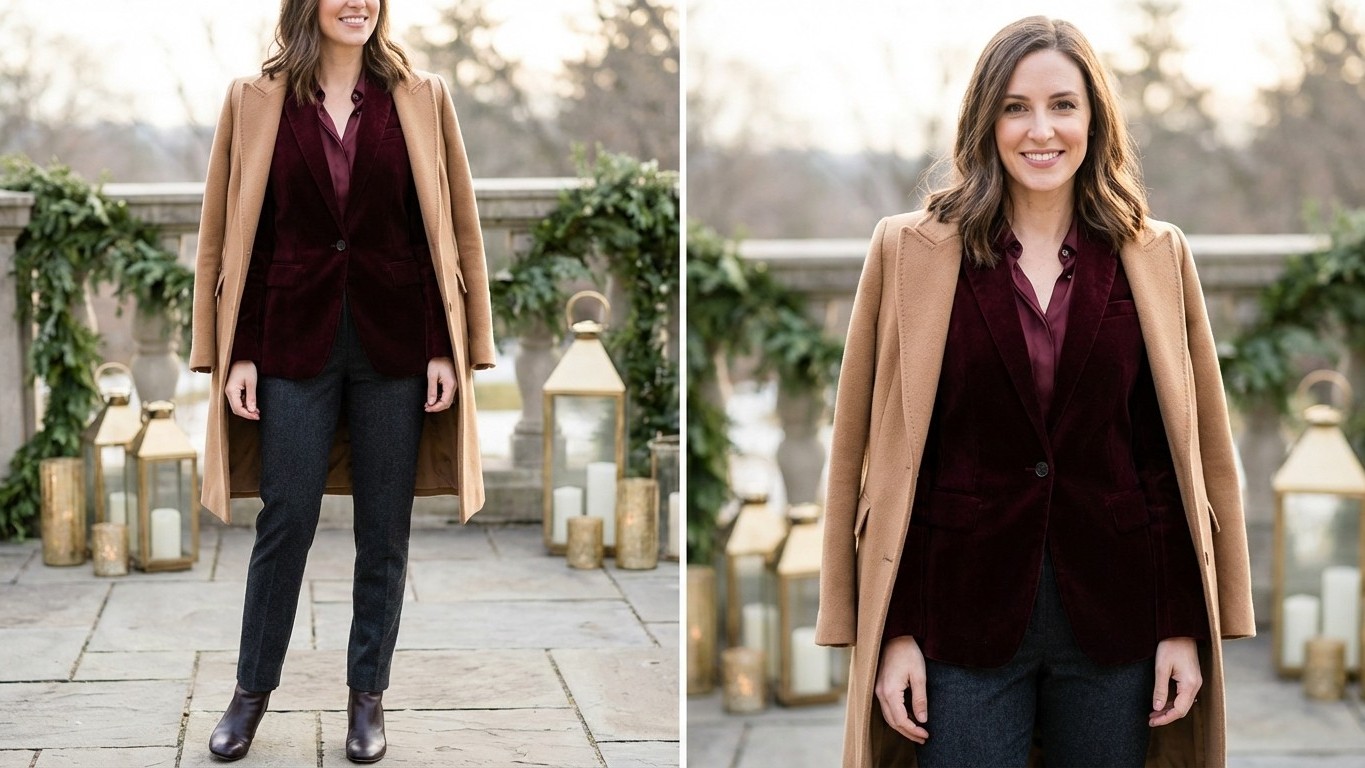
Velvet emerges as the undisputed champion of winter wedding fabrics, offering both luxury and practicality. A velvet blazer or dress photograph magnificently under tungsten lighting, creating depth and richness that lighter fabrics simply cannot achieve. Wool crepe, often overlooked, provides structure and warmth while maintaining the drape necessary for formal wear. Even ponte knits, when chosen in sophisticated cuts, offer comfort and temperature regulation without sacrificing style.
The mistake I repeatedly made was clinging to my favorite summer pieces, simply adding layers on top. This approach creates bulk, compromises the silhouette, and often results in overheating once indoors. Winter wedding attire Should be designed for the season, not adapted from warmer Weather pieces.
The Footwear Dilemma That Trips Everyone Up
Nothing reveals winter wedding inexperience quite like inappropriate footwear choices. The instinct to wear open-toe shoes because the ceremony is indoors ignores several crucial factors: outdoor photos, potential venue transfers, And the Simple-proportion-rule”>simple-trick-under-the-covers-the-life-changing”>Simple-trick-under-the-covers-the-life-changing”>Simple-trick-under-the-covers-the-life-changing”>Simple-trick-under-the-covers-the-life-changing”>Simple reality that closed-toe shoes photograph better against darker, winter backgrounds.
The secret lies in embracing boots as legitimate formal wear. Ankle boots in rich leather or suede, when paired with tailored trousers or midi skirts, create sophisticated silhouettes that work beautifully for winter celebrations. Knee-high boots under longer dresses solve both temperature and style challenges while creating interesting proportions that photograph beautifully.
For those who prefer traditional pumps, the key is choosing styles in seasonal materials. Patent leather, rich suede, or even metallic finishes complement winter’s deeper color palette Better Than summer’s nude and beige neutrals. The goal is creating cohesion between your outfit and the season rather than fighting against it.
Mastering the Art of Sophisticated Layering
Perhaps the most challenging aspect of winter wedding dressing is creating layers that enhance rather than hide your outfit. The common mistake is treating outerwear as an afterthought – something to be removed immediately upon arrival and forgotten until departure. This approach ignores the reality that wedding photos often include outdoor moments, cocktail hours in transitional spaces, and the simple fact that beautiful outerwear can Elevate an Entire look.
The most successful winter wedding guests understand that a stunning coat or wrap becomes part of the outfit, not a cover-up. A tailored wool coat in a rich color like deep burgundy or forest green can complement the couple’s winter palette while providing necessary warmth. Faux fur stoles or elegant pashminas add texture and visual interest while serving practical purposes.
The layering strategy should work from the inside out: a beautifully fitted base garment that looks complete on its own, paired with thoughtfully chosen outer pieces that enhance rather than hide the silhouette. This approach ensures you look polished whether the coat is on or off, eliminating the anxiety of figuring out when and where to remove layers.
Color Psychology and Winter Light
Winter weddings occur in dramatically different lighting conditions than their summer counterparts, affecting how colors appear both in person and in photographs. The soft, diffused light of winter days, combined with the warm artificial lighting typical of indoor venues, Transforms how we should approach color selection.
Rich jewel tones – emerald, sapphire, deep burgundy – come alive under winter lighting conditions. These colors photograph beautifully against typical winter wedding backdrops: evergreen arrangements, metallic accents, and candlelit venues. The mistake many guests make is avoiding darker colors out of concern for looking somber, when in reality, these deeper shades create the most striking and appropriate winter wedding looks.
Metallic accents become particularly important in winter wedding attire. Gold jewelry, metallic shoes, or subtle shimmer in fabrics catch and reflect the warm lighting typical of winter venues, adding dimension and visual interest that matte finishes cannot achieve. This isn’t about adding sparkle for the sake of glamour, but rather understanding how different lighting conditions affect fabric and color choices.
Understanding winter wedding dress codes ultimately comes down to embracing the season rather than fighting against it. The most elegantly dressed guests are those who work with winter’s natural palette, lighting, and temperature requirements to create looks that feel both sophisticated and seasonally appropriate. By choosing richer fabrics, embracing closed-toe footwear, mastering thoughtful layering, and selecting colors that complement winter light, you can avoid the mistakes that leave you shivering in parking lots and instead arrive as a perfectly prepared, impeccably dressed winter wedding guest.