
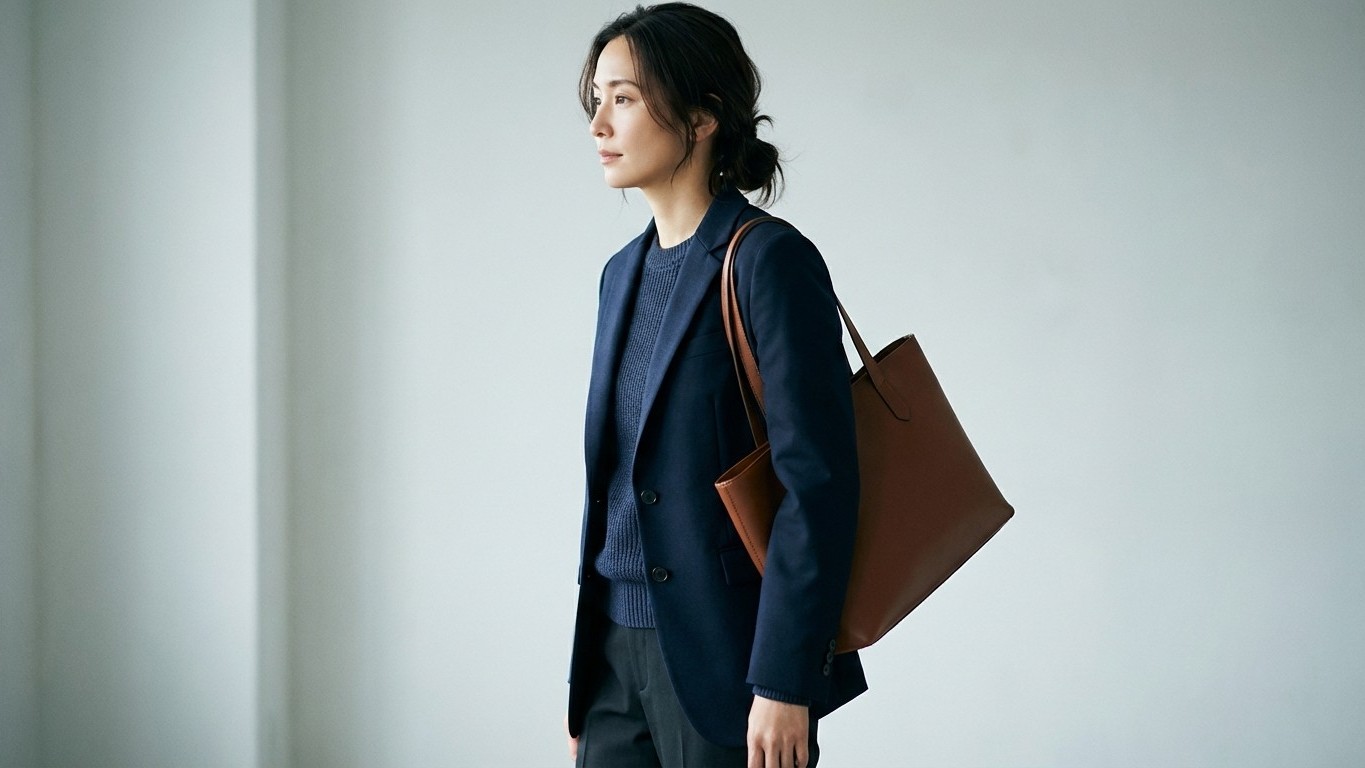
The average American woman’s handbag weighs around 5 to 6 pounds once loaded with the daily essentials. Wallet, phone, keys, hand sanitizer, a charger or two, sunglasses, maybe a water bottle for good measure. That doesn’t sound alarming, until you consider that the same load, applied unevenly to one shoulder for hours a day, produces biomechanical effects that orthopedic specialists are now comparing to patterns they historically spotted on teenage spines.
This isn’t about vanity or alarmism. The research is clear, and the mechanisms are well understood. What’s less clear is why so few of us have connected the dots between our favorite carry-all and the nagging stiffness that greets us every morning.
Key takeaways
- Asymmetrical handbag weight causes exponential—not linear—stress on spinal discs
- The cascade effect: from shoulder muscle tension to ‘military neck’ to unexpected headaches
- It’s not just about going lighter—bag style and core strength matter more than most people think
What’s Actually Happening Inside Your Body
Carrying a heavy handbag on one shoulder causes your center of gravity to shift to one side and the trapezius muscle in your upper back to over-contract and become stiff. That’s not a one-day problem. Do it five days a week for months, years, and you get something far more insidious. The muscles on one side of the body work harder to support the load, while the other side may become weaker or overstretched, and over time this imbalance can lead to muscle fatigue, tightness, and changes in posture.
Here’s the part that tends to surprise people: switching sides occasionally doesn’t fully solve the problem. Changing the load side can relieve the tension of the paraspinal muscle, but it does not reduce the burden on the intervertebral discs. The discs, the cushioning structures between your vertebrae, take a hit regardless of which shoulder carries the weight. And the handbag is, biomechanically speaking, the worst offender among common bag styles. The handbag produces greater muscle force, intervertebral compressive force, intervertebral shear force, and peak stress on the nucleus pulposus than the backpack and shoulder bag of the same weight.
Peak stress on the intervertebral discs in the backpack model increased linearly with bag weight, while it increased exponentially with bag weight in the handbag model. Exponentially. That means adding just a pound or two to your tote doesn’t simply add a little more strain, it multiplies it.
The Scoliosis Connection (And Where It Gets Complicated)
The comparison to scoliosis isn’t just rhetorical. Shoulder and handheld bags produce postural deviations in all planes, which may cause adverse stress and strain on spinal structures and ultimately lead to pain and progressive postural scoliosis. That last phrase, “postural scoliosis,” is worth sitting with. It describes a condition where the spine appears bent due to compensatory posture, rather than an actual structural deformity. The two look almost identical on the outside.
To be precise here, because the science is nuanced: scoliosis is not caused by heavy backpacks or bags. Heavy loads may cause back, neck, and shoulder pain, but scoliosis develops in different ways. True idiopathic scoliosis, the kind diagnosed in teenagers, has genetic, biomechanical, and neuromuscular roots that have nothing to do with carrying habits. But the functional scoliosis-like curvature that develops from asymmetrical loading? That’s a different category altogether, and it’s entirely preventable. Carrying a heavy bag can lead to neck, shoulder, or back pain, and throughout life, carrying a large, asymmetrical load can reinforce structural problems including scoliosis and kyphosis.
There’s a study published on PubMed that underscores just how fast this can happen. Carrying a load on the right shoulder significantly increased the thoracic lateral curvature in the frontal plane and decreased the thoracic kyphosis in the sagittal plane. The study confirms that even carrying a 17% body-weight load causes significant changes in spinal alignment. These are not subtle adjustments. These are measurable shifts in how the spine curves, in otherwise healthy adults.
The Cascade Nobody Talks About
The spine doesn’t suffer in isolation. Carrying a heavy purse can cause the trapezius muscle to spasm and tighten, along with the muscles that go from the shoulder to the base of the neck, causing stiffness in the upper back, the shoulder area, and the neck. From there, the cascade continues upward. Over time, this can cause a decreased curve in the neck, known as “military neck,” and some people develop arthritis in the lower neck because it has been forced to carry heavy weight for extended periods.
And then there are the headaches, the ones that seem unrelated, that you blame on stress or dehydration. Trapezius trigger points are sensitive knots within the trapezius muscle that can cause neck pain, muscle tightness, and referred pain to the shoulders or head. These trigger points, hardened by months of asymmetric loading, can generate tension headaches that radiate from the base of the skull around to the forehead. Your osteopath, if you have one, almost certainly knows exactly what these feel like to palpate.
There’s one more effect that doesn’t get enough attention: the impact on how you walk. One consequence of carrying a shoulder bag on one shoulder is that it significantly interferes with normal gait. The arm on the bag side can’t swing properly, and the other arm has to compensate by swinging more. Your entire movement pattern shifts to accommodate the load. Day after day. Year after year.
What Actually Helps (And What Doesn’t)
The reflex answer is to go lighter, and yes, that matters. Experts recommend that your bag weigh no more than 5% of your body weight. For a 140-pound woman, that’s 7 pounds, including the bag itself, which can already weigh 2 to 3 pounds empty if it has hardware. Do the math, and that “roomy” tote with the chunky chain strap is already almost at the limit before a single item goes in.
But lighter alone isn’t the full story. Style matters structurally too. Where backpacks evenly distribute weight on each side, many adults choose appearance over function with handbags, briefcases, or tote bags. A crossbody strap is better than a single shoulder drop, because it spreads the load diagonally across the torso. A cross-body bag is slightly better than a shoulder bag, though it can still result in some strain on the neck.
Core exercises, posture training, and stretches for the shoulders and hips improve alignment and reduce pain. This is the unsexy but genuine solution, building the muscular infrastructure that gives your spine a fighting chance. The trapezius, in particular, benefits from targeted strengthening exercises, and a physical therapist can design a program in one or two sessions that counteracts the daily asymmetry.
One more counterintuitive finding worth noting: the larger the bag, the more likely you are to fill it. This is the “bag size drives bag weight” phenomenon, and it’s one of the most consistently observed patterns among practitioners who work with handbag-related musculoskeletal complaints. Choosing a structurally smaller bag isn’t just an aesthetic decision. It’s an automatic weight-management strategy for your spine that requires zero willpower.
Sources : pmc.ncbi.nlm.nih.gov | pubmed.ncbi.nlm.nih.gov