
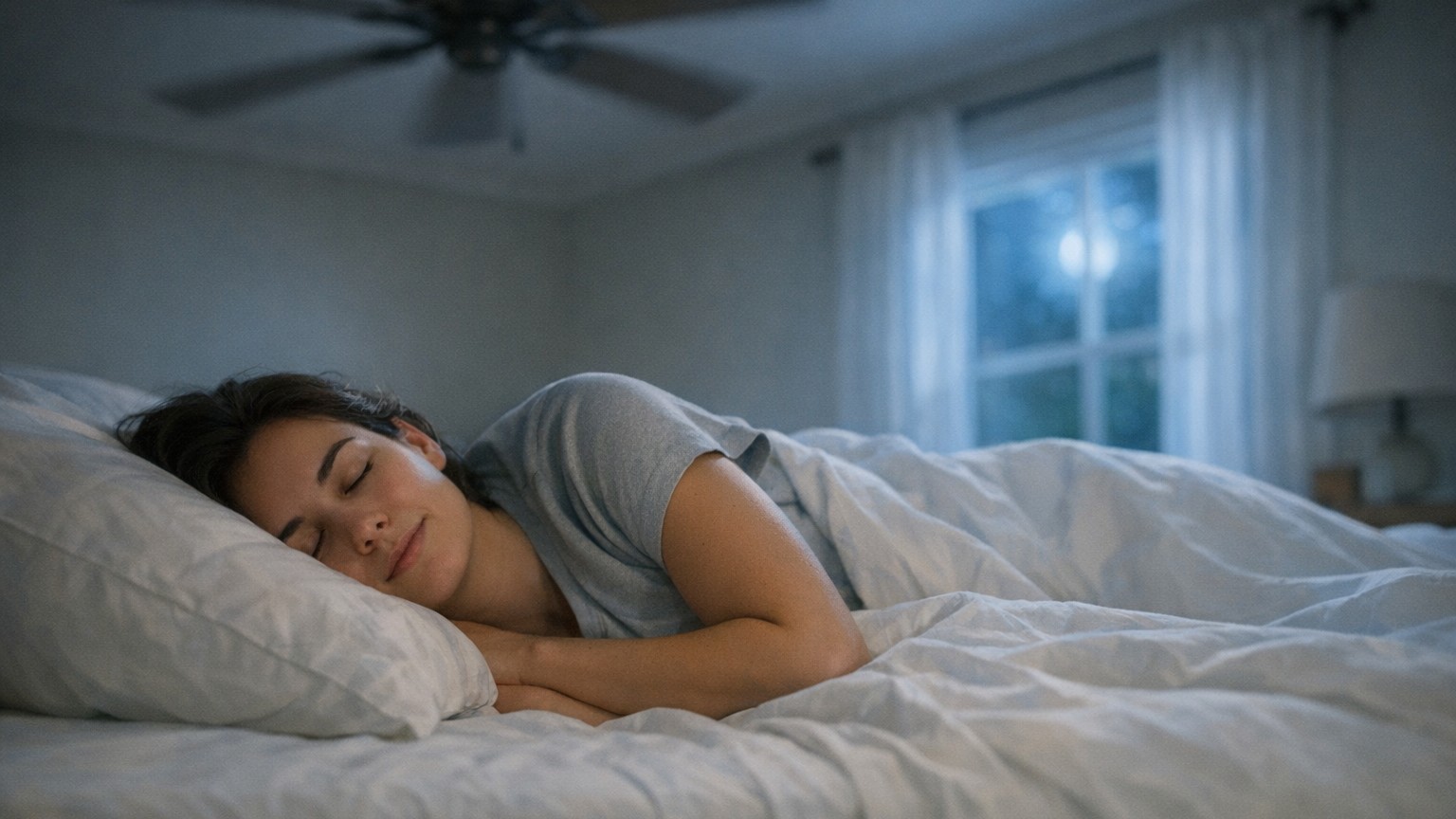
Every summer, the same three things. A cold shower straight before bed, a glass of wine to “take the edge off,” and a fan blasting directly at the face all night. Logical, right? Cooling down, relaxing, staying cool. Except that a sleep researcher would immediately flag two of those three as the exact opposite of helpful, and the reasoning behind it is both fascinating and a little humbling.
Key takeaways
- One popular cooling habit triggers your fight-or-flight response and floods your body with stimulating hormones right when you need to relax
- That relaxing nightcap you thought was helping? It’s disrupting your sleep quality hours later in ways you don’t realize
- There’s one surprisingly simple habit that actually works—and sleep science explains exactly why it helps you cool down faster
The Cold Shower Problem: You’re Waking Your Body Up, Not Down
The cold shower feels like the obvious move on a sweltering night. You’re hot, you want to be cold, you step in. Done. The problem is that your nervous system doesn’t read “refreshing”, it reads “threat.” The shock of cold water triggers a quick release of stimulating hormones, including norepinephrine and adrenaline, hormones associated with heightened alertness, increased focus, and energy — which directly opposes the relaxed state needed for sleep. Sleep expert Dr. Michael Breus, known as “The Sleep Doctor,” put it plainly: “Taking a cold shower before bed leading to better sleep is a myth. Cold showers will raise your heart rate,” and they trigger the body to release the fight-or-flight hormones adrenaline, norepinephrine, and cortisol.
There’s also the cortisol angle, which rarely gets mentioned in casual conversation. Cortisol levels in the body follow a fairly predictable daily pattern, usually peaking around 9 a.m. and decreasing to their lowest point around midnight. Studies have connected increased cortisol levels at night with poorer sleep. A cold shower right before bed is essentially injecting a mini morning into your evening.
The counterintuitive fix? Warm water. It may seem counterintuitive that a hot shower before bed can help lower your core body temperature, but when you take one one to two hours before bed, it temporarily raises your temperature, and afterward causes a drop in your core temperature, a signal to your body that it’s time to start producing melatonin. A meta-analysis of 13 human trials confirmed this cleanly: warm water bathing for as little as ten minutes, between one and two hours before sleep, shortens sleep latency by approximately 36%. Ten minutes. That’s genuinely a low-stakes intervention with a measurable payoff.
The Nightcap Trap
The wine or the cold beer at the end of a hot day. It feels like it helps, and in the short term, physiologically speaking, it sort of does. Alcohol is a sedative, which can make you feel relaxed and drowsy shortly after drinking, and research confirms that drinking before bed can reduce the time it takes to fall asleep, at least initially. The “at least initially” is the important part.
What happens later in the night is where things come apart. Alcohol may help you fall asleep faster but disrupts sleep quality later in the night, reducing REM sleep and increasing nighttime awakenings. On a hot summer night, that means waking at 2 or 3 a.m., overheated and unrested, and blaming the temperature when alcohol was pulling strings behind the scenes. The mechanism is specific: in healthy adults, alcohol consumption has been shown to blunt the normal diurnal variation in core body temperature rhythm and decrease salivary melatonin levels. Two of the exact things your body needs to fall into deep, restorative sleep, dismantled by a drink that was supposed to help.
The rebound effect makes it worse. The body initially adjusts for alcohol’s effects in order to maintain normal sleep during the first half of the night. But even after the body metabolizes alcohol halfway through, it stubbornly continues to adjust, ultimately overcompensating and resulting in sleep disruption. A 2024 meta-analysis added precision to the picture: a dose-response relationship was identified such that disruptions to REM sleep occurred following consumption of a low dose of alcohol, approximately two standard drinks, and progressively worsened with increasing doses. Two drinks. Not six. Two.
The One Thing That Actually Works: The Fan
Here’s where the sleep researcher vindicated my third habit. The fan stays. Fans create soothing white noise that masks disruptive sounds, promote deeper sleep, and improve room cooling while reducing energy use compared to air conditioning. The white noise component matters on its own: research has shown that white noise can significantly improve sleep quality and duration, and one study found that white noise helped people fall asleep up to 38% faster.
The circulation piece matters just as much, especially in summer. Using a fan to circulate air supports heat transfer from the body and helps prevent night sweats. The physics here are simple, moving air accelerates evaporative cooling from skin, which accelerates the core temperature drop the body is already trying to achieve before sleep. To lower its core temperature, the body pushes heat out through the skin, and blood flow in the hands and feet increases, allowing heat to be transferred into the surrounding air. A fan just speeds up that already-occurring process.
One caveat worth knowing: prolonged fan use can dry out mucous membranes and skin, stir up dust, and worsen allergy symptoms. If you’re waking up congested or with a dry throat each morning, the fan might be worth repositioning, angling it away from the face rather than cutting it out entirely.
What to Do Instead on a Hot Night
The revised ritual is simpler than expected. A warm (not hot) shower taken about 90 minutes before bed, no alcohol within at least three to four hours of sleep, and a fan running in the room rather than directly on your face. Recommendations vary on the ideal bedroom temperature, but the National Sleep Foundation says the optimal range for sleeping is 60 to 67 degrees Fahrenheit. If AC isn’t an option, opening windows early in the evening to let in cooler air and closing them before bedtime to reduce noise can meaningfully lower room temperature before you lie down.
The bedding question also deserves more attention than it gets. Lightweight, breathable sheets and blankets made from natural fibers like cotton or linen help wick away moisture and keep you cool throughout the night. And the body’s own cooling mechanism has one more trick up its sleeve: sleeping with feet out of the duvet or bed sheet helps keep you cool. Despite common belief that we lose most of our heat through our heads, hands and feet are actually key to staying cool. The feet-out approach is, in sleep science terms, the original cooling hack, and it predates every gadget on the market.
Sources : pmc.ncbi.nlm.nih.gov | sciencedirect.com