
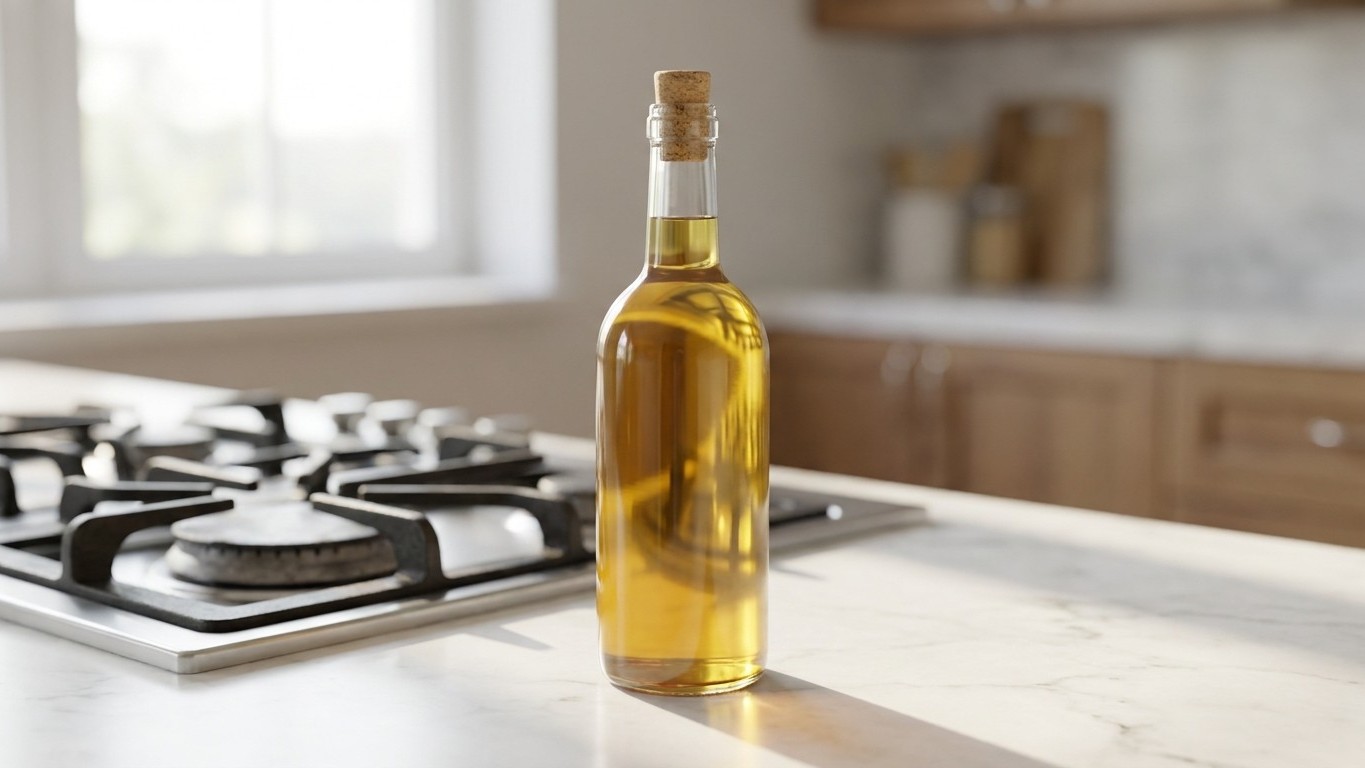
Look at the average American kitchen counter. There it is: the tall, half-used bottle of vegetable oil or canola oil, tucked between the salt and the paper towels, refilled on autopilot for decades. Cheap. Neutral. Ubiquitous. The oil that built a hundred weeknight dinners. The problem is that the people who study what we eat, cardiologists, dietitians, nutrition researchers, have quietly moved on from it. Not because it’s poison, but because we now understand what better actually looks like.
Key takeaways
- The ‘hateful eight’ seed oils have become wellness TikTok’s favorite villain, but cardiologists and nutritionists aren’t convinced by the toxicity claims
- What doctors actually use instead might surprise you—and it’s not what most Americans have relied on for decades
- How you store and reheat your oil matters more than which bottle you buy
The “Hateful Eight” and the Social Media Bonfire
The debate centers around eight specific seed oils that critics have dubbed “the hateful eight”: canola, corn, cottonseed, grapeseed, soy, rice bran, sunflower, and safflower oil. If you’ve spent any time on wellness TikTok or listened to a health podcast in the past two years, you’ve heard the indictment. These oils, the argument goes, are toxic, vehicles of chronic inflammation, obesity, and disease, introduced into the American diet at industrial scale.
The consumption numbers are hard to argue with. Soybean oil holds the highest level of consumption of any edible oil in the United States, with Americans consuming about 12.25 million metric tons of it in a recent year, compared to about 1.9 million metric tons of palm oil. These oils didn’t creep into the American pantry, they took it over. In North America, seed oils first gained popularity in the late 1900s as an alternative to partially hydrogenated oils. They solved one problem (trans fats) and became the new default before anyone asked too many questions.
Here’s the counter-intuitive part: the science does not support the “toxic” framing. Part of the problem is that the research into seed oils is not definitive. As Dr. Cori Russell, a Henry Ford Health cardiologist specializing in lipid management, explains: “There are a lot of limitations, and I think that applies to all nutrition science”, and she notes that while some people worry about processing methods and inflammation risks, the scientific evidence doesn’t support avoiding these oils. A June 2025 study presented at the American Society for Nutrition meeting drove that point home: researchers analyzed blood markers from nearly 1,900 people and found that higher levels of linoleic acid, an omega-6 fat commonly found in seed oils, were linked to lower inflammation and better cardiometabolic health.
The Omega-6 Confusion, Explained
The loudest charge against seed oils is that they flood your body with omega-6 fatty acids, tipping the balance toward inflammation. The logic sounds clean. A diet too high in omega-6s is also typically a diet too low in omega-3 fatty acids. The ideal omega-6 to omega-3 ratio is 2:1 or 1:1, but for most Americans, the actual ratio is a whopping 10:1 or even 20:1. That imbalance is real. But blaming seed oils alone for it is a significant leap.
Christopher Gardner, director of nutrition studies at the Stanford Prevention Research Center, explains that omega-3 fatty acids are anti-inflammatory and help lower triglycerides, while “omega-6s do many of the same things,” just not as effectively. “Somewhere along the line, this got flipped into a misunderstanding that omega-6s do the opposite of omega-3s.” In plain terms: omega-6 is not pro-inflammatory. It’s simply less anti-inflammatory. That’s a very different thing.
Gardner sums up the social media argument this way: “I’ve gone back to some of the social influencer podcasts, and what I typically hear is, seed oil consumption has doubled. And in the same time it’s doubled, obesity rates have risen, inflammation has risen, chronic diseases are a problem. This is an association, not causation.” The culprit, according to Johns Hopkins researchers, is far more likely the ultra-processed food those oils live inside, foods that are generally not good for your health because they’re “usually high in sodium or salt, added sugars, unhealthy fats, and additives.” That’s why they’re bad for you, not the inclusion of seed oils.
What’s Actually On a Doctor’s Counter
None of this clears generic vegetable oil as the gold standard. There’s a wide spectrum between “probably not toxic” and “genuinely good for you.” And that’s where doctors and registered dietitians have actually moved the needle.
Olive oil is considered the healthiest oil for everyday cooking due to its nutrients and well-researched benefits. This isn’t a lifestyle trend, it’s decades of clinical data. Olive oil has been proven to lower LDL (bad cholesterol) and raise HDL (good cholesterol) levels when used to replace saturated fat, such as butter. Extra virgin olive oil, specifically, carries a particular compound worth knowing about: it’s an excellent source of antioxidants, and it also contains hydroxytyrosol, an organic compound with anti-inflammatory, anti-tumor, antiviral, antibacterial, and antifungal properties. Not bad for something you drizzle on vegetables.
For high-heat cooking, the searing, roasting, and stir-frying that olive oil doesn’t handle as elegantly — avocado oil has earned serious credibility. Avocado oil ticks many of the same health boxes as olive oil: it’s rich in heart-healthy fats and exerts anti-inflammatory effects, plus it offers vitamin E to support blood vessel and skin health. It has a smoke point up to about 520 degrees Fahrenheit, and even at high heat, avocado oil “doesn’t have a burnt flavor, and it also retains all those nutrients.” The practical split that most nutrition-savvy cooks now use: olive oil for dressings, low-heat sautés, and finishing; avocado oil when the pan needs to get seriously hot.
The case against pivoting entirely to animal fats, butter, beef tallow, ghee, as some wellness influencers have suggested? Dr. Russell makes it directly: “If we used things like butter, ghee, beef tallow, the animal products, there’s very good data already that shows that our risk of heart disease and stroke, and peripheral artery disease, even things like insulin resistance and fatty liver disease would all become more prevalent.” Decades of research show that consuming unsaturated fat in place of saturated fat is linked to a lower risk of heart attack and death from heart disease. That data goes back to the 1950s. It hasn’t moved.
One Bottle Is Never the Whole Answer
The real insight here isn’t about which oil to demonize. Research published in Critical Reviews of Food Science and Nutrition has shown that reheating vegetable oils repeatedly may produce harmful fumes associated with higher cancer risks, and reheating oils also diminishes any nutritional value they may have. Even before cooking, “the more refined, the more processed the oil, the fewer nutrients.” How you use an oil matters as much as which oil you choose.
Storing oils for long periods can ruin their health benefits. Oils should be used within 30 to 60 days after opening, stored in a cool, dark, and dry place, and any that smell bitter or “off” should be replaced. That tall, half-forgotten bottle sitting in direct light on the counter? By the time you finish it, the oil may have oxidized well past its useful life, regardless of what’s printed on the label.
Research also shows that linoleic acid, the primary fatty acid in many seed oils, can improve glucose metabolism and reduce the risk of type 2 diabetes. One research team found that participants with the highest levels of linoleic acid had a 35% lower risk of developing type 2 diabetes compared to those with the lowest levels. The picture that emerges from the full body of research is not a story of good oils and evil oils. It’s a story of context, quality, quantity, and a kitchen that probably needs more than one bottle on the shelf.
Sources : sniglobal.org | frontiersin.org